
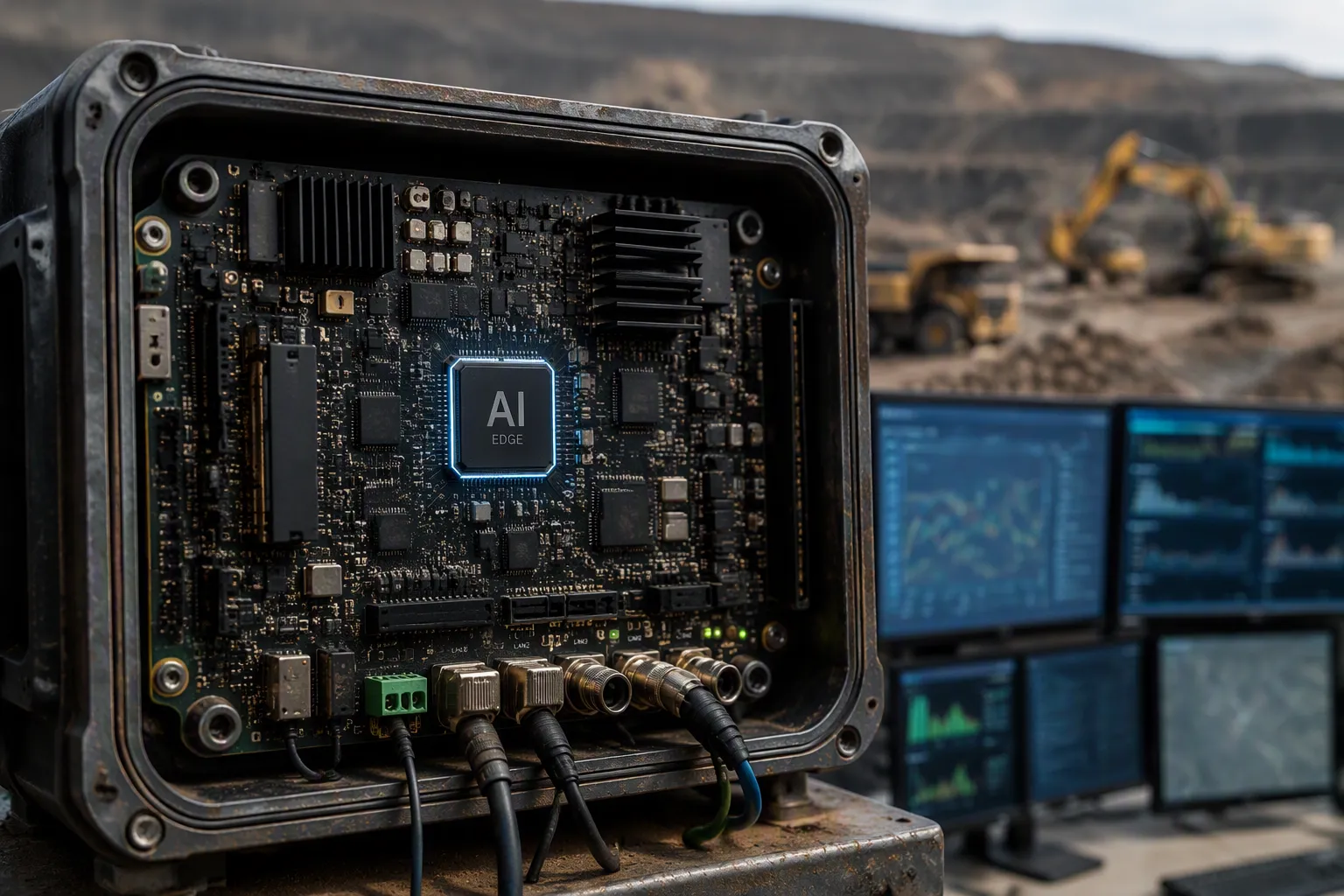
Rugged edge AI PCBA assembly creates rugged PCBA for mining and remote monitoring. These systems for mining environments endure extreme conditions and thermal stress. Standard PCBA fails under such stress, but rugged edge computing PCBs prevent downtime in harsh environments. They support computing on server hardware for remote monitoring, delivering reliability and performance through thermal management. Edge AI reduces downtime on edge servers for these systems, enabling low-latency monitoring. Rugged edge AI PCBA ensures stable operation in harsh conditions, and computing on these systems enables autonomous operations.
Key Takeaways
Choose rugged PCBA with wide-temperature materials and conformal coating. This protects electronics in extreme mining environments.
Use edge AI on rugged server PCBA to process data locally. This reduces delays and prevents failures.
Implement proactive monitoring with sensors and predictive maintenance. This catches problems early and reduces downtime.
Require rigorous testing like HALT and thermal cycling for all rugged PCBA. This ensures durability in harsh conditions.
Key Features of Rugged Edge AI PCBA
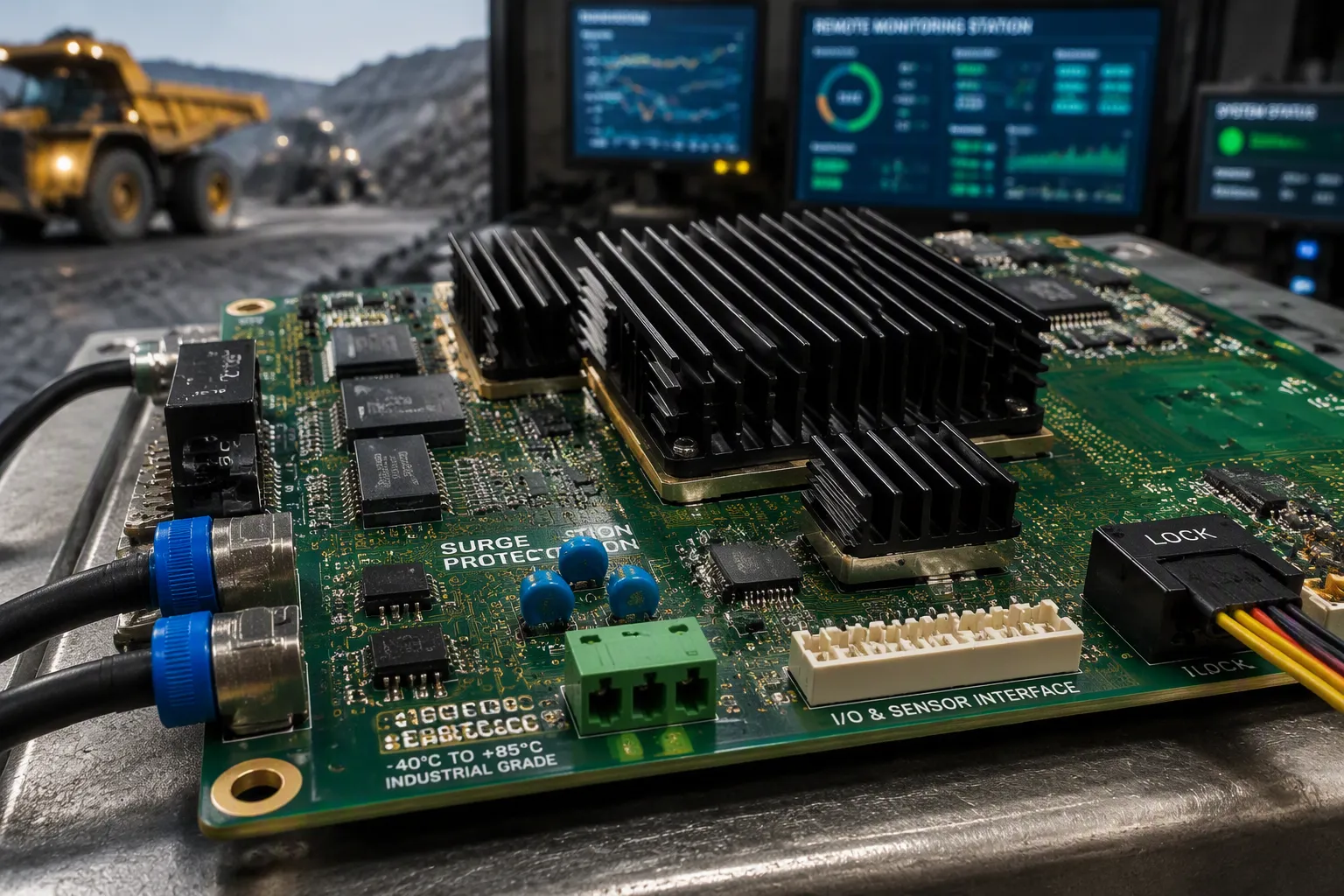
Mining sites and remote monitoring stations expose electronics to constant vibration, wide temperature swings, dust, and moisture. A rugged edge AI PCBA must survive these extreme conditions without failure. Engineers achieve this durability through careful material selection, mechanical reinforcement, and protective circuit design.
Vibration Resistance and Thermal Management
Heavy machinery generates continuous vibration that cracks solder joints and loosens connectors on standard boards. Rugged edge computing PCBs counter this threat with underfill epoxy beneath critical components. Locking connectors prevent cables from disconnecting during operation. Reinforced mounting holes distribute mechanical stress across the board surface. These measures extend durability under impact and support shock testing for edge computing applications.
Wide-Temperature Materials and Surge Protection
Material choice determines whether a PCBA operates reliably across seasonal extremes. Polyimide and high-Tg FR4 substrates resist warping at elevated temperatures. High-melting-point solder paste maintains joint integrity during thermal cycling. Industrial-rated components function across a -40°C to +85°C range, which covers most mining and remote deployments.
Power converters for these environments must handle similar extremes. As one manufacturer specifies:
The converters are suitable for operation in extreme environments including transportation, heavy industry, mining, and power generation and distribution. … The converters are rated for operation over a -40 to +70°C cold plate temperature range for full specification; wider temperature ranges are available on request.
Surge protection shields sensitive AI hardware from voltage spikes on power lines. TVS diodes clamp transient voltages before they reach processors. Input filtering removes electrical noise that could corrupt data. These protections reduce downtime and preserve reliability in harsh environments.
The table below compares temperature capabilities across system types:
System Type | Operating Temp Range | Protection Level |
|---|---|---|
Standard Dry-Type | 0°C to 40°C | Low (Open) |
Oil-Immersed 400KVA | -25°C to +50°C | High (Enclosed) |
Industrial Shielded | -10°C to +45°C | Medium (IP54) |
Climate-Controlled | -40°C to +60°C | Extreme (IP65) |
Modular Hybrid | -20°C to +50°C | High (Modular) |
These features work together. Vibration resistance protects physical connections. Thermal management prevents overheating. Wide-temperature materials ensure operation across seasons. Surge protection guards against power anomalies. A rugged edge AI PCBA combines all four to deliver computing performance in the most demanding environments.
Rugged AI Server PCBA for Mining and Remote Monitoring
Self-Cleaning Cameras and Conveyor Monitoring
Conveyor systems fail when splice joints break, belts misalign, or drive pulleys slip. BeltIQ self-cleaning cameras watch these points continuously. Each camera runs on a rugged AI server PCBA that processes images at the edge. This edge computing approach cuts latency dramatically compared to sending video to a distant data center. The rugged AI server PCBA handles dust buildup and vibration without missing a frame.
Remote Diagnostics and Drone Ground Stations
Remote equipment diagnostics depend on reliable server hardware that operates far from climate-controlled rooms. A rugged AI server PCBA enables drone ground stations to process flight data on site. The edge AI models detect equipment anomalies in real time. This edge processing supports autonomous mining vehicles and robotics that require split-second decisions.
Rugged PCBA Reliability Strategies
Proactive Monitoring and Predictive Maintenance
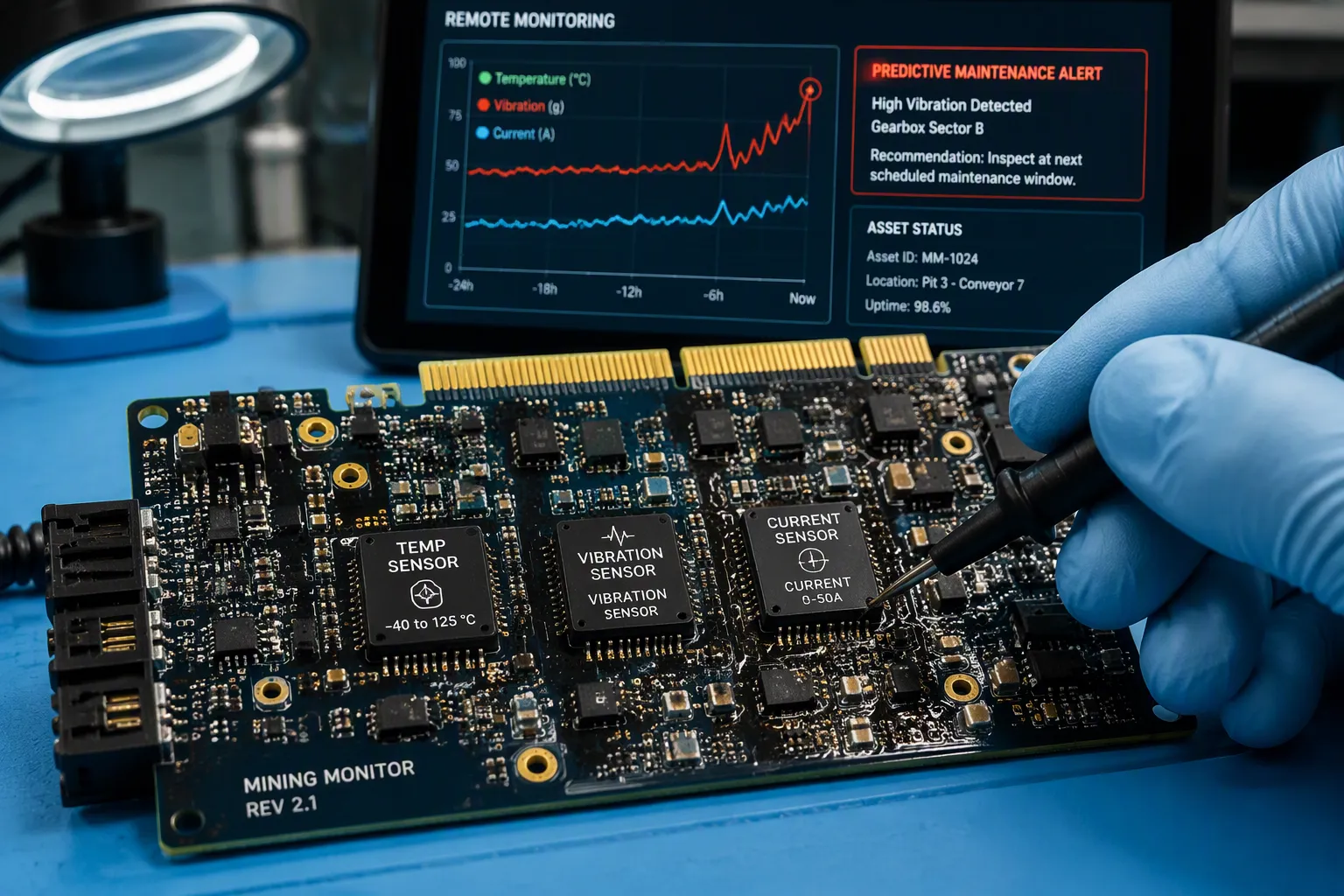
On-board sensors track temperature, vibration, and current draw in real time. These sensors feed data to predictive maintenance algorithms running on the edge. The algorithms detect early signs of component degradation. A slight rise in thermal resistance might signal a failing solder joint. An unusual vibration pattern could indicate a loose connector.
Industry experts emphasize this shift. One reliability engineer notes, “Predictive maintenance transforms reactive repairs into planned interventions. Mining companies that adopt this approach report significantly fewer unplanned stoppages.” The rugged AI server PCBA processes this sensor data locally. Edge AI models flag anomalies without sending raw data to a distant server. This edge computing approach reduces latency and preserves network bandwidth.
Conformal Coating and Reliability Testing
The table below compares coating performance across key parameters:
Coating Type | Moisture Resistance | Temperature Range | Application Method |
|---|---|---|---|
Acrylic | Good | Moderate | Spray or dip |
Silicone | Excellent | Wide | Spray or brush |
Parylene | Superior | Wide | Vapor deposition |
Rugged edge AI PCBA is a necessity for mining and remote monitoring. It directly addresses vibration, thermal extremes, dust, and power anomalies. First, careful material selection and engineering protect against physical stress. Second, robust design enables AI processing in harsh environments. Third, proactive maintenance and testing maximize uptime. These systems deliver durability and performance. This technology enables autonomous mining and continuous remote monitoring. Engineers should consider these factors when designing their next system. The edge computing hardware must handle extreme conditions. The edge server and edge AI models require rugged PCBA. The edge systems for harsh computing demand rigorous testing. The edge computing systems for mining reduce downtime. The edge AI computing systems prevent downtime. The harsh environments demand reliable PCBA.
FAQ
What makes a rugged PCBA suitable for mining operations?
How does edge AI reduce downtime in harsh conditions?
Edge AI processes data on rugged server PCBA hardware at the edge. This eliminates network latency for conveyor monitoring and diagnostics. Predictive algorithms detect failures early, preventing downtime in mining operations. The systems run reliably in harsh conditions.
What testing validates rugged edge server PCBA reliability?
How does conformal coating protect PCBAs in remote environments?
See Also
Durable AI Circuit Board for Australia Mining and Energy Operations
Tough Edge AI Board for Canada Outdoor Surveillance and Monitoring
Rugged AI Server Board for Canada Remote Computing Networks
Durable AI Board for Norway Marine and Energy Tracking Equipment
Cold-Resistant AI Server Board for Canada Remote Mining Locations