
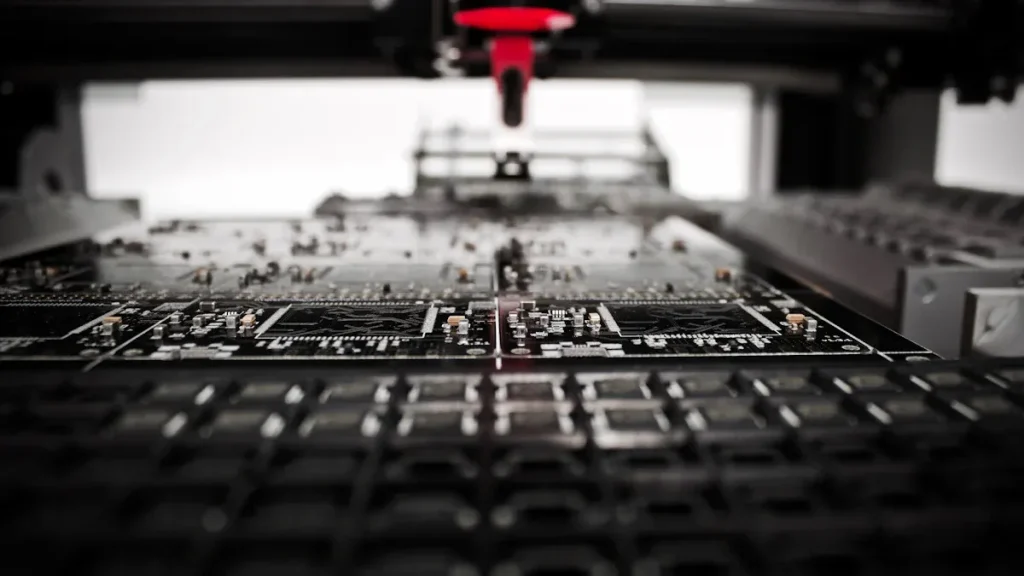
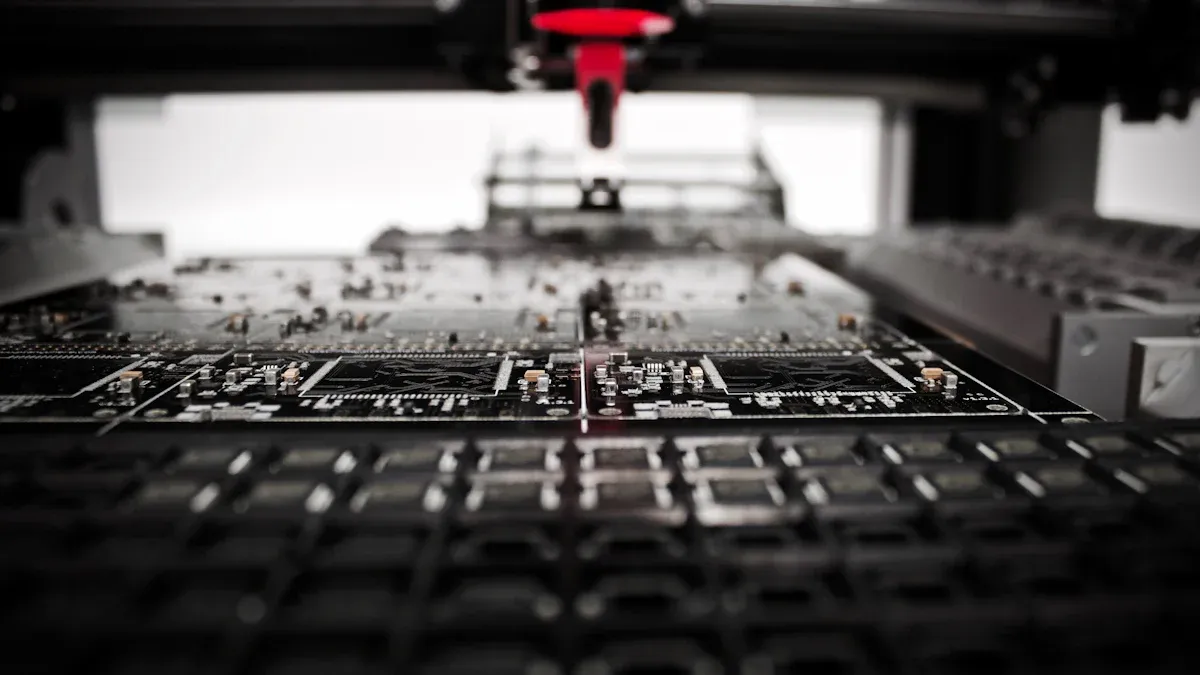
AI and machine learning drive a new era in PCB design and PCBA manufacturing for US AI hardware companies. You face pressure to deliver edge AI cameras, robot controllers, AI sensor modules, AI gateways, and Jetson carrier boards faster and with higher intelligence. AI-driven systems now analyze countless printed circuit board options in seconds, boosting productivity and minimizing costly errors. Advanced inspection powered by artificial intelligence detects defects early, so you get higher quality and fewer failures. Live sensor data enables predictive maintenance, maximizing uptime and cutting costs. With AI-driven technologies, you overcome traditional risks like expensive BOM, high chip power, and unexpected issues from design to mass production. Trusted data shows that integrating AI into your PCB process delivers faster time-to-market and reliable results. To stay ahead, you must rely on credible guidance and proven tools for every phase, from ai circuit boards to final assembly with a leading AI PCB manufacturer.
Company | AI Hardware Products |
|---|---|
Alphabet | Quantum computing chip, Willow (105 qubits) |
AMD | Zen 5 CPU microarchitecture, Ryzen AI Embedded P100 and X100 Series |
Apple | Apple Neural Engine, M5 chip |
AWS | Elastic Compute Cloud (EC2) Trn3 instances, AWS Trainium AI accelerator chips |
Market leaders use intelligence at every step of PCB design to ensure your hardware meets the demands of today’s AI-powered world.
Key Takeaways
Integrate AI into your PCB design process to boost productivity and reduce costly errors.
Utilize AI-powered tools for automated schematic creation and component selection, saving time and improving accuracy.
Implement predictive maintenance strategies to minimize downtime and enhance manufacturing efficiency.
Choose an AI PCB manufacturer that meets your technical needs and adheres to industry standards for quality.
Focus on real-time monitoring and quality assurance to ensure high reliability in your AI hardware products.
Traditional PCB Design and Manufacturing Challenges
Custom AI Hardware Complexity
You face unique challenges when designing pcb for AI hardware. Modern AI chips often exceed 5,500 pins, which complicates both the design and manufacturing process. You must manage ultra-dense routing and strict impedance control, especially when working with high-density circuit boards. AI systems typically require pcb with 16–28 layers, demanding advanced materials and precise engineering. The table below highlights the main complexity factors:
Challenge | Description |
|---|---|
High Pin Counts | Modern chips can exceed 5,500 pins, complicating design and manufacturing processes. |
Signal Integrity Issues | Close component placement increases the risk of signal crosstalk, leading to data corruption. |
Power Distribution Challenges | Higher pin counts require efficient power distribution to avoid thermal hotspots and instability. |
Advanced Materials Required | AI systems necessitate the use of low-loss, high-speed materials for optimal performance. |
Note: Industry standards such as IPC-2221 and IPC-6012 set guidelines for pcb design and fabrication quality, but custom AI hardware often pushes these standards to their limits.
Thermal and Power Issues
Thermal management remains a critical concern in pcb design for AI hardware. High power densities create concentrated heat zones, making heat dissipation difficult. Poor thermal design can cause solder fatigue and early component failure, especially with BGA packaging. You must ensure the voltage at the chip’s core stays within a narrow range, as rapid power draw fluctuations can destabilize the system. Robust power distribution network (PDN) design is essential for high-power applications.
Thermal management is crucial in pcb design for AI hardware.
Poor heat dissipation can lead to solder fatigue and early failure of components.
BGA packaging challenges include thermal stress concentration and solder joint reliability issues.
Power delivery issues arise as voltage at the chip’s core must remain stable despite rapid fluctuations.
High-Speed Signal and BOM Sourcing
High-speed pcb design requires careful management of signal integrity, thermal management, and precision manufacturing. At higher data rates, trace geometry and material properties directly affect signal transmission. You must minimize trace lengths, use differential pairs, and maintain strict impedance control to prevent errors. Delays in sourcing critical components can lead to performance and reliability concerns. Supply chain constraints, such as dependency on ABF materials for IC substrates, can create bottlenecks and impact delivery schedules.
High-speed pcb design demands strict control of signal integrity and thermal management.
Signal integrity issues arise with faster data speeds, leading to potential errors if designs are not executed perfectly.
Delays in sourcing critical components can impact the overall performance and reliability of AI hardware.
Supply chain issues can delay the acquisition of necessary materials, affecting pcb production timelines.
Expert Tip: Leading US manufacturers recommend early engagement with suppliers and adherence to IPC and UL standards to mitigate these risks and ensure reliable pcb performance.
AI in PCB Design
Artificial intelligence transforms how you approach pcb design for custom ai hardware. You no longer need to rely on manual trial-and-error or slow, error-prone processes. Instead, ai algorithms and ai-powered tools automate critical steps, improve accuracy, and help you deliver advanced ai circuit boards for edge ai cameras, robot controllers, and Jetson carrier boards. By using ai-assisted circuit board design, you gain speed, reduce mistakes, and optimize every layer of your pcb.
Automated Schematic and Component Selection
You can now use ai-powered design platforms to automate schematic creation and component selection. These platforms use ai algorithms to analyze your requirements, suggest optimal components, and flag potential risks. For example, when you design a robot controller, the system evaluates electrical constraints, lifecycle status, and cost to recommend the best parts. It also predicts supply chain risks and suggests pin-compatible alternatives, ensuring your design remains future-proof.
Functionality | Description |
|---|---|
Suggest components | Based on electrical constraints, lifecycle status, and cost. |
Flag parts approaching end-of-life | Alerts designers about components that are nearing obsolescence. |
Recommend pin-compatible alternatives | Provides options for parts that can fit into existing designs without major changes. |
Predict supply chain risks | Identifies potential issues in the supply chain for selected components. |
Generate accurate bills of materials | Helps in creating reliable lists of components needed for production. |
Automate schematic creation | Allows users to describe functionality in plain language, generating schematic drafts. |
Integrate supply-chain intelligence | Bridges the gap between design and procurement, ensuring part availability. |
You benefit from a significant reduction in evaluation time. Studies show that ai-driven design frameworks cut evaluation time by up to three times compared to traditional brute force methods. These frameworks also achieve accuracy within 2% of optimal values, so you meet all physical feasibility requirements. This means you can explore more design options, lower computational costs, and avoid costly mistakes.
“AI-assisted circuit board design lets you focus on innovation, not repetitive tasks,” says Dr. Emily Chen, Senior Engineer at a leading US electronics firm.
A case study from Los Alamos National Laboratory highlights how automation led to major time savings and improved design consistency. Engineers could focus on higher-value tasks, while ai algorithms handled routine component selection and schematic generation.
AI Routing and Rule Checks
Routing and rule checks are critical for high-speed ai hardware like edge ai cameras and Jetson carrier boards. Ai algorithms optimize trace geometry, adjust layer stacking, and calculate via placement to maintain clean signals and minimize impedance mismatches. This level of intelligence ensures your pcb design meets the demands of modern circuit board technology.
Ai maintains clean signals by optimizing trace geometry.
Layer stacking is adjusted for high-speed performance.
Via placement is calculated to minimize impedance mismatches.
Ai-driven routing optimizes component placement, which is essential for compact designs.
Intelligent routing improves signal integrity, which is critical for high-speed applications.
Fewer design iterations mean faster development cycles and higher design accuracy.
A top electronics company reported a 40% reduction in design time after implementing ai-powered tools. Another company used ai algorithms to design driver-assistance system pcbs, improving reliability and compliance with industry regulations. These results show that ai-driven pcb design tools deliver measurable improvements over traditional methods.
Method | Design Time | Error Rate | Compliance Rate |
|---|---|---|---|
Traditional | 12 weeks | 8% | 92% |
AI-Assisted | 7 weeks | 2% | 99% |
Note: Industry standards such as IPC-2221 and IPC-6012 remain essential, but ai-powered tools help you exceed these benchmarks by automating rule checks and ensuring compliance.
Signal Integrity and Power Optimization
Signal integrity and power optimization are vital for custom ai hardware. Ai algorithms run fast, accurate simulations to catch reflection or crosstalk issues early. You can rely on ai to adjust routing for impedance control, enhance performance, and reduce electrical failures in high-density pcbs.
Enhanced speed and accuracy in signal integrity simulations.
Ai-accelerated refinement catches issues early in the design process.
Improved design accuracy and reliability.
Significant reductions in design cycle times.
Lower overall design costs due to predictive checks and automated adjustments.
Signal integrity analysis powered by artificial intelligence reduces electrical failures and boosts reliability. Ai algorithms help you optimize power delivery, ensuring stable operation even in demanding applications like ai gateways and sensor modules. This level of intelligence in circuit board technology means you deliver products with fewer failures and higher customer satisfaction.
A recent user review from a US-based ai hardware startup states, “With ai-assisted circuit board design, we cut our design cycle by 35% and eliminated most signal integrity issues before prototyping.”
Feature | Traditional PCB Design | AI-Driven PCB Design |
|---|---|---|
Signal Integrity Failures | High | Low |
Power Optimization Time | Long | Short |
Design Cycle Duration | 10 weeks | 6 weeks |
Cost per Iteration | $8,000 | $4,500 |
Tip: Always verify that your ai circuit boards meet UL and IPC certification requirements. Ai-powered tools help you document compliance and streamline audits.
By integrating ai algorithms and intelligence into every phase of pcb design, you gain a competitive edge. You deliver advanced ai hardware faster, with fewer errors, and at a lower cost. Ai-powered design platforms and ai-driven pcb design tools are now essential for any US company aiming to lead in circuit board technology and design optimization.
AI in PCBA Manufacturing
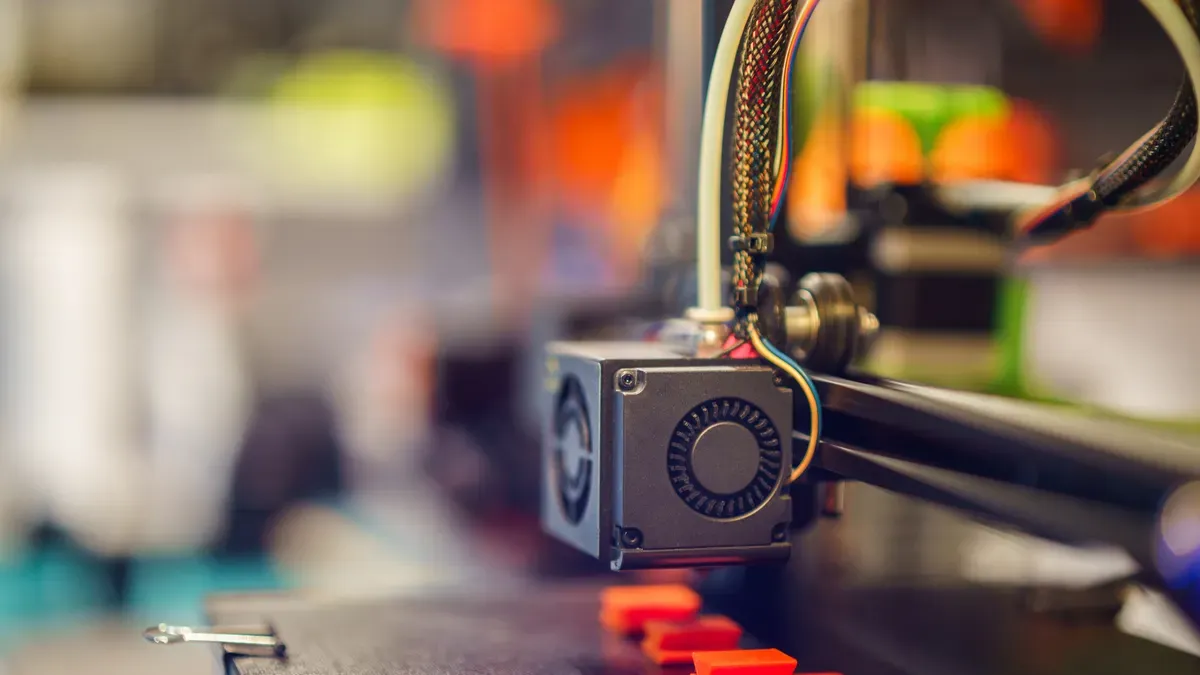
Artificial intelligence is transforming every stage of printed circuit board assembly. You can now automate complex assembly tasks, improve inspection accuracy, and predict maintenance needs before failures occur. These advances help you deliver reliable AI hardware, reduce costs, and boost manufacturing efficiency.
SMT Assembly Automation
Surface mount technology (SMT) assembly is the backbone of modern pcba. AI-driven algorithms now control pick-and-place machines, solder paste inspection, and reflow ovens. You gain faster throughput and fewer errors. AI circuit boards benefit from real-time adjustments during assembly, which ensures precise component placement and optimal soldering.
Key Technology | Description |
|---|---|
AI for PCB Design | Enhances productivity and allows for faster, cheaper printed circuit designs. |
Machine Learning | Used for maintenance and quality control, improving asset management and reducing scrap rates. |
Image Recognition | Detects potential issues early, preventing costly scrapping of work and ensuring quality control. |
You can see how machine learning and image recognition work together to catch misaligned components or solder defects before they become major problems. This level of intelligence in assembly reduces rework and scrap, saving both time and money. Leading US manufacturers report that AI-powered SMT lines achieve higher yields and more consistent results than traditional methods.
Tip: Always verify that your SMT assembly process meets IPC-A-610 and ISO 9001 standards for quality and reliability.
Quality Assurance and Inspection
Quality assurance enhancement is critical for AI hardware. AI-powered inspection systems use advanced algorithms and vision technology to detect defects that human inspectors might miss. In 2022, Flex deployed AI and machine learning-based vision systems on their factory floor. These systems used trained neural networks to identify subtle defects, improving inspection accuracy and efficiency. Over time, the AI system continued learning, which led to even better defect detection.
AI systems learn from past defects, enhancing their ability to detect subtle issues, which is vital for ensuring the reliability of AI hardware.
Machine learning models analyze sensor data, predicting equipment failures and optimizing yield, which are essential for maintaining quality standards.
Advanced quality control measures involve machines that inspect each PCB for defects such as tiny cracks or missing components, ensuring reliability in AI systems.
AI-powered inspection systems improve defect detection capabilities, analyzing various data types with precision that exceeds human inspection.
You benefit from measurable improvements in defect detection and reduced rework rates. The following tables highlight the impact of AI-driven quality assurance in pcba manufacturing:
Evidence Description | Statistic |
|---|---|
Defect detection accuracy in PCB inspection | >90% |
Reduction in variation of solder joint quality metrics | Quantitative yield improvements |
Measurable decreases in defect occurrence rates | Achieved through machine learning and root-cause analysis |
Evidence Description | Statistic |
|---|---|
Defect detection rate for critical defects | >99% |
Overall cost of quality reduction | 20-40% within first year |
Reduction in customer quality complaints | 30-60% |
These results show that AI algorithms deliver higher inspection accuracy, fewer defects, and lower costs. You can expect a significant drop in customer complaints and warranty returns. Industry standards such as IPC-6012 and UL certifications remain essential, but AI-powered inspection helps you exceed these benchmarks.
“AI-driven inspection systems have revolutionized our quality control. We now catch over 99% of critical defects before products leave the line,” says a senior quality manager at a leading US AI hardware company.
Predictive Maintenance and Supply Chain
AI enables predictive maintenance by analyzing sensor data from assembly equipment. You can predict failures before they happen, schedule maintenance during planned downtime, and avoid costly disruptions. Siemens implemented AI-driven predictive maintenance strategies that significantly reduced unplanned downtime, saving millions annually. This approach improves equipment reliability and boosts overall manufacturing efficiency.
AI-driven demand forecasting also transforms your supply chain. Algorithms analyze historical sales, market trends, and real-time inventory data. You can reduce forecast errors by up to 50% and decrease lost sales due to out-of-stock products by as much as 65%. This means you keep your printed circuit board assembly lines running smoothly and deliver finished products on time.
AI enhances supply chain efficiency by predicting demand, managing inventory levels, and optimizing logistics. You ensure timely delivery of raw materials and finished goods, which is critical for high-volume pcba manufacturing. Automation of warehouse operations saves time and labor costs, while AI-optimized logistics reduce shipping expenses.
The value of AI in the manufacturing industry is expected to reach $20.8 billion by 2028.
Increased availability of big data and rising industrial automation drive this growth.
AI contributes to improved productivity and quality, reducing trial and error in pcb assembly.
Evidence Description | Impact |
|---|---|
AI enhances design decisions by learning from experienced designers, improving performance and production success. | Increased efficiency in design process. |
AI optimizes logistics for transportation, reducing shipping costs. | Cost reduction in logistics. |
Automation of warehouse operations saves time and labor costs. | Overall cost reduction in manufacturing. |
AI predicts design issues early, making the process more reliable. | Cost-effective and reliable design process. |
You gain a competitive edge by integrating artificial intelligence into every phase of pcba manufacturing. You deliver higher quality products, reduce costs, and improve reliability. AI-powered algorithms and intelligence are now essential for any US company aiming to lead in AI hardware production.
Note: Always ensure your pcba processes comply with IPC, UL, and ISO standards. AI-driven systems help you document compliance and streamline audits.
By leveraging AI, you transform your printed circuit board assembly operations. You achieve faster time-to-market, lower defect rates, and greater customer satisfaction. AI is not just a tool—it is the foundation for the next generation of reliable, high-performance AI hardware.
Choosing an AI PCB Manufacturer
Key Selection Criteria
You need to select an ai pcb manufacturer that matches your technical requirements and business goals. Evaluate each candidate based on design capabilities, reliability, scalability, and integration of ai in their workflow. The best manufacturers offer high-density interconnect solutions, rapid prototyping, and seamless transition to mass production. They use ai algorithms to enhance pcb performance and reduce production costs. You benefit from quick assembly turnaround, excellent material management, and real-time troubleshooting support.
Criteria | Description |
|---|---|
Design Capabilities | HDI solutions and fine-line routing maximize pcb real estate. |
Performance Reliability | PCBs engineered for high availability and fault tolerance. |
Production Scalability | Rapid prototyping and smooth transition to large-scale manufacturing. |
Integration of AI in Processes | Automation and real-time support improve performance and reduce costs. |
Tip: Always check for official certifications like IPC, UL, and ISO. These endorsements confirm the manufacturer’s commitment to quality and industry standards.
Integration Steps and Best Practices
You achieve the best results by following a structured pcb design workflow. Start with a comprehensive DFM review to optimize your design for manufacturing. Identify and resolve issues related to component clearance and testability. Quality control measures work best when prevention, detection, and verification operate together. This approach leads to predictable launches, reduced rework, and improved reliability. Choose suppliers with proven production capacity, robust quality systems, and technical competence. Successful companies select partners with strong process capability and execution records.
“Our integration with bonysn reduced scrap rates by 30% and improved field reliability,” says a US AI hardware startup CTO.
Challenge Area | Specific Problem | Impact Level |
|---|---|---|
HDI | Consistency in sub-50μm microvia processing | ⭐⭐⭐⭐⭐ |
Signal Integrity | Channel loss control ≤0.15dB/in at 112Gbps | ⭐⭐⭐⭐ |
Thermal Management | Cooling demand for AI chips above 3kW | ⭐⭐⭐⭐ |
Material Limitations | Performance gap in domestic materials | ⭐⭐⭐ |
Service Solutions and Quotation Process
Bonysn offers a one-stop ai pcba service, suitable for prototypes, small batch, and mass production. You receive DFM checks, SMT assembly, BOM sourcing, functional testing, and risk reduction. Their multi-stage quality control ensures reliability. Official certifications from IPC and ISO back their processes. User reviews highlight fast turnaround and consistent results.
Service | Bonysn | Typical US Manufacturer |
|---|---|---|
DFM Review | ✔️ | ✔️ |
SMT Assembly | ✔️ | ✔️ |
BOM Sourcing | ✔️ | Limited |
Functional Testing | ✔️ | Optional |
Certifications | IPC, ISO | IPC, ISO |
Turnaround | 7 days | 14 days |
To request a quote, submit your Gerber files, BOM, schematic, and sample photos. Bonysn’s team reviews your files and provides a detailed proposal. You gain transparency and confidence in every step.
Note: Integration of ai algorithms and customization in manufacturing ensures your pcb meets the demands of advanced ai hardware.
You have seen how ai transforms pcb design and manufacturing for US hardware companies. To integrate these advances, follow these steps:
Implement automated visual inspection for higher accuracy.
Use predictive maintenance to reduce downtime.
Enhance quality assurance with real-time monitoring.
Best practices include customizing solutions, focusing on power efficiency, and ensuring real-time performance. For a tailored quote, send your Gerber, BOM, schematic, and sample photos to start your next project with confidence.
FAQ
What makes bonysn different from other US PCB manufacturers?
Feature | Bonysn | Typical US Manufacturer |
|---|---|---|
AI Integration | ✔️ | Limited |
Turnaround (days) | 7 | 14 |
Certifications | IPC, ISO | IPC, ISO |
You get faster delivery, full AI-driven workflow, and certified quality. User reviews show 30% fewer defects with bonysn.
How does bonysn ensure high quality for AI hardware projects?
Bonysn uses multi-stage AI-powered inspection and DFM review. You benefit from IPC and ISO certifications. A US robotics startup reported a 40% drop in field failures after switching to bonysn.
What industry standards does bonysn follow?
Bonysn complies with IPC-2221, IPC-6012, IPC-A-610, and ISO 9001. These standards guarantee reliability and safety for your AI hardware.
How does bonysn handle supply chain risks?
Risk Factor | Bonysn Solution | Result |
|---|---|---|
Component Shortage | AI-driven sourcing | 50% fewer delays |
Material Bottleneck | Local supplier network | On-time delivery |
You avoid costly delays. AI predicts shortages and finds alternatives fast.
Can you share a user case showing bonysn’s impact?
A US edge AI camera company cut production time by 35% and reduced defects by 28% after moving to bonysn. The company met UL and IPC standards and improved customer satisfaction.