
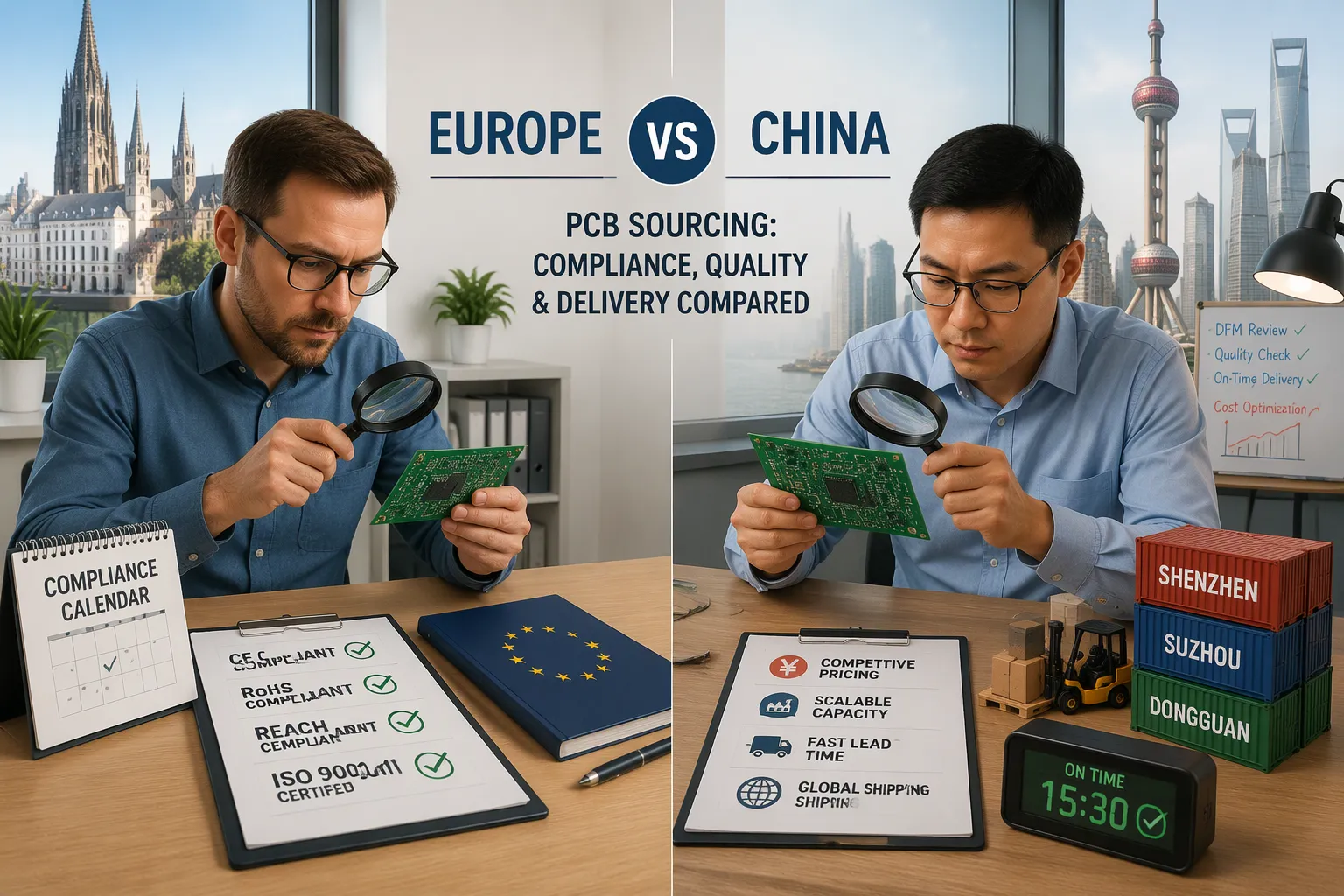
PCB makers in Europe offer faster lead time. Chinese suppliers cut cost, but lead-time and compliance logistics grow complex. A PCB manufacturer Europe or China? This triangle shapes every PCB decision in PCB manufacturing and assembly. Certifications, quality, and delivery paperwork remain key checks for PCB exports to the EU. Each factor gets a look below.
Key Takeaways
Put your budget, timeline, and compliance needs in order of importance to choose the best PCB region.
China has lower unit prices for big orders, but check shipping and taxes to find the total cost.
Europe offers quicker delivery and easier rules to follow. This makes it a good choice for urgent projects or ones with many regulations.
Cost: PCB Manufacturer Europe vs China
Unit Price and Tooling
Big order sizes drive the main price gap. A pcb manufacturer from china spreads tooling and setup costs over huge order volumes. So unit prices for bare boards and assembly end up far below European quotes. A pcb manufacturer europe buyers use usually charges more per unit, but that price stays steady across quarters. Buyers can plan budgets with fewer surprises.
Tooling and NRE charges work the same way. Chinese suppliers often cover or lower these fees on bigger runs. European shops quote them openly and keep them fixed. EU buyers can follow regional price changes with the NCAB Material Cost Composite. This index helps a procurement team compare quotes and negotiate from facts rather than guesswork.
Shipping, Tariffs, and Landed Cost
The listed price tells only part of the story. Total landed cost adds freight, import duties, tariffs, and currency swings. Air freight for urgent pcb manufacturing from Asia eats the savings fast. Exchange-rate movement between the euro and the yuan can change margins on every shipment. Buyers should work out landed cost before they compare regions.
Eastern Europe offers a middle path. Engineering rates there run 40% to 70% lower than US onshore costs, and the work stays under EU jurisdiction. That mix suits buyers who want lower pcb manufacturing expense without long ocean transit. A pcb manufacturer in europe’s eastern tier can also make customs paperwork simpler. Cost, quality, and delivery all play a part in the final calculation.
Lead-Time: Production and Shipping Timelines
Standard and Expedited Production
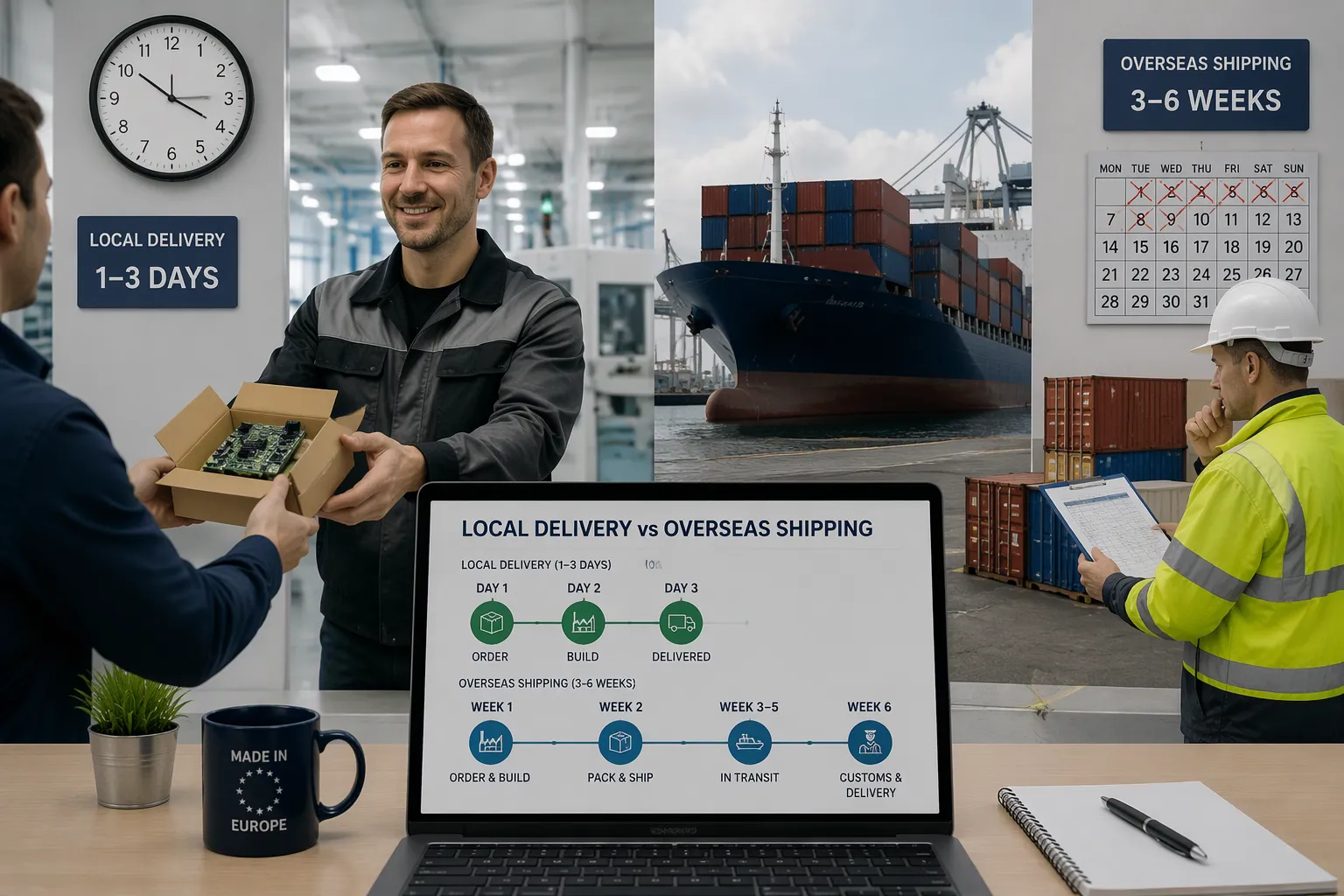
A pcb manufacturer europe buyers depend on usually gives shorter standard lead-time for bare boards and turnkey pcb assembly. European shops often ship standard orders in days to a few weeks. Chinese factories usually take longer for pcb manufacturing and assembly, since ocean transit adds weeks to the schedule. Both regions offer expedited options. European quick-turn builds cut the schedule even more, while Chinese suppliers can rush production but cannot rush a ship.
Shipping and customs clearance are part of every end-to-end timeline for China orders. International air freight and customs delays can add days you cannot predict. Buyers should plan for fast eu transit only when they pay for air freight, and they should set aside time for paperwork review.
Supply chain factors matter too. Single-source risk grows when demand spikes. Capacity allocation shifts, such as major Chinese electronics manufacturers reporting a 103.9% year-over-year profit surge, can tighten availability and push prices up. Dual sourcing protects delivery schedules against these swings.
Quick-Turn PCB and PCBA Prototypes
Quick-turn pcb and pcba prototypes need speed more than anything. European or domestic suppliers usually win this race. A european pcb prototype can reach the bench in days, and quick-turn pcb fabrication stays close to the design team. Quick-turn pcb manufacturers in Europe also make feedback loops simpler during early debug rounds.
China still works for less urgent prototype rounds. Quick-turn pcb and pcba prototypes from Chinese shops cost less, and quick-turn pcb and pcba prototypes fit later validation stages with looser schedules. Buyers should weigh certifications and quality checks before they commit. Quick-turn pcb manufacturers in China can deliver solid work, but the timeline stretches with freight. Quick-turn bare-board prototypes follow the same logic. Quick-turn bare-board prototypes from Europe move fastest, and turnkey quick-turn pcb orders from Asia fit planned iterations. Turnkey pcb assembly in either region depends on component availability. A turnkey quick-turn pcb quote from Europe often includes local parts sourcing. A turnkey quick-turn pcb order from China may need extra lead-time for parts consolidation. Turnkey pcb assembly buyers should confirm stock before they lock a date. Quick-turn pcb manufacturers vary in capacity, so ask for a written schedule. Quick-turn pcb manufacturers with local support answer faster. Quick-turn pcb manufacturers in Europe also handle small batches well. Match the region to the urgency, and the lead-time stays predictable.
Compliance: RoHS, REACH, and CE Marking
Three rules control PCB sales into the EU. RoHS limits harmful substances in electrical goods. REACH controls chemical substances and requires information to flow along the supply chain. CE marking shows a product meets the EU directives that apply to it. Each rule affects pcb buyers directly, from laminate choice to final assembly.
European Suppliers and EU Compliance
A pcb manufacturer europe buyers pick works inside EU legal jurisdiction. European shops follow RoHS and REACH updates as their own country’s law. They hold the certifications that customs officers and auditors expect. Paperwork comes in the buyer’s language and format. This setup takes away translation risk and legal confusion from the pcb manufacturing cycle.
European suppliers also carry quality certifications that back up compliance claims. Auditors can check these certifications on site without long travel. The paperwork trail stays short and clear.
Chinese Suppliers and EU Compliance
Chinese factories can meet EU rules, and many hold the certifications that European buyers ask for. The work shifts to the buyer. A careful procurement team asks for RoHS and REACH compliance declarations with raw materials before placing an order. These declarations should name the laminate, solder mask, and surface finish. Buyers should check the certifications against the supplier’s audit records.
Compliance paperwork is a key check for exports to Europe, especially for flex PCBs. Flex materials use different adhesives and coverlays, so the substance profile is not the same as rigid boards. Buyers should ask for material declarations for every flex pcb order. Strong quality certifications lower risk, and weak ones warn of trouble ahead.
Both regions can supply compliant pcb manufacturing. The difference is who carries the paperwork load. European suppliers handle it natively. Chinese suppliers need active buyer oversight. Either path works when the buyer plans for compliance from the start.
Decision Framework: Matching Option to Priorities
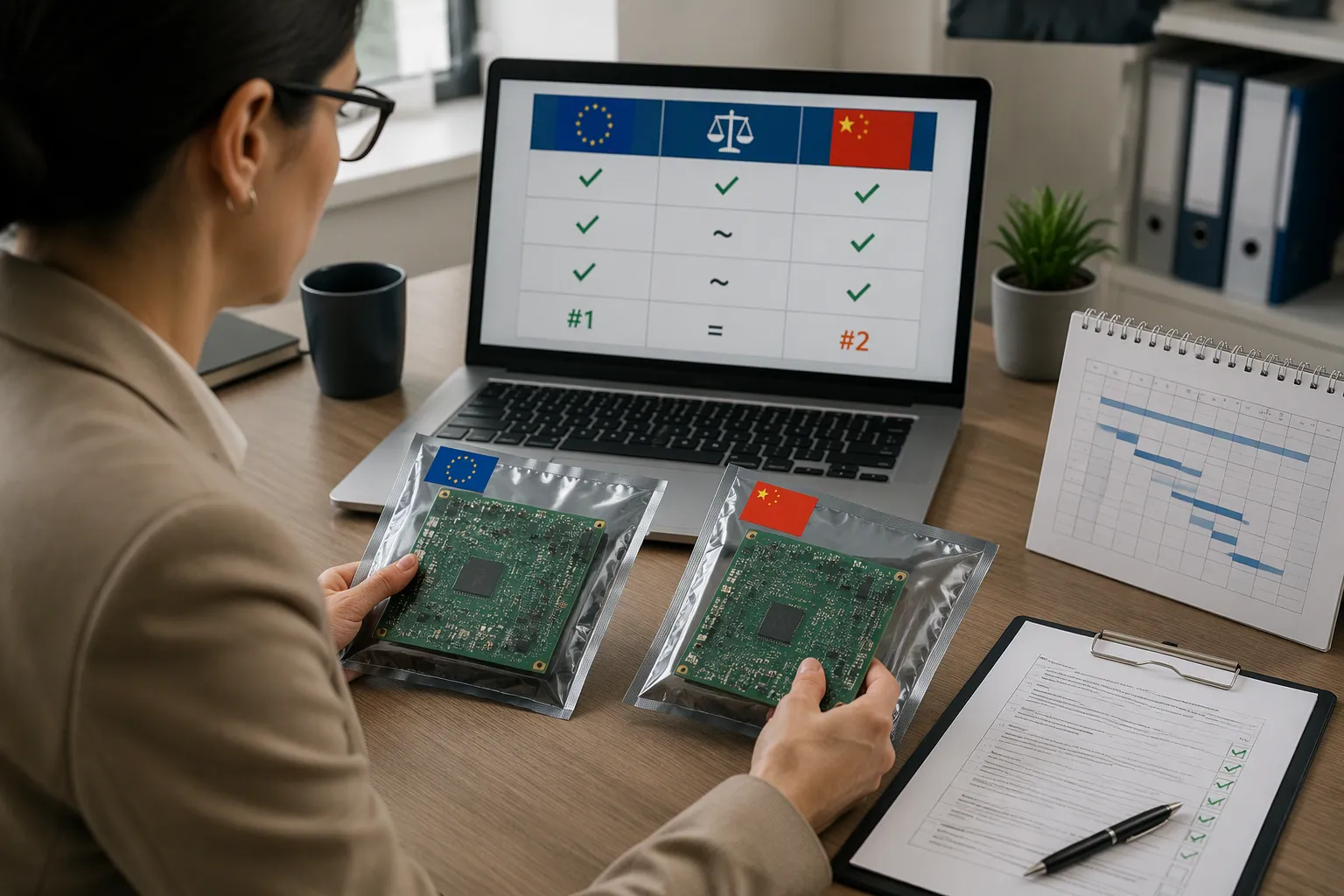
A helpful framework begins with three rankings. Buyers list budget sensitivity, schedule pressure, and compliance workload by importance. The top priority points to a region. This method keeps feelings out of a sourcing decision that involves real money.
When European Manufacturing Fits
Urgent schedules favor a pcb manufacturer europe buyers can visit in person. Short transit and same-jurisdiction shipping protect tight launch dates. Easier compliance adds another win. European shops file RoHS and REACH paperwork under local law, so the buyer’s team spends less time chasing declarations. EU jurisdiction also settles disputes under familiar rules. Programs tied to the Made in Europe initiative fit here too, since the origin story supports the brand. Buyers who rank schedule and paperwork above price find a strong match. The pcb manufacturer handles certifications natively, and the buyer reviews them without translation risk. That ease carries real value across pcb manufacturing and assembly.
When Chinese Manufacturing Fits
Cost-sensitive volumes point to China. Large runs spread tooling over many units, and the per-board price drops well below European quotes. Less urgent timelines suit the longer ocean transit. Buyers need staff who can manage compliance documentation and freight logistics. A procurement team that requests material declarations up front controls the risk. This profile fits buyers with the resources to oversee pcb manufacturing services abroad. They trade hands-on work for lower unit prices. The pcb manufacturer still must meet EU rules, and the buyer verifies every claim.
Many EU buyers run both regions across one portfolio. High-volume, stable programs go to China. Urgent or compliance-heavy work stays in Europe. Dual sourcing cuts single-source risk during demand spikes. It also gives the buyer leverage in price talks. A split portfolio balances quality, delivery, cost-effectiveness, and risk. Buyers should revisit the ranking each quarter, because priorities shift with market conditions. The right mix protects the schedule and the budget at once. Strong certifications from either region support that balance. Buyers who track certifications, lead-time, and landed cost together make better calls. That discipline turns a hard choice into a repeatable process. Cost-effectiveness follows from fit, not from a single headline price. A clear ranking, checked often, keeps every pcb order on track.
China has the cost advantage. Europe wins on lead time and simpler compliance. Suppliers in Eastern Europe fall in the middle. Buyers should first rank budget, schedule, and compliance workload. That ranking points to a region for each pcb order. Both pcb options fit different buyer profiles. Many EU buyers use both across one pcb portfolio. A balanced pcb mix protects cost, schedule, and quality on every pcb program.
FAQ
Which region offers the lower total landed cost?
China usually has the lower unit price. Shipping fees, import taxes, and money value changes make that gap smaller. Before placing a pcb order, buyers should compare the full landed cost, not just the advertised price.
What compliance documents should buyers request from Chinese suppliers?
Buyers should ask for RoHS and REACH declarations that connect to the raw materials. These papers should list the laminate, solder mask, and surface finish. Flex pcb orders need their own material declarations.
Can EU buyers source from both regions at once?
Yes. Many EU buyers divide their pcb work between the two regions. Large, steady programs go to China. Urgent pcb work or jobs with heavy compliance needs stay in Europe. Using two sources lowers the risk of relying on one supplier and gives buyers more power to negotiate price.
See Also
AI PCBA OEM Manufacturing Services for Electronics Factories in Poland
Tailored Edge AI PCBA Solutions for American Hardware Startup Companies
Manufacturing AI Server PCBs for American GPU Hardware Businesses
Complete Turnkey AI PCBA for Irish MedTech and IoT Firms
Bespoke AI PCBA Production for Electronics Manufacturers in Mexico