
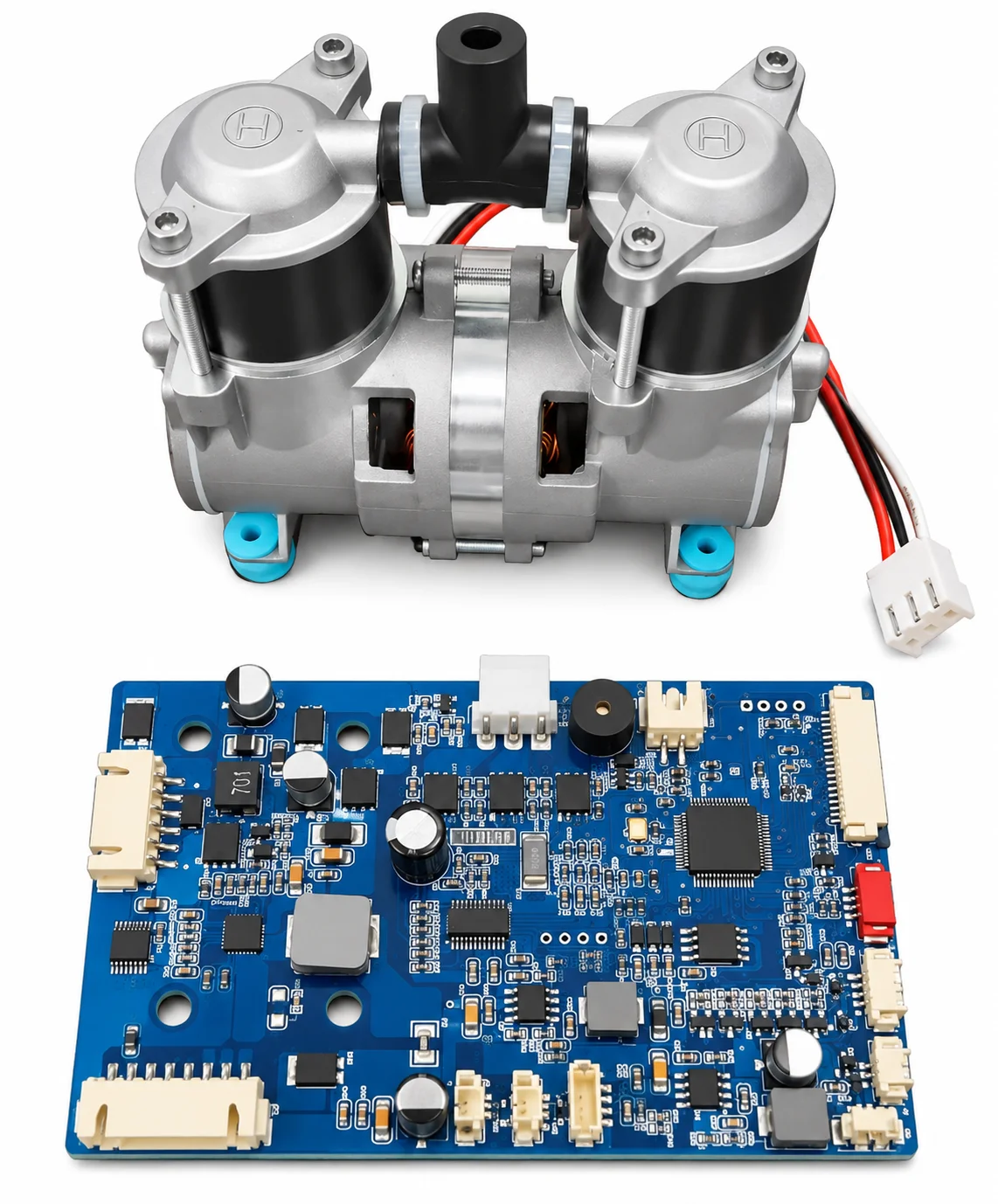
A customized oxygen concentrator PCBA solution is a circuit board designed, assembled, and tested around one specific machine’s performance targets, enclosure, and market requirements. For OEMs and device developers, that focus pays off in three ways. The board aligns with your flow, purity, and reliability goals instead of forcing compromises. Design choices support your regulatory clearance path. Total cost stays under control, because you pay for the functions your product actually needs. You need a board that fits your product, not a generic platform you must work around. This post explains what can be customized on a oxygen concentrator board, how the process runs, and how to choose a processing partner.
Key Takeaways
Custom boards match your machine’s needs for flow, purity, and reliability.
Design choices help your product pass safety and regulatory checks.
Follow a clear process: requirements, design, prototyping, and testing.
Choose a manufacturing partner with medical device experience and cleanrooms.
Define your specs first, then request a design review and plan a prototype.
Key Customization Factors
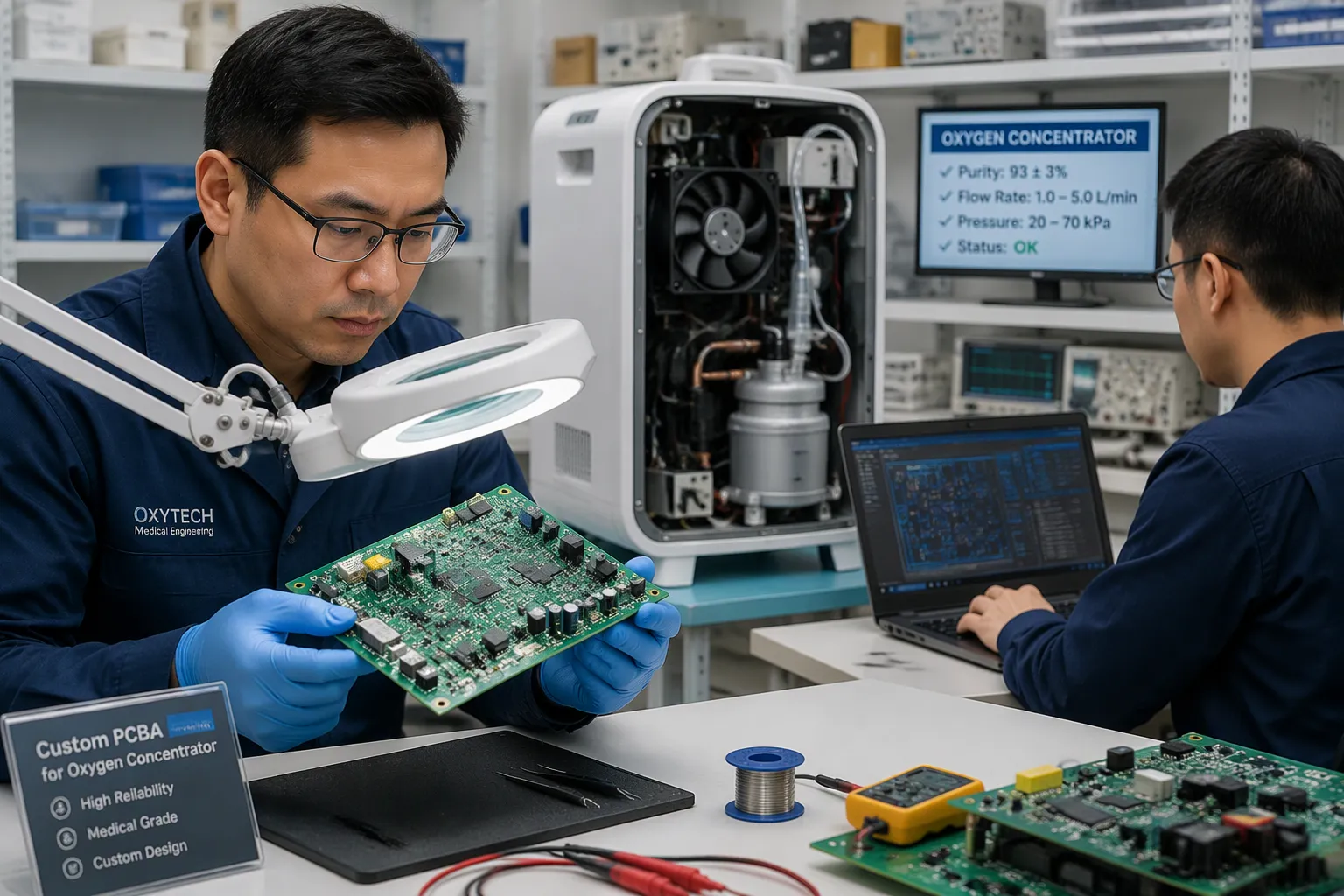
An oxygen concentrator splits into a handful of functional blocks: compressor drive, valve and sieve-bed control, oxygen sensing, user interface and alarms, and power management. Board architectures differ from vendor to vendor. Some integrate everything onto one dense board for compact home units. Others keep power and sensing on separate boards, which suits larger or modular machines. Each layout has trade-offs in serviceability, footprint, and cost. Customization starts with deciding which blocks your design owns and which it buys.
Technical Performance and Reliability
Component selection is the first lever. The compressor drive stage needs switching devices rated for your motor’s current and the heat it generates. Sensing circuits need parts with low drift, so purity readings stay honest over years of use. A developer picks these parts against the machine’s real duty cycle, not a catalog average.
Thermal management comes next. Boards inside a concentrator sit near the compressor and run warm for hours. Copper pours, thermal vias, and component placement spread that heat. Long-term reliability follows from the same choices. Connectors that resist vibration, coatings that block moisture, and derated parts all extend service life. Each decision trades cost against how long the board survives in the field.
Application Fit and Compliance
Design choices also carry the product toward market entry. Medical-device expectations cover electrical safety, electromagnetic compatibility, and risk management. A board laid out with clean separation between high-voltage and signal traces supports safety testing. Filtering and shielding choices help the unit pass emissions checks. Traceability matters too. Serialized boards and documented test records give regulators and customers a clear quality trail. Build these choices in early, and clearance becomes a review rather than a redesign.
Customizing a Oxygen Concentrator PCBA Solution
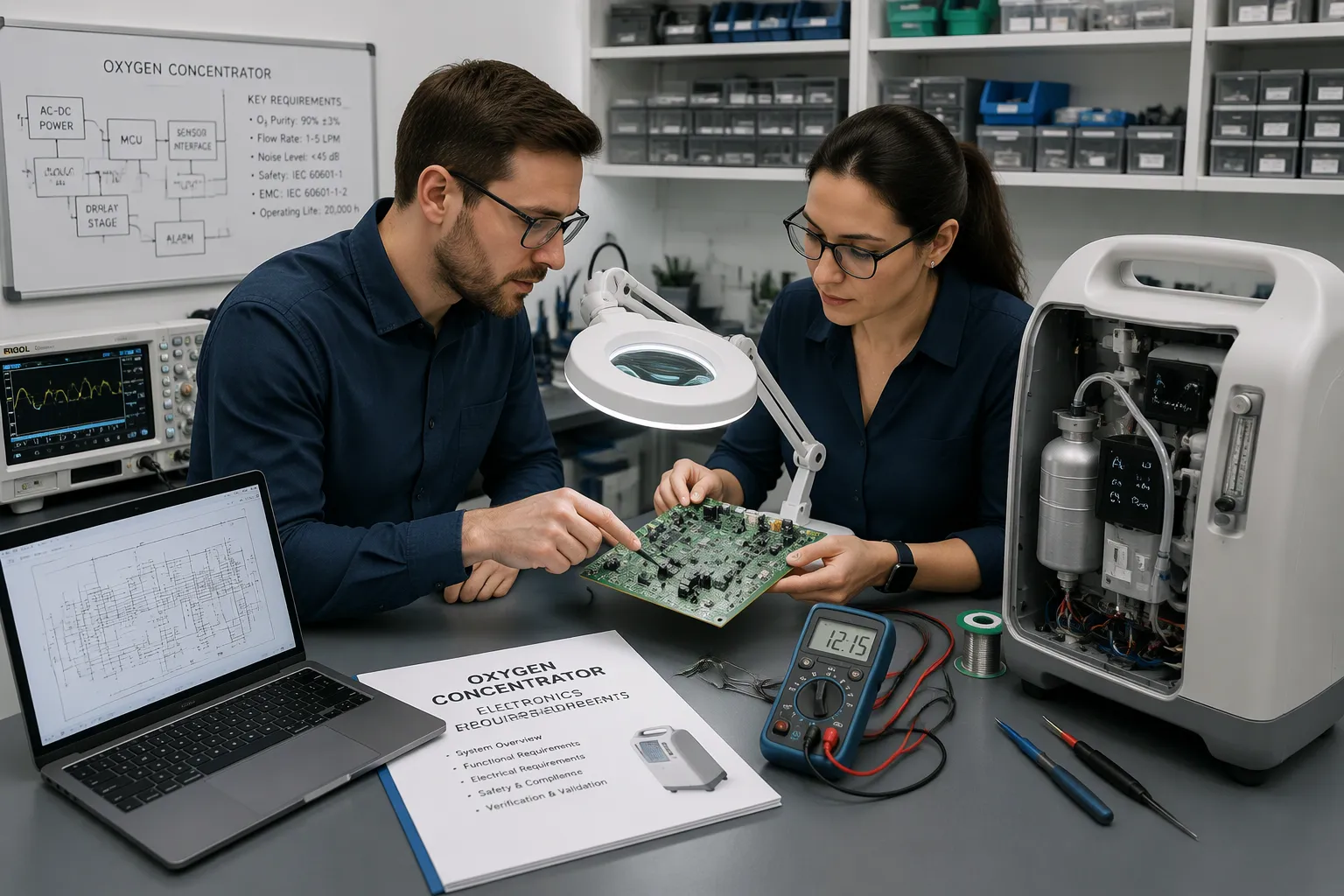
Every functional block on the board — compressor drive, valve and sieve-bed control, oxygen sensing, user interface, and power management — brings its own set of requirements. Customization turns those requirements into a working board for the oxygen concentrator through a fixed sequence. Here is how that sequence runs.
Requirements Analysis and Design
The process starts with a requirements document. The OEM lists the machine’s flow rates, purity targets, duty cycle, enclosure dimensions, and connector locations. They also spell out the compliance path the product must follow and the market it will enter. Clear requirements define how the team will measure success later. A good partner reviews this list line by line and flags gaps before any design work begins.
Design then translates those requirements into a schematic and a layout. Engineers assign each functional block to a board area, choose parts against the stated duty cycle, and plan the thermal and signal paths. Layout choices at this stage decide how the board handles heat and noise. Advanced commercial machines show how tightly board design ties to device operation. The Yuwell 7F-3NW, for example, packs sensing and control functions into a compact internal design. That reference helps a team judge how much integration its own oxygen concentrator needs.
Prototyping, Testing, and Validation
Prototype builds come next. The partner assembles a small batch and runs functional tests: flow output, purity readings, alarm behavior, and user-interface response. Each test maps back to a line in the requirements document, so the team skips nothing.
Reliability testing follows. Thermal cycling, vibration, and extended burn-in expose weak joints and drifting sensors. The team logs every failure, fixes the design, and rebuilds. Release to production waits until the board passes functional and reliability checks together. A written validation report closes the loop and supports the regulatory file. That discipline keeps surprises out of the field and gives the OEM a board it can trust.
PCBA Processing for Oxygen Concentrator Boards
Choosing a Processing Partner
The functional blocks of an oxygen concentrator — compressor drive, valve control, sensing, user interface, and power — each place different demands on assembly. A partner who understands those demands makes the build smoother. Look for a supplier with specialized PCB assembly services for medical devices. That experience shows up in how they handle small-pitch sensing components and how they document every build.
Cleanroom environments and ESD protection matter just as much. Dust and static can damage sensitive parts before the board ever powers on. A partner who controls both protects your yield and your reputation. Ask about their floor setup during the first conversation. The answer tells you a lot about how they treat medical work.
Quality Control and Scalability
Process options should fit the job, not the other way around. Vacuum reflow ovens, such as the Havi-Thermal HWV Series, remove voids from solder joints — a real benefit for boards with dense power components. Epoxy boards resist high temperatures well, which suits designs that run hot near the compressor. Neither choice is mandatory. Each one fits a specific need, and a good partner helps you decide.
Scalability comes from repeatable processes. The partner should hold inspection criteria steady as volume climbs, from prototype batches to full production runs. Serialized boards and documented test records keep quality visible at every stage. That consistency lets an oxygen concentrator maker scale output without re-qualifying the line. Ask how the partner handles a volume increase before you sign. The answer separates a true manufacturing partner from a one-time assembler.
An oxygen concentrator splits into compressor drive, valve control, sensing, interface, and power. Integrated boards save space; split boards ease service. A customized solution settles that trade-off for your machine, matches technical and regulatory needs, keeps cost predictable, and builds reliability into manufacturing.
Customization follows a structured path: requirements, design, prototyping, testing. Your processing partner matters as much as the design itself.
So define your performance and compliance requirements first. Then request a design review or quote, and plan a prototype build before scaling. Ready to talk? Share your specs, and the customization conversation can start today.
FAQ
What are the main functional blocks of an oxygen concentrator board?
A typical board handles compressor drive, valve and sieve-bed control, oxygen sensing, the user interface and alarms, and power management. Vendors split these blocks differently. Some put everything on one dense board for compact home units. Others separate power and sensing, which helps with serviceability on larger machines.
Which board layout works better — integrated or split?
Neither wins outright. Integrated boards save space and suit small enclosures. Split boards make repairs and upgrades easier, and they fit modular machines. The right choice depends on your footprint, your service model, and your cost target. A customization review settles that trade-off for your specific product.
Can a custom board support my regulatory submission?
Yes, when the team builds compliance in from the start. Clean separation between high-voltage and signal traces supports safety testing. Filtering and shielding help with emissions checks. Serialized boards and documented test records give reviewers a clear quality trail. Plan these choices early, and clearance becomes a review rather than a redesign.
How long does a custom PCBA project take?
Timelines vary with complexity, so no single number fits every project. The work moves through requirements, design, prototyping, and validation in sequence. Reliability testing adds time, and fixes may trigger a rebuild. Ask your partner for a schedule tied to your requirements document, not a generic estimate.
Do I need vacuum reflow or epoxy boards for my design?
Not necessarily. Vacuum reflow ovens, such as the Havi-Thermal HWV Series, remove voids from solder joints, which helps boards with dense power components. Epoxy boards resist high temperatures, which suits designs running hot near the compressor. Each option fits a specific need. A good partner helps you decide based on your design.
See Also
Company: Shenzhen Zhenshan Intelligent Technology Co., Ltd.
Contact Person: Gavin
Email: xgx881@163.com
Phone / WhatsApp: +86 189 3894 8471
AI PCBA OEM Production Services for Electronics Factories in Poland
Complete AI PCBA Solutions for Singapore IoT and MedTech Initiatives
AI Control Board Assembly for Austrian Automation Equipment Makers
AI IoT PCBA Production Services for Hardware Firms in Malaysia
Tailored AI PCBA Production for Electronics Businesses in Mexico