


High precision PCBA plays a critical role in ensuring the reliability and accuracy of advanced medical devices, including sensors, diagnostic instruments, and laboratory equipment. These devices demand exceptional performance to meet the rigorous standards of the healthcare industry. By integrating AI into the manufacturing process, you can achieve unparalleled precision and quality, reducing errors and enhancing efficiency. For Swiss medical and measurement devices, customized PCB assembly ensures that every component meets the specific needs of the application, reflecting the high standards of Swiss engineering.
Key Takeaways
High-precision PCBA ensures reliability and accuracy in medical devices like sensors, diagnostic tools, and laboratory equipment.
AI integration in PCBA manufacturing enhances precision, reduces errors, and improves production efficiency for medical applications.
Compliance with IPC-A-610 Class 3 standards guarantees the safety, reliability, and performance of medical-grade PCBAs.
Advanced testing methods, such as AOI, X-ray inspection, and functional testing, ensure the quality and reliability of PCBAs.
Customized PCBA solutions meet the specific needs of Swiss medical devices, reflecting the high standards of Swiss engineering.
Applications of High Precision PCBA in Medical Devices

Medical Sensors and Diagnostic Instruments
High-precision PCBA significantly enhances the performance of medical sensors and diagnostic instruments. These devices require exceptional accuracy to ensure reliable results. For instance, SPEA flying probe testers offer maximum accessibility and flexibility. They eliminate the need for specific fixtures or wiring, allowing for rapid testing of various components. The unmatched probe movement speed and automatic test program generation minimize setup times and costs.
Moreover, the Light Chromaticity & Intensity Test function measures LED color and intensity automatically. This function utilizes modular instruments like light sensors, spectrometers, or cameras. It guarantees accuracy without interference from neighboring LEDs or ambient lighting. The parameters measured include:
Wavelength range
Color rendering index (CRI)
HSL color space
RGB color scale
X-Y Chromaticity Diagram CIE 1931
Correlated color temperature
Dominant wavelength
Light intensity in Lux and Candela values
These capabilities ensure that diagnostic instruments maintain high standards of precision and reliability.
Precision Control Boards for Healthcare
Precision control boards are vital in healthcare applications. They must meet specific features to ensure optimal performance. The following table outlines critical features of these boards:
Feature | Description |
|---|---|
Brightness | Ensures excellent visibility under various lighting conditions for accurate assessments. |
Resolution | Provides high-definition images for detailed examinations and diagnostics. |
Contrast Ratio | Enhances image quality with improved sharpness and depth for distinguishing fine details. |
Glove Compatibility | Maintains functionality while adhering to safety standards in medical environments. |
Responsive Touch | Ensures ease of use in fast-paced medical settings. |
Contaminant Resistance | Calibrated to function in the presence of contaminants like blood and saline. |
Reliable Operation | Ensures touch interfaces remain responsive and accurate in challenging conditions. |
Reducing Light Reflection | Improves optical clarity for better visibility in medical devices. |
Creating Mechanical Robustness | Ensures durability in demanding medical environments. |
Optimal EMC Immunity | Engineered to withstand electromagnetic interference for reliable performance. |
Long-Term Availability | Provides sustained support and supply for continuity in medical applications. |
Integrated Computing | Enhances control and customization in healthcare displays. |
Real-Time Interaction | Allows seamless interaction with other medical devices and hospital systems. |
Connectivity | Facilitates connections with hospital information systems and electronic medical records. |
Efficient Patient Care | Simplifies processes for physicians to access and update patient information promptly. |
These features ensure that precision control boards meet the rigorous demands of healthcare environments.
Laboratory Equipment and Measurement Devices
In laboratory settings, high-precision PCBA plays a crucial role in measurement devices. These devices require accurate data collection and analysis. Customized PCB assembly allows for tailored solutions that meet specific laboratory needs. By integrating advanced technologies, you can enhance the performance of measurement devices, ensuring they deliver reliable results.
The importance of signal integrity and anti-interference capabilities cannot be overstated. High-precision PCBA minimizes noise and ensures that signals remain clear and accurate. This capability is essential for devices that rely on precise measurements, such as spectrophotometers and chromatographs.
Manufacturing Processes in PCBA
Plasma Coating and Fine-Pitch Assembly
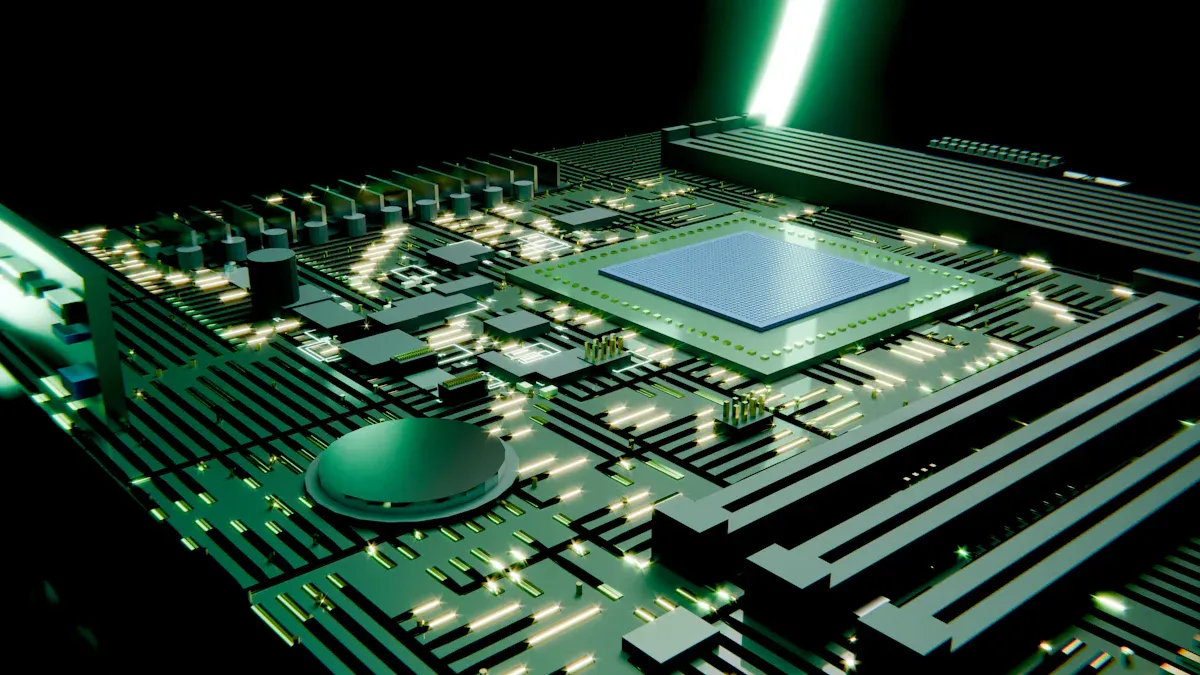
Plasma coating technology plays a pivotal role in enhancing the reliability of high-precision PCBA. By creating a uniform surface treatment, plasma coating improves adhesion and ensures optimal performance for components in medical devices. This process is particularly beneficial for Swiss medical applications, where precision and durability are paramount.
Fine-pitch assembly technology addresses the growing demand for miniaturized medical devices. As devices become smaller, the complexity of their design increases. You can achieve miniaturization and superior performance by utilizing fine-pitch assembly techniques, such as System in Package (SiP) technology. SiP integrates multiple bare dies, passive components, and sensors into a single module, enabling compact designs without compromising reliability. Key benefits of fine-pitch assembly include:
Enhanced functionality in smaller form factors.
Improved mechanical stress resistance.
Reduced thermal issues and robust encapsulation.
These advancements ensure that Swiss medical PCBAs meet the stringent requirements of modern healthcare applications.
Multi-Layer and HDI PCB Solutions
Multi-layer and HDI PCB solutions are essential for complex medical and measurement devices. They offer several benefits that optimize performance and reliability:
Benefit | Description |
|---|---|
Reduced Size | Multilayer PCBs allow for more complex circuitry in a smaller space by routing traces between layers. |
Increased Routing Density | More layers provide greater routing density, optimizing trace layouts for complex routing. |
Separation of Signals | Different signals can be isolated on different layers to prevent interference. |
Shielding | Traces can be shielded from EMI and crosstalk by being sandwiched between power or ground planes. |
Lower Impedance Power Distribution | Uninterrupted power and ground planes provide low-impedance networks for power distribution. |
These PCBs also enhance signal integrity and reduce electromagnetic interference. Ultra-HDI designs shorten electrical paths, minimizing signal loss and parasitic effects. This ensures faster signal transmission and improved reliability, critical for medical applications like diagnostic instruments and laboratory equipment.
IPC-A-610 Class 3 Standards for Medical PCBA
Adhering to IPC-A-610 Class 3 standards is non-negotiable for medical-grade PCBA. These standards ensure the highest level of reliability and performance, which is crucial for devices used in life-critical applications. Key requirements include:
Requirement Type | Description |
|---|---|
Material Qualifications | Specific materials must meet stringent criteria for safety and performance in medical applications. |
Processes must adhere to strict guidelines to ensure reliability and quality in production. | |
Inspection Criteria | Comprehensive inspection protocols are required to verify compliance with Class 3 standards. |
By meeting these standards, you ensure that your PCBA assembly aligns with industry expectations and regulatory requirements, such as FDA 21 CFR Part 820. This guarantees that medical devices deliver consistent performance and reliability, even in demanding environments.
Testing and Validation in High-Precision PCB Assembly
Automated Optical Inspection (AOI)
Automated Optical Inspection (AOI) is a critical step in ensuring the quality of high-precision PCBA. This method inspects solder joints and component placements with high accuracy. AOI systems utilize advanced imaging technology to detect defects that could compromise device performance. The benefits of AOI include:
Speed: Rapid inspection processes reduce production time.
Accuracy: High-resolution imaging identifies even the smallest defects.
Consistency: Automated systems provide uniform inspection results, minimizing human error.
X-Ray Testing for Internal Analysis
X-ray testing offers a non-destructive method for analyzing the internal structure of PCBAs. This technique is essential for identifying hidden defects, such as solder joint issues and internal voids. The advantages of X-ray testing include:
Detailed Imaging: X-ray provides a 3D view of high-density PCBAs, crucial for detecting faults.
High Resolution: It reveals issues that traditional inspection methods might miss.
Quantitative Evaluation: This capability ensures the reliability and integrity of PCBAs, vital in the medical device industry.
Functional Testing for Reliability
Functional testing verifies that the assembled PCB performs its intended functions. This testing method assesses the overall performance of the device, ensuring it meets industry standards. Key standards for functional testing include:
Standard | Description |
|---|---|
IEC 60601-1 | Safety requirements including essential performance characteristics. |
IEC 60601-1-2 | EMC requirements for medical devices. |
ISO 80601-2-84 | Standards for ventilators in emergency medical services. |
By implementing rigorous testing protocols like AOI, X-ray inspection, and functional testing, you can ensure that your high-precision PCBAs meet the highest quality standards. These methods not only enhance reliability but also build trust in your products, as evidenced by positive user reviews and case studies demonstrating successful outcomes in high-precision, small-batch, and high-reliability PCBA projects.
AI in PCBA Manufacturing
Enhancing Quality Control with AI
AI is transforming quality control in high precision PCBA manufacturing, especially for medical devices. By leveraging advanced technologies like automated X-ray inspection powered by AI, you can detect hidden defects in electronic assemblies with unparalleled accuracy. These systems utilize sophisticated algorithms to identify issues in solder joints, wire bonds, and component quality.
Feature | Description |
|---|---|
Technology | Automated X-ray inspection powered by AI |
Purpose | Detect hidden defects in electronic assemblies |
Benefits | Provides high-resolution insights into solder joints, wire bonds, and component quality |
Application | Critical for ensuring the reliability of medical devices |
Importance of Algorithms | Sophisticated algorithms are essential for effective defect detection and are cost-effective to update compared to hardware replacements. |
AI-driven quality control systems ensure consistent results, reducing human error and enhancing reliability. This approach is vital for medical devices, where precision and performance are non-negotiable.
Improving Production Efficiency and Precision
AI optimizes production efficiency and precision in PCBA assembly processes. By integrating AI-based software, intelligent cameras, and sensors, you can achieve faster manufacturing speeds and higher inspection quality. Traditional machine vision systems and manual quality control often struggle with the complexity of modern products. AI-powered visual inspection systems, equipped with deep neural networks (DNN), excel at classifying items with remarkable precision and minimal error rates.
For instance, companies like Google have developed deep-learning algorithms that detect even the smallest defects during assembly inspections. Foxconn has implemented similar solutions, achieving inspection times as fast as 0.3 seconds per component and reducing unidentified defects to just 10%. These advancements ensure that your PCBA manufacturing processes remain efficient and precise, meeting the demands of high-performance computing (HPC) applications in medical devices.
Future Applications of AI in Medical PCBA
AI holds immense potential for driving innovation in medical PCB assembly. Future applications may include AI-optimized data centers that analyze vast amounts of manufacturing data to predict and prevent defects before they occur. High-performance computing (HPC) systems powered by AI could enable real-time monitoring and adjustments during the assembly process, ensuring optimal outcomes.
Additionally, AI could facilitate the development of fully automated, customized PCB designs tailored to specific medical applications. This capability would allow you to create high precision PCBA solutions that meet the unique requirements of Swiss medical and measurement devices. As AI technology continues to evolve, its integration into PCBA manufacturing will undoubtedly redefine the standards of quality and efficiency in the healthcare industry.
High-precision PCBA plays a vital role in advancing medical technology. You benefit from enhanced sensors, diagnostic instruments, and laboratory equipment that deliver reliable results. AI and advanced manufacturing techniques significantly improve the reliability and precision of these devices. By combining engineering with manufacturing, you can design products that meet production needs, avoiding costly redesigns.
As the demand for regulatory-compliant PCBs grows, you can expect broader adoption of Edge AI in medical technology. This trend will enhance real-time diagnostics and image analysis, ensuring that your devices remain at the forefront of innovation.
FAQ
What makes Bonysn PCBA solutions ideal for Swiss medical devices?
Bonysn specializes in high-precision, small-batch, and high-reliability PCBA projects. User evaluations highlight consistent performance and compliance with IPC-A-610 Class 3 standards. Case studies demonstrate success in delivering tailored solutions for Swiss medical applications.
How does AI improve PCBA manufacturing quality?
AI enhances quality control by detecting defects with advanced algorithms. Automated X-ray inspection powered by AI ensures high-resolution analysis of solder joints and components. This technology minimizes errors and boosts reliability in medical-grade PCBAs.
Why is IPC-A-610 Class 3 compliance important for medical PCBA?
Compliance ensures your PCBA meets the highest reliability standards for life-critical applications. It guarantees material safety, manufacturing precision, and rigorous inspection protocols, aligning with industry regulations like FDA 21 CFR Part 820.
What testing methods ensure PCBA reliability?
Automated Optical Inspection (AOI), X-ray testing, and functional testing verify PCBA quality. AOI identifies defects quickly, X-ray testing analyzes internal structures, and functional testing ensures devices meet performance standards like IEC 60601-1.
Can Bonysn handle custom PCBA designs for unique medical applications?
Yes, Bonysn excels in creating tailored PCBA solutions. Case studies show successful outcomes in designing custom boards for diagnostic instruments and laboratory equipment, meeting specific requirements for Swiss medical devices.