
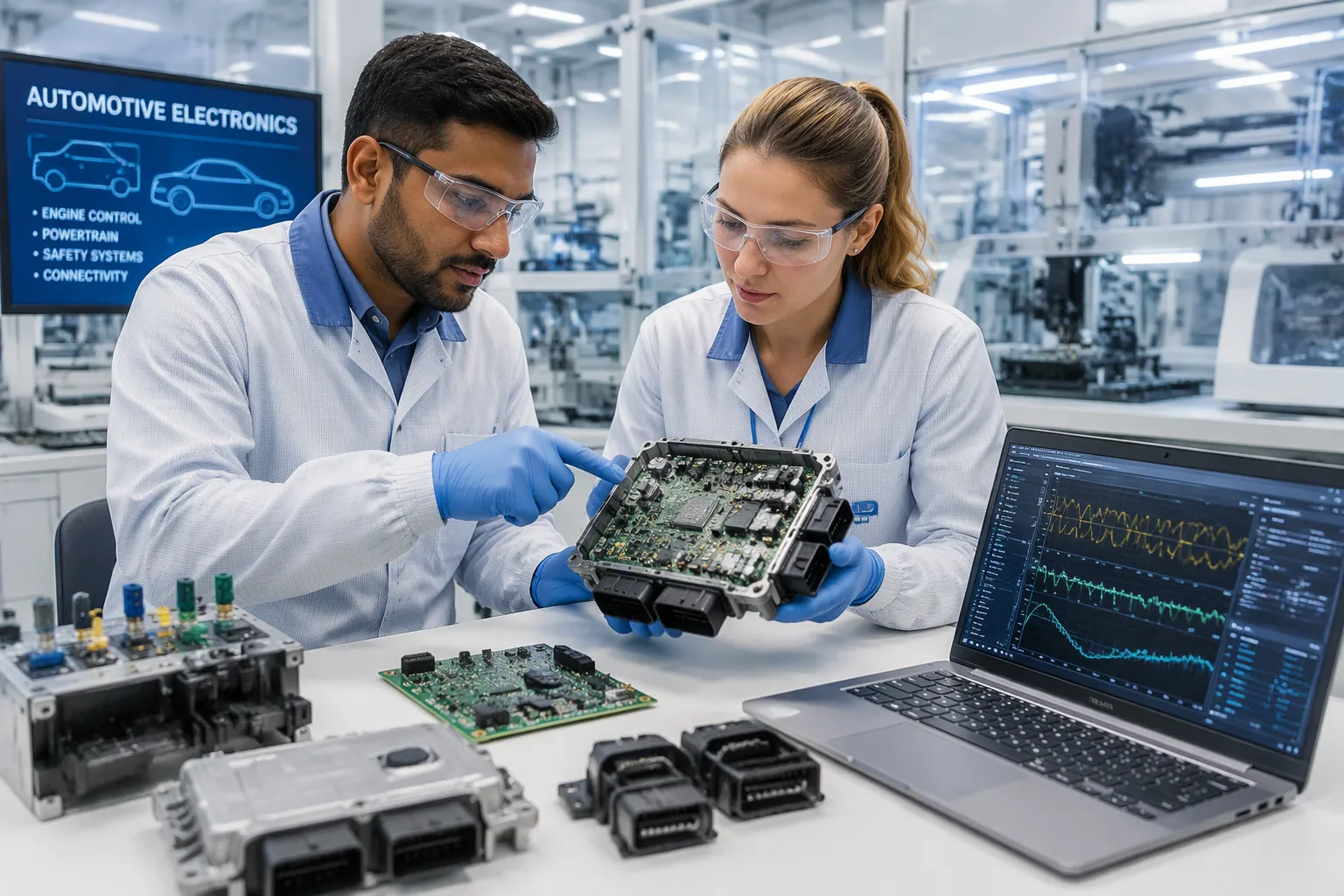
Germany stands as the largest national EMS market worldwide. This guide examines five automotive electronics ems specialists: Connect Group, Jabil, Rutronik, Zollner Elektronik, and BMK Group.
Each brings a distinct edge. Connect Group offers European scale and decades of partnership experience. Jabil delivers integrated optics and design collaboration. Rutronik combines family-owned stability with distributor reach. Zollner Elektronik provides broad technology coverage and precision. BMK Group stays flexible for customized, lower-volume work.
These top five european ems providers differ in meaningful ways. Buyers should weigh four factors: technical capability, application fit, regulatory compliance, and cost. The right automotive EMS partner matches priorities to proven strengths, not marketing claims. Readers can use this comparison to shortlist providers with confidence.
Key Takeaways
Germany leads the global EMS market with deep engineering talent and strict quality standards.
Match your product needs to each provider’s strengths: scale, optics, sourcing, or flexibility.
Always verify compliance records and request reference builds in your product class.
Weigh total cost against reliability, engineering support, and long-term stability.
Use a sourcing partner to compare providers and shorten your selection process.
Germany’s Automotive Elektronik EMS Market
Why Germany Leads in Automotive EMS
Germany remains the largest national EMS market and a central hub for automotive electronic manufacturing services. The country pairs deep engineering talent with a dense base of vehicle makers and tier-one suppliers. That combination keeps demand steady for automotive electronics ems partners who understand strict quality expectations.
Market scale tells a clear story. The Top 50 EMS/ODM providers generated $802.5 billion in 2025 and captured over 81% of the market. This concentration matters for buyers. Large ems players carry the capacity, tooling investment, and process depth that complex automotive programs demand.
The 2024 downturn tested the field. Lower-revenue companies felt the hardest hit, with about 67% impact. Scale and diversification protected the strongest firms. Buyers should note this pattern. A provider with a broad customer base and multiple plant locations absorbs shocks better than a single-site manufacturer.
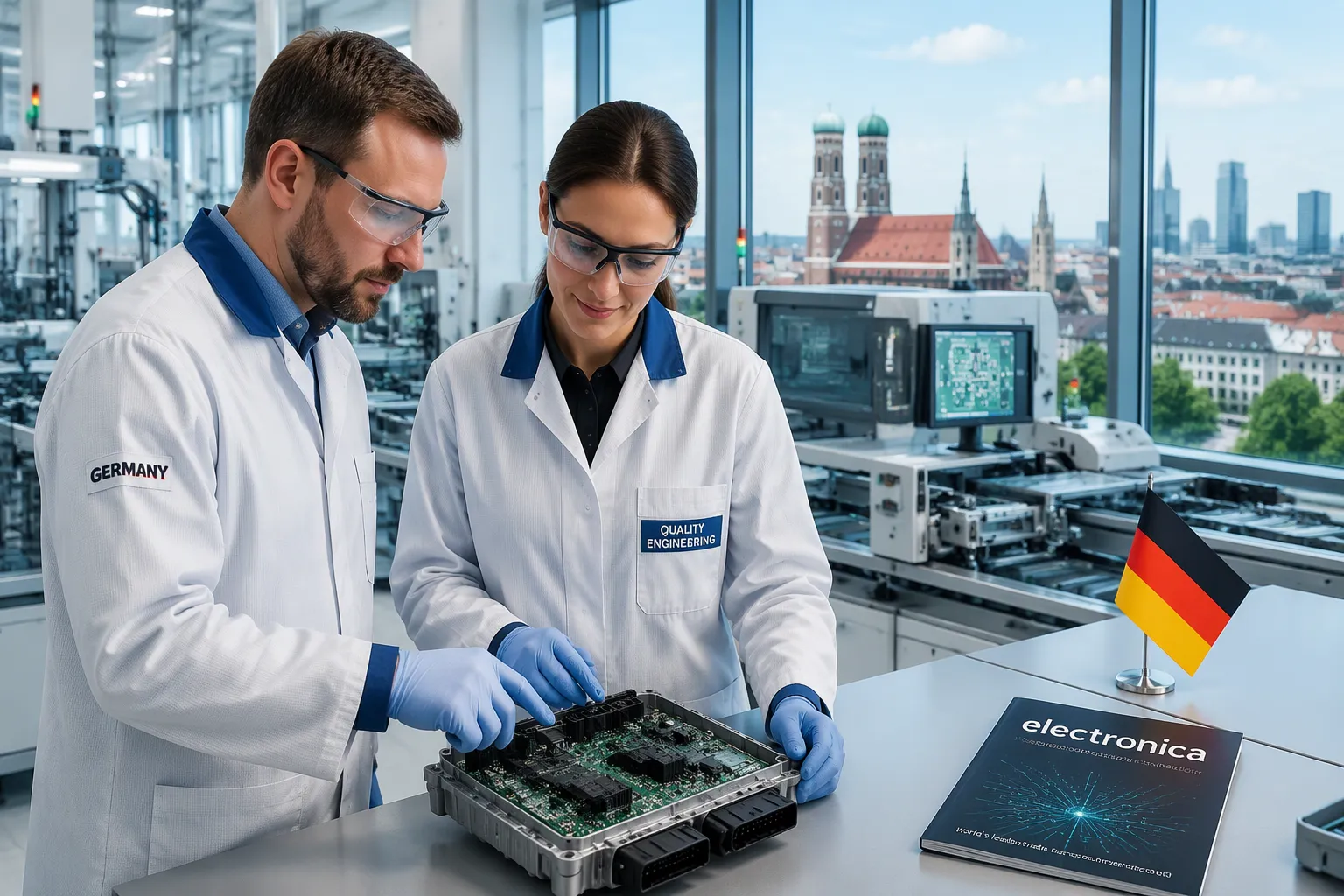
Munich anchors much of this activity. Siemens, BMW, and Infineon operate nearby, and the region supports a steady flow of engineering talent. Trade events such as electronica and SEMICON Europa draw the electronics manufacturing community to the city. These gatherings give buyers a practical way to meet ems providers face to face.
What Buyers Should Expect
The automotive sector sets a high bar. Buyers should expect documented process control, traceability across every production step, and clear quality reporting. Automotive industry programs rarely tolerate gaps in these areas.
Providers in this market also compete on application fit. Some specialize in power electronics, others in sensor modules or control units. The best ems and automotive partnerships start with a clear match between the buyer’s product and the provider’s proven experience.
Cost deserves honest scrutiny. German labor and energy costs run higher than in many regions. Buyers should weigh total cost against reliability, engineering support, and compliance record. A lower quote from an unproven supplier often costs more over a program’s life.
Finally, buyers should confirm capacity headroom. Ask how a provider handles volume swings and supply disruptions. The 2024 downturn showed that financial resilience separates long-term partners from short-term options.
Connect Group: European EMS Leader
Technical Performance and Application Fit
Connect Group ranks among the TOP20 european ems providers. The company has built its electronic manufacturing services business through partnership since 1987. That record gives it more than four decades of experience in the field.
The provider pairs two decades of local expertise with investment in Tunisia. This combination expands capacity without sacrificing regional support. Automotive customers gain a partner that understands European quality expectations and can scale production when programs grow.
Connect Group fits programs that need a proven European partner with room to expand. Buyers with sensor modules, control boards, or power assemblies should ask for reference builds in their own product class. A short audit of past projects reveals more than a brochure ever will.
Compliance and Cost Profile
Compliance sits at the center of any automotive engagement. Connect Group operates within the documentation and traceability routines that vehicle programs require. Buyers should request its quality certificates and process records during the shortlist stage.
Cost structures reflect the company’s European base and its Tunisian capacity. The Tunisia site gives buyers a way to balance European engineering with competitive production economics. This dual footprint suits programs that need both.
The company’s long history in electronics manufacturing supports stable pricing over multi-year contracts. Buyers should still compare total cost across the shortlist. A provider with four decades of experience often avoids the rework and delays that erode thin margins.
Jabil: Integrated Automotive Solutions
Technical Performance and Application Fit
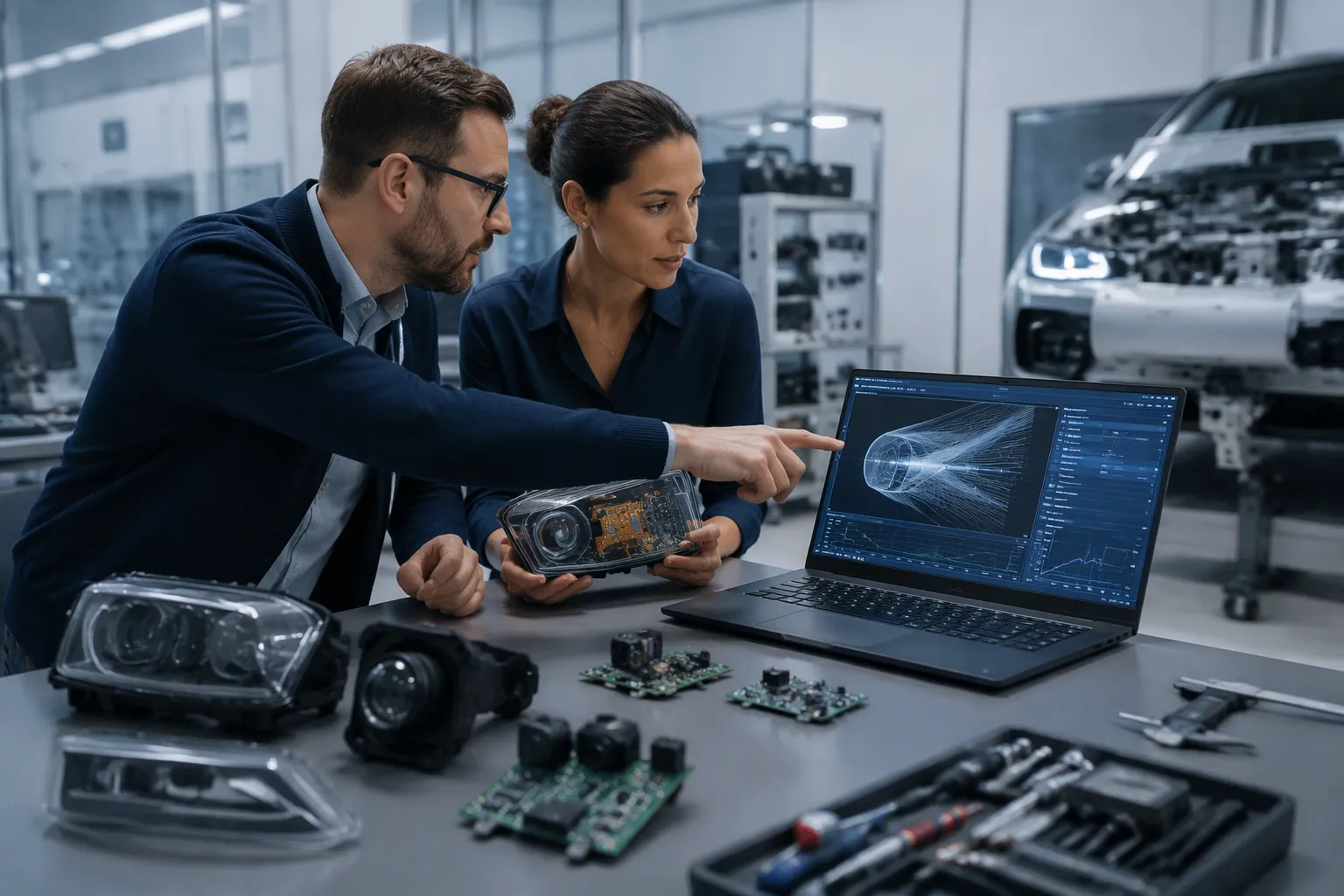
Jabil takes an integrated approach to automotive programs. The company positions itself as a single-source solution for automotive optics development. A customer can bring an optical concept to Jabil and receive design support, prototyping, and volume manufacturing under one roof. This model removes the handoffs that slow down multi-vendor projects.
The provider collaborates with automotive customers across design and manufacturing. Engineers work alongside the customer’s team from the early concept stage through production ramp. This joint working style suits lighting modules, sensor windows, and camera assemblies, where optical performance and electronics must align closely. Jabil’s electronics background supports that alignment. The company also handles system integration and box build work, so a program can move from bare boards to a tested assembly without leaving the partner’s control.
Buyers with optics-heavy products should ask for evidence of past design collaborations. A review of similar programs shows whether the provider truly contributes engineering value or simply builds to print.
Compliance and Cost Profile
Jabil operates at a scale that supports formal compliance routines. Automotive customers should request the company’s quality documentation, traceability records, and process controls during evaluation. The provider’s global footprint gives it experience with the audit expectations of major vehicle makers.
Cost profiles vary by site and program scope. Jabil’s size can deliver competitive pricing on high-volume work, and its integrated model reduces coordination costs across suppliers. Smaller programs may find the fit less natural. Buyers should compare total cost, including engineering support and logistics, rather than unit price alone.
An ems partner with this breadth fits programs that value one accountable owner. Buyers should confirm that the assigned site matches their product class and volume band before committing.
Rutronik: Family-Owned German EMS
Technical Performance and Application Fit
Rutronik began in 1973 as an independent family-owned company based in Ispringen, Germany. Five decades of sustainable growth followed. That continuity shapes how the firm works with customers today. Ownership stays close to the business, and long-term relationships carry real weight.
The company holds a dual position in the market. It operates as a distributor and as an ems provider. This distributor-plus-EMS model gives buyers a practical advantage. Component sourcing and board assembly sit under one relationship, which reduces the coordination burden on the customer’s team. Automotive programs benefit from this setup. A buyer can discuss part availability and production planning in the same conversation.
Rutronik fits programs that value stability and a single point of contact for sourcing and build. Buyers should ask how the firm separates its distribution and contract manufacturing roles on a given project. Clear answers show whether the model delivers real integration or just shared branding.
Compliance and Cost Profile
Compliance routines follow the expectations of the German automotive supply base. Buyers should request quality documentation and traceability records during evaluation. The firm’s five decades in electronics give it a long track record to examine. Past audits and reference programs reveal more than any sales presentation.
Cost structures reflect the German base and the family-owned model. Buyers should compare total cost across the shortlist, not unit price alone. A provider with stable ownership often plans capacity and pricing over longer horizons. That stability suits multi-year automotive programs.
The distributor side can also affect cost. Consolidated component purchasing may reduce material spend on some programs. Buyers should confirm how the firm prices sourced parts versus assembly work. A clear breakdown makes the comparison honest.
Zollner Elektronik: Scale and Precision
Technical Performance and Application Fit
Zollner Elektronik stands among the largest ems providers in Germany. The company carries deep automotive electronics experience across many vehicle programs. That background gives buyers a partner familiar with the quality routines of the automotive sector.
Technology coverage is broad. The company handles pcb assembly across SMT, THT and mixed technology. This range matters for automotive work. A single control unit often combines fine-pitch SMT parts with through-hole connectors and power components. One partner can build the whole board instead of splitting the job.
Buyers should test the fit with real examples. Ask for reference builds in the same product class, such as control units or sensor boards. A provider with this scale can usually show comparable work. The review should confirm process depth, not just capacity.
Compliance and Cost Profile
Compliance routines follow the expectations of the German automotive supply base. Buyers should request quality certificates, traceability records, and process documentation during the shortlist stage. A provider of this size typically maintains formal audit trails. Buyers should still verify that the assigned plant matches their program.
Cost profiles reflect the German base and the scale of the operation. High-volume programs often gain from the provider’s purchasing power and automated SMT lines. Smaller programs may see less benefit. Buyers should compare total cost, including engineering support and logistics, rather than unit price alone.
The breadth of electronics manufacturing experience supports stable planning over multi-year contracts. Buyers should confirm capacity headroom before committing. A short audit of past programs and a clear cost breakdown make the comparison honest.
BMK Group: Flexible Mid-Size EMS
Technical Performance and Application Fit
BMK Group operates as a flexible mid-size German ems provider. The company serves automotive and industrial customers from a German base. Its size gives buyers a practical middle path. The firm is large enough to run disciplined processes and small enough to adapt to individual programs.
Customized, lower-to-medium volume production sits at the core of its model. This focus suits buyers with specialized control units, small sensor batches, or niche vehicle variants. A large plant often optimizes for high volume and treats small runs as an exception. BMK Group builds its routines around that work instead. The company also covers system integration and box build, so a program can move from bare boards to a tested assembly with one partner.
Buyers should test the fit with real examples. Ask for reference builds in the same product class and volume band. A provider that handles customized work well will show comparable projects without hesitation.
Compliance and Cost Profile
Compliance routines follow the expectations of the automotive industry. Buyers should request quality certificates, traceability records, and process documentation during the shortlist stage. A mid-size electronic manufacturing service provider often gives buyers closer access to the people who run the line. That access helps during audits and engineering changes.
Cost profiles reflect the German base and the customized model. Lower-to-medium volume work rarely benefits from the purchasing power of a high-volume plant. Buyers should weigh total cost against flexibility, engineering attention, and change responsiveness. A short cost breakdown makes the comparison honest across the shortlist.
The company’s electronics background supports stable planning for multi-year programs. Buyers should confirm capacity headroom before committing. A short audit of past programs and a clear cost breakdown complete the evaluation.
Comparing the Top EMS Providers
Strengths at a Glance
The five providers share a strong base in electronics manufacturing, yet each leans on a different strength. The table below summarizes how they compare across technical capabilities & quality, application fit, compliance, and cost.
Provider | Technical strength | Best application fit | Cost profile |
|---|---|---|---|
Connect Group | TOP20 European ranking, partnership since 1987 | Programs needing European engineering plus scalable capacity | Balanced by the Tunisia footprint |
Jabil | Integrated optics design and manufacturing | Optics-heavy modules built by one owner | Competitive at high volume |
Rutronik | Distributor plus EMS under one relationship | Programs valuing sourcing and build integration | Stable, long-horizon planning |
Zollner Elektronik | Broad PCB assembly: SMT, THT and mixed technology | Complex control units with mixed board types | Gains from scale on large runs |
BMK Group | Flexible mid-size routines | Customized, lower-to-medium volume builds | Priced for flexibility, not volume |
Best-Fit Applications
Connect Group suits buyers who want a proven European partner with room to grow. Jabil fits lighting, sensor window, and camera programs where optics and electronics must align. Rutronik works well for teams that want one contact for parts and assembly. Zollner Elektronik serves programs with dense mixed-technology boards. BMK Group matches niche variants and small sensor batches.
No single provider wins on every axis. Buyers should match the shortlist to their product class and volume band. A quick review of reference builds in the same category confirms the fit faster than any brochure. This step also shows which of these EMS companies truly understands the buyer’s automotive electronics ems requirements.
Choosing the Right EMS Partner
Matching Priorities to Providers
Selection starts with a clear list of priorities. Buyers should rank technical capability, application fit, compliance record, and cost before they contact any provider. This ranking turns a vague search into a focused shortlist. A program with dense mixed-technology boards should weight process depth heavily. A niche vehicle variant should weight flexibility instead.
The next step matches each priority to proven evidence. Buyers should request reference builds in the same product class and volume band. They should also confirm the assigned plant, not just the company name. This approach answers how to select the right EMS partner with facts rather than sales claims. A short audit of past programs usually settles the question faster than any brochure.
Working with a Sourcing Partner
A sourcing partner can carry much of this comparison work. Verypcba helps buyers evaluate providers side by side and manage pcb assembly: smt, tht & mixed technology projects from quote to delivery. The team reviews capabilities, checks compliance documents, and keeps the shortlist honest across all candidates.
This support matters most when timelines are tight. A sourcing partner can gather quotes, compare cost breakdowns, and flag gaps in a provider’s response. Buyers keep control of the final decision. The partner simply removes the legwork from the ems selection process. For smt and mixed-technology assembly work, that head start often shortens the path from shortlist to signed contract.
The five providers differ in clear ways. Connect Group and Zollner Elektronik lead on scale and broad process depth, Jabil and Rutronik fit specialized programs, and BMK Group serves flexible, lower-volume work. Compliance routines and cost profiles follow each model.
Buyers should define priorities first, shortlist providers that match their product class, then validate compliance records and cost breakdowns. This path keeps the automotive electronics ems decision grounded in evidence. Germany’s ems landscape will keep rewarding partners with strong electronics depth and steady capacity planning.
FAQ
Which provider handles mixed-technology boards best?
Zollner Elektronik covers pcb assembly across SMT, THT and mixed technology. That range suits control units that combine fine-pitch parts with through-hole connectors. Buyers should still request reference builds in the same product class before they commit.
Does a family-owned EMS provider offer enough capacity?
Rutronik has grown steadily since its founding in 1973. Stable ownership often supports longer capacity and pricing planning. Buyers should confirm headroom for volume swings and ask how the firm separates its distribution and assembly roles on a project.
How do buyers verify compliance claims?
Buyers should request quality certificates, traceability records, and process documentation during the shortlist stage. They should also confirm the assigned plant, not just the company name. A short audit of past programs usually settles the question faster than any brochure.
Why does scale matter after a market downturn?
The 2024 downturn hit lower-revenue companies hardest, with about 67% impact. Large providers with broad customer bases and multiple sites absorb shocks better. Buyers should ask how a candidate handled volume swings and supply disruptions during that period.
Can one provider cover optics and electronics together?
Jabil positions itself as a single-source solution for automotive optics development. The company collaborates with customers across design and manufacturing. This model suits lighting modules, sensor windows, and camera assemblies, where optical performance and electronics must align closely.