
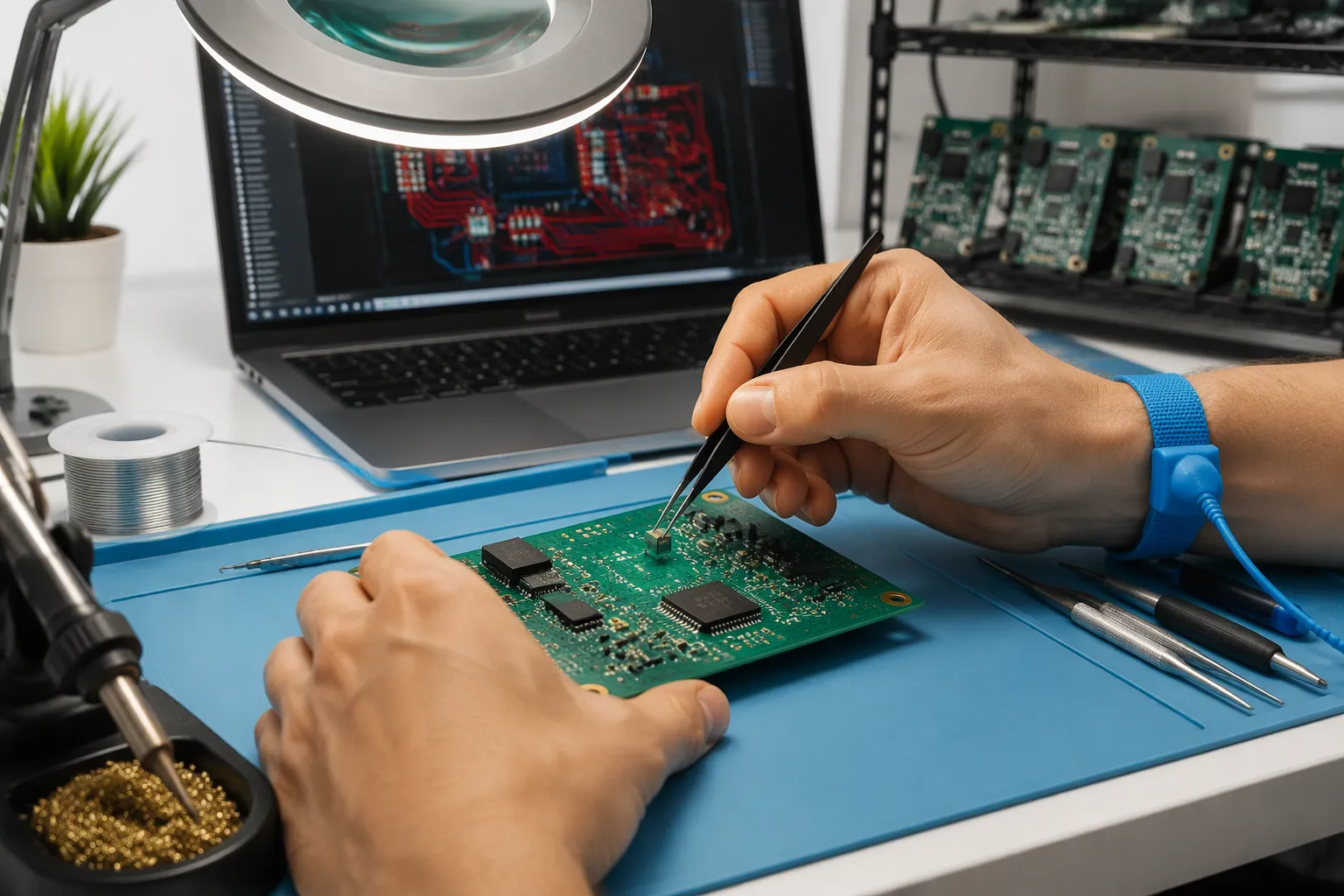
Expect low volume pcb assembly costs to run from a few dollars per unit upward, with full turnkey builds delivered in 24–120 hours and standard orders in 2–4 weeks. Prepare three essentials: Gerbers, a BOM, and a pick-and-place file. An unoptimized parts list inflates prototype budgets. This guide covers cost and lead-time drivers plus a preparation checklist.
Key Takeaways
Expect low volume PCB assembly costs to start at a few dollars per unit, with quick-turn builds in 24–120 hours and standard orders in 2–4 weeks.
Prepare three essential files: Gerbers, a BOM, and a pick-and-place file. A clean BOM lowers costs and speeds up quotes.
Choose a partner who provides real lead times and reviews your files early. This keeps your project on schedule and within budget.
Low Volume PCB Assembly Costs and Lead Times
Typical Cost Ranges
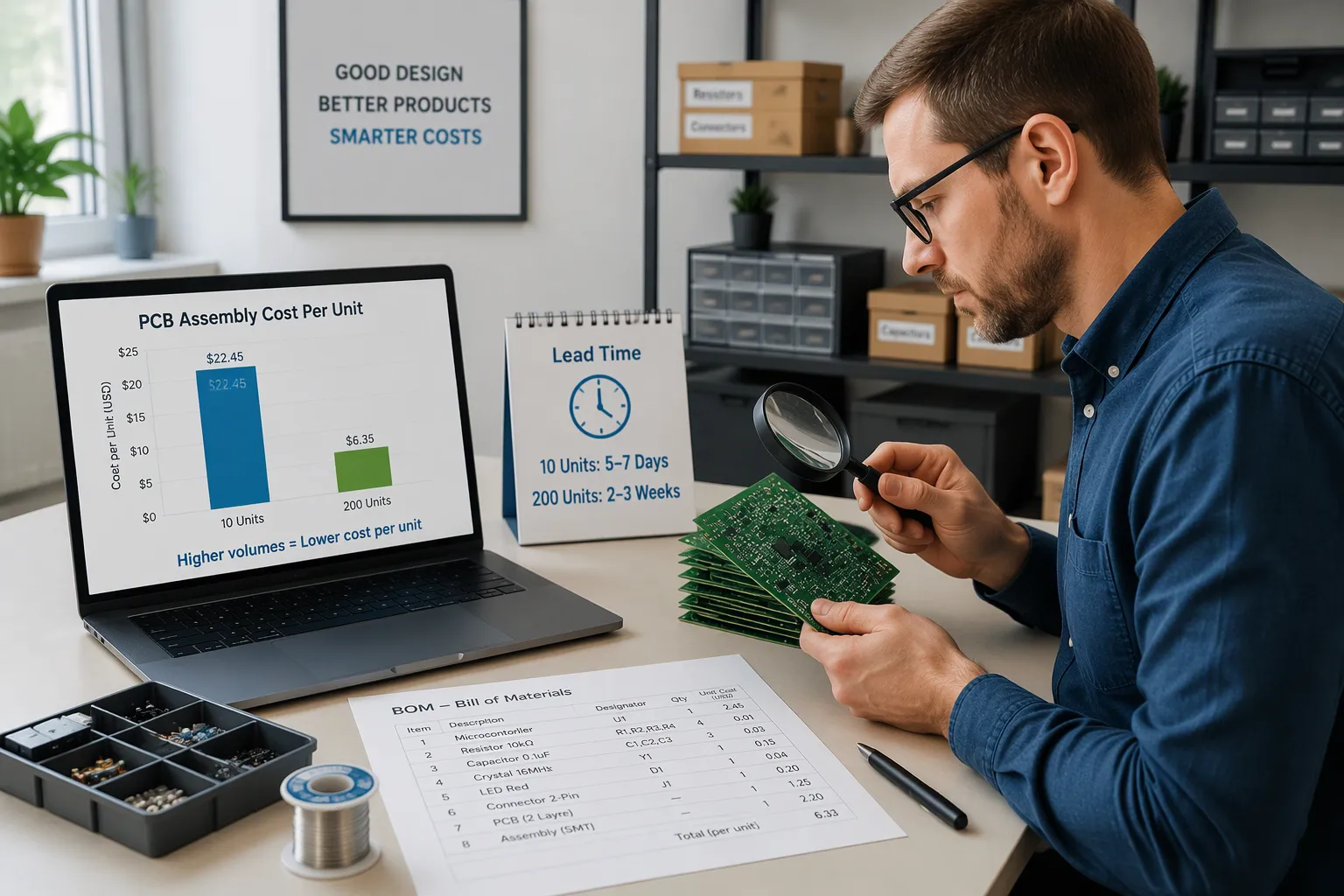
You can expect low volume pcb assembly to start at a few dollars per unit and climb with board complexity, part count, and component mix. The per-unit price drops as quantity rises. A prototype batch of 10 units might run about $1.30 per unit, while the same design at 200 units can land near $1.05 per unit. That is roughly a 19% reduction per unit. These figures show a simple rule: small batch pcb production spreads setup and tooling charges across more boards, so each board carries less of that burden. Your pcb prototyping costs depend heavily on the parts you specify. A clean bom with common, in-stock components keeps quotes low. Rare parts, fine-pitch packages, and double-sided assembly push the cost upward. Treat any quote as a starting point and compare it against your design choices.
Typical Lead Times
Lead time depends on the service level you choose and the parts you need. Full turnkey pcb assembly can deliver working prototypes in 24 to 120 hours. That window covers quick-turn builds where the assembler sources every component and runs the boards through reflow and test. Complexity and part availability set where you land inside that range. A simple board with stocked parts moves fast. A dense design with long-lead components takes longer. Standard orders for small volume pcb assembly typically run 2 to 4 weeks. That schedule fits planned builds where you have time to review the bom, confirm part substitutions, and schedule testing. The table below summarizes the two paths.
Path | Typical lead time | Best fit |
|---|---|---|
Quick-turn | 24–120 hours | Urgent validation, a few units |
Standard | 2–4 weeks | Planned small batch production |
Plan your prototype around the path that matches your deadline. A rushed build costs more per unit, and a standard build rewards patience with a lower price. Either way, confirm part availability before you commit. One missing component can reset your entire schedule, and that risk grows when you skip a bom review. Check stock levels, approve alternates, and lock the parts list early. These steps protect both your budget and your timeline.
What Counts as Low Volume PCB Assembly
Versus Prototyping and Mass Production
Low volume pcb assembly sits between a one-off prototype and a full production run. You order tens to low hundreds of boards, enough to validate a design in the field or equip an early pilot. Prototyping usually means a handful of units for bench testing. Mass production means thousands of units on a fixed line with hard tooling. The table below shows where each stage fits.
Stage | Typical quantity | Main goal |
|---|---|---|
Prototyping | A few units | Prove the design works |
Low volume | Tens to low hundreds | Validate in the field, equip a pilot |
Mass production | Thousands | Lowest unit cost at scale |
Small-batch production carries setup charges across fewer boards, so the per-unit price stays above mass production levels. That trade-off buys flexibility. You can change the design between runs without scrapping expensive tooling.
Where It Fits for Startups
Early-stage teams rarely need thousands of boards. They need working units fast, at a cost the runway can absorb. Low volume pcba fits that reality well. You can run a pilot batch, ship samples to beta testers, and gather feedback before you commit capital to a large order. Small batch pcb manufacturing also lets you test assembly yield on a real line. A defect that appears across fifty boards tells you more than one hand-built unit ever will. Many founders use prototyping and small-batch pcb production as one continuous loop: build, test, revise the bom, build again. Each cycle costs less than a full production commitment. Small batch pcb assembly therefore acts as a bridge. It protects your budget while your design matures.
Why Startups Choose Small Volume PCB Assembly
Key Benefits for Early-Stage Teams
Your runway is finite, so every dollar must earn its place. Low volume pcb assembly lets you buy only the boards you need right now. You avoid a large inventory commitment and keep cash free for firmware, tooling, and customer discovery. A prototype batch also gives you real data. You learn how the design behaves in the field, not just on the bench.
Speed matters just as much. Small batch pcb manufacturing shortens the loop between a design change and a tested board. You can revise the BOM, rebuild, and retest within weeks. Each cycle sharpens the design before you spend on a large order. Small volume pcba therefore de-risks your path to production.
The Assembly Process Step by Step
The workflow follows a predictable sequence. You supply the files, the assembler sources parts, and the line builds your boards.
You send Gerbers, a BOM, and a pick-and-place file.
The assembler reviews the BOM and confirms part availability.
The team orders components and prepares stencils.
The line prints solder paste, places parts, and runs reflow.
Technicians inspect and test each board before shipping.
Full turnkey pcb assembly covers every step, including sourcing. Partial turnkey leaves component sourcing with you. Small batch pcb assembly fits either model, and small batch production keeps the run economical. Rapid prototyping depends on this loop running cleanly, so review each step with your partner.
Cost and Lead Time Factors
Setup, Tooling, and Component Costs
Every quote bundles a few fixed charges. Setup covers stencil creation and line programming. Tooling covers any fixtures your board needs. Component costs track the parts you specify. These charges spread across your batch size, so small batch pcb production carries a heavier share per board than a large run.
An unoptimized BOM is a common budget inflator for hardware startups. Duplicate part numbers, obsolete components, and rare packages all add sourcing time and price. Review the BOM before you request a quote. Consolidate similar values, approve in-stock alternates, and remove parts the design no longer uses. This step protects your cost and schedule more than any negotiation.
Design Choices That Move Your Quote
Your design decisions shape both price and turnaround. Quick-turn service carries a priority premium, so the per-unit cost runs higher. It suits quantities of 1 to a few units when validation cannot wait. Standard orders cost less per unit and optimize for volume. The table below shows the trade-off.
Path | Per-unit cost | Typical quantity |
|---|---|---|
Quick-turn | Higher, priority premium | 1 to a few units |
Standard | Lower, volume-optimized | Tens to low hundreds |
Board complexity also moves the number. Fine-pitch parts, double-sided assembly, and tight tolerances raise the skill and time the line needs. A simpler design with common footprints often reaches a lower total cost without losing function. Small volume pcb assembly rewards this kind of planning. Weigh your deadline against your budget, then pick the path that fits. Small batch production works best when you lock the design early and let the schedule breathe.
Rapid Prototyping With Quick-Turn Assembly
Standard vs. Expedited Turnaround
Quick-turn assembly compresses the schedule to 24 hours up to 5 business days. Standard orders run 2 to 4 weeks. Neither path is better in every case. Quick-turn fits urgent validation, where you need a working board to unblock a test or a demo. Standard fits planned builds, where you can schedule around a predictable date.
The trade-off is straightforward. Expedited work carries a priority premium, so your cost per unit rises. Standard work spreads setup charges over a calmer schedule and keeps costs lower. For rapid prototyping, match the path to the deadline. A prototype that arrives after the investor meeting has little value. A prototype that burns your budget on speed you did not need has little value either.
Causes of Delays and How to Avoid Them
Most delays trace back to parts, not the line. A component goes out of stock, a substitute needs approval, or a footprint in the BOM does not match the design. Each issue stalls the build while the assembler waits for your answer. Review the BOM before you commit, and name approved alternates for critical parts.
Documentation gaps cause the rest. Missing layers in the Gerber set, a pick-and-place file with wrong rotations, or unclear testing requirements all force a pause. Send a complete package and state your acceptance criteria in writing. Full turnkey pcb assembly removes sourcing from your plate, which shrinks the delay surface. Even then, confirm the parts list early. Small volume pcb assembly partners quote real dates when your files are clean. Treat file review as part of your overall lead time, not a step outside it. That habit protects both prototype builds and later small batch production runs, and it keeps costs predictable across low-volume builds.
What to Prepare Before You Quote
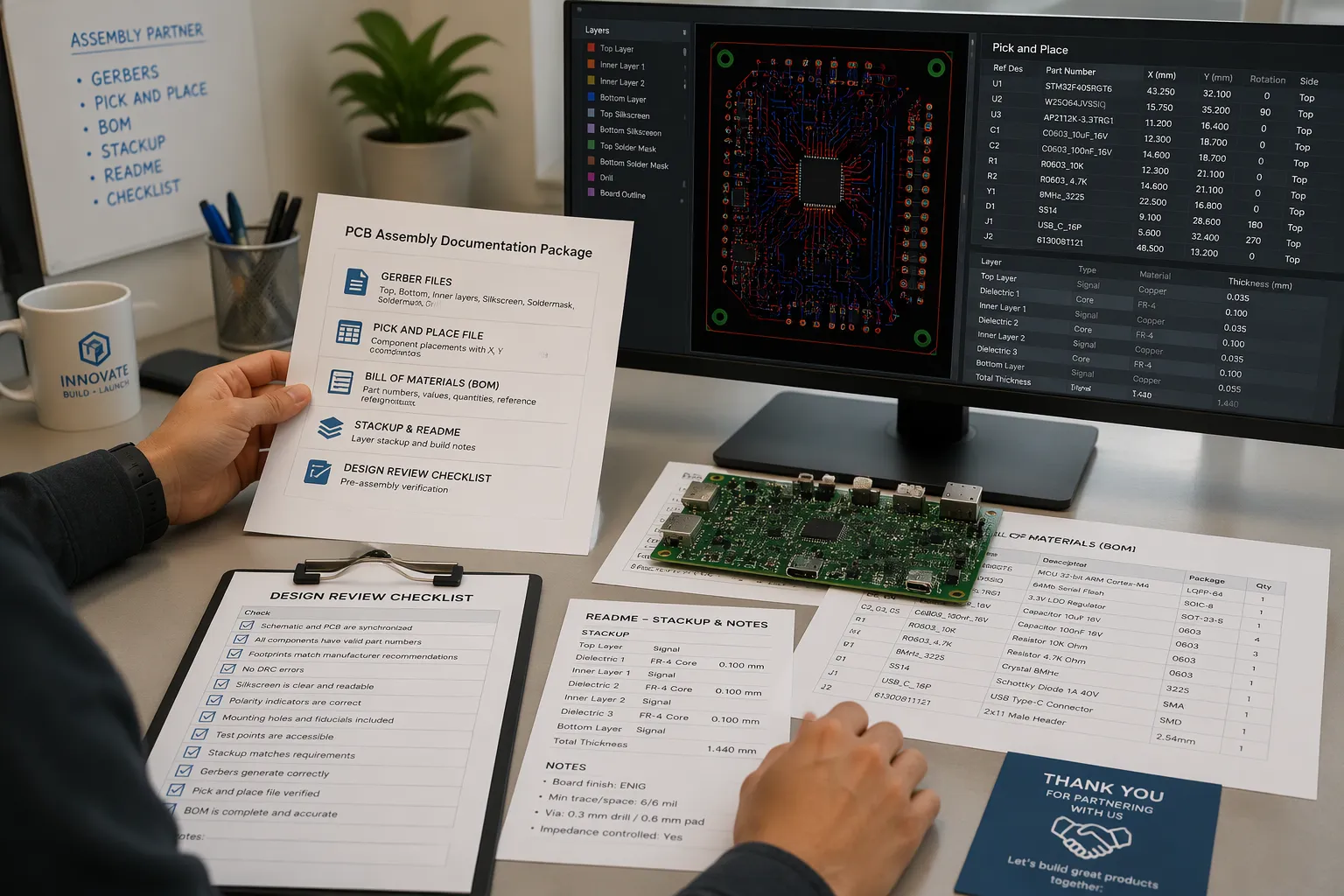
A clean file package shortens every quote and removes most delay risk. Assemblers price what they can see. Missing data forces questions, and each round of questions pushes your build date back. Send everything at once.
Required Files: Gerbers, BOM, Pick-and-Place
Three files drive the quote. The table below shows what each one must contain.
File | What it must contain | Why it matters |
|---|---|---|
Gerbers | Every copper, mask, silkscreen, and drill layer | Defines the bare board |
Parts list | Part numbers, values, footprints, reference designators, approved alternates | Drives sourcing and cost |
Pick-and-place | X/Y coordinates, rotation, and side for each part | Drives placement programming |
Name files clearly and include a readme that lists the stackup. Your bill of materials deserves the most attention. A complete bom lists every part with a manufacturer part number and an approved substitute. Incomplete lines stall sourcing. The assembler cannot order a part you never named. Add revision numbers and date codes so everyone works from the same version.
Design and Documentation Checklist
Run this checklist once per design revision, before you send anything:
Confirm every footprint in the design matches the part on the parts list.
Check that the pick-and-place rotations match component orientation.
Name approved alternates for long-lead parts.
State your testing requirements and acceptance criteria in writing.
Request a dfm / dfa review from your partner.
That last step pays for itself. The review catches footprints that will not solder cleanly and parts placed too close for the nozzle. Fixes cost little at the file stage and a great deal after the line runs. Ask for the review before you request pricing, not after.
Documentation should also state the service scope. Full turnkey pcb assembly means the partner sources parts, so your bom quality sets the schedule. Partial turnkey leaves sourcing with you, so confirm stock before you quote. Either way, describe the build plainly: quantity, board thickness, surface finish, and test method. An assembly drawing with notes on any hand-soldered parts removes guesswork.
Good files help every stage. A prototype built from clean data validates faster. Rapid prototyping runs smoother when rotations and footprints already match. Small volume pcb assembly quotes arrive faster and with fewer surprises. A short cover note with your deadline helps the partner quote the right service level. Treat file preparation as the first step of the build, not paperwork around it.
Choosing a Low Volume PCBA Partner
Capabilities and Questions to Compare
Compare partners on four points: lead times, minimum order quantity, component sourcing, and testing. Ask each one for a real quote on your files. A dedicated low volume pcb assembly provider quotes actual lead times for your build. A general shop may treat your small order as an afterthought and pad the schedule.
Ask how the partner handles part shortages and whether they offer incoming inspection. Request a sample test report. These answers reveal more than a brochure ever will. The right partner also reviews your bom before quoting, which keeps your cost predictable.
Turnkey vs. Partial Turnkey
Full turnkey pcb assembly means the partner sources every component, builds the boards, and tests them. You send files and receive finished units. Partial turnkey leaves sourcing with you. You ship consigned parts, and the partner handles assembly only.
Model | Who sources parts | Best fit |
|---|---|---|
Full turnkey | The partner | Teams without procurement staff |
Partial turnkey | You | Teams with existing stock or preferred suppliers |
Neither model wins outright. Full turnkey suits small batch pcbas where your team lacks sourcing capacity. Partial turnkey fits when you already hold parts or want control over suppliers. Many teams start with full turnkey for early low volume pcba runs and shift to partial turnkey once they build supplier relationships. Discuss both options with each candidate. Confirm how they handle small volume pcba orders and what testing they include. A clear scope agreement prevents disputes later.
Common Challenges and Fixes
Component Sourcing and Shortages
Parts cause most schedule slips on a small run. A single out-of-stock component can stall the whole build while your assembler waits for an answer. Shortages hit small orders harder than large ones, because a distributor may reserve limited stock for bigger customers first.
You can reduce this risk before you request a quote. Review the bom and name approved alternates for every critical part. Choose common, in-stock packages where the design allows it. Full turnkey pcb assembly shifts sourcing to your partner, which helps, but you still confirm the parts list early. A clean parts list keeps cost predictable and protects your rapid prototyping timeline.
Quality on Small Batches
Quality can dip on small batches. A short run gives the line less time to settle, and a setup error may reach more of your boards by proportion. Small batch pcb production also skips some of the statistical checks a large order supports.
Build safeguards into the order. Ask for incoming inspection of components, and state your testing requirements in writing with clear acceptance criteria. Request a sample test report with each shipment. These steps catch defects before they reach your users. Small volume pcb assembly and small batch pcb assembly both reward this discipline, and the same habits carry into small batch production at higher volume.
Expect a few dollars per unit, with quick-turn builds in 24–120 hours and standard orders in 2–4 weeks. Send Gerbers, a bom, a pick-and-place file, and clear requirements. Optimize that parts list and choose a partner who quotes real dates. Then gather your files and request quotes from two or three providers. Compare their cost and lead times for small volume pcb assembly, and confirm what full turnkey pcb assembly includes.
FAQ
How many boards should you order for a first run?
Order tens to low hundreds of units. This range covers field validation and pilot builds. You avoid a large inventory commitment and keep cash free for other work.
Does a larger batch lower your per-unit cost?
Yes. Setup and tooling charges spread across more boards. A 200-unit run can cost roughly 19% less per unit than a 10-unit batch. Review your bom before quoting to capture the full savings.
Which files do you need for a quote?
Send three files: Gerbers, a parts list, and a pick-and-place file. Add a short note on quantity, testing, and your deadline. Clean files let small volume pcb assembly partners quote real dates. Full turnkey pcb assembly also covers component sourcing, so confirm the parts list early.
See Also
Tailored Edge AI PCBA Solutions for American Hardware Startups
Complete AI PCBA Services for Ireland MedTech and IoT Firms
AI Hardware Prototype PCBA Solutions for Belgium Technology Businesses
Bespoke AI PCBA Production for Electronics Manufacturers in Mexico
Tailored AI Server Prototype PCBA for Israel Infrastructure Startups