
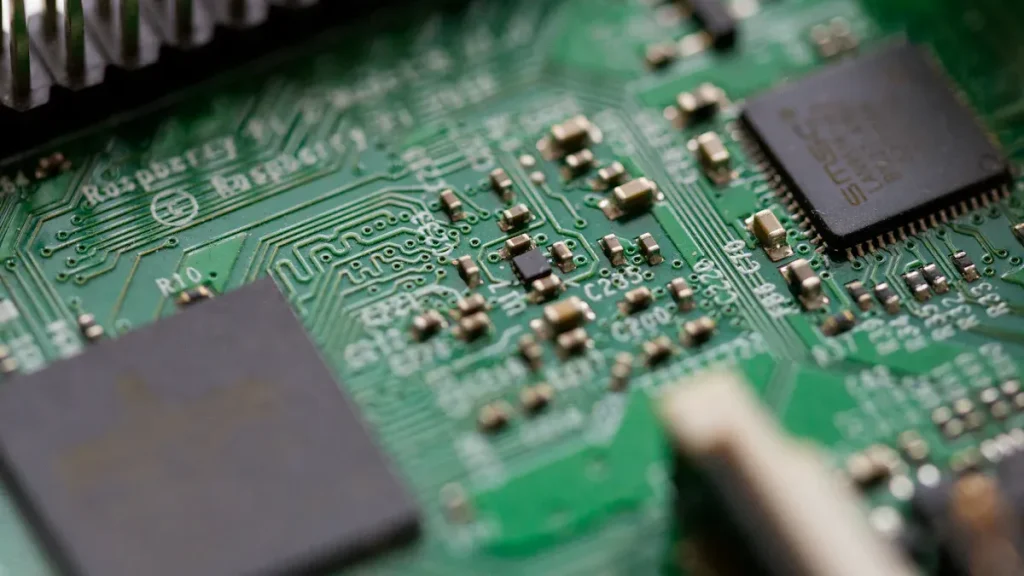
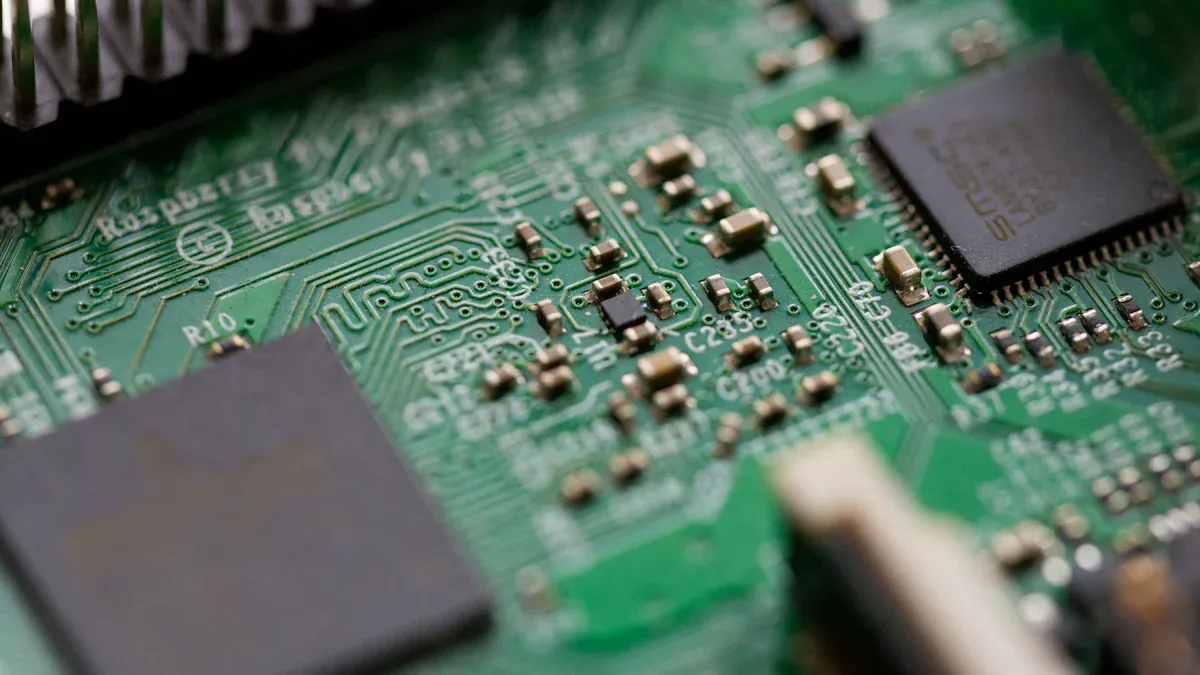
Edge AI plays a crucial role in enabling real-time data processing for vision and monitoring devices. This technology empowers devices like edge AI PCB AI cameras and drones to analyze data instantly, enhancing their functionality. Robust PCB design and assembly are vital for these applications. You must ensure that your designs meet the rigorous demands of environmental monitoring and industrial sensors. Additionally, challenges such as thermal management, power integrity, and compliance with industry standards require careful consideration in your development process.
Key Takeaways
Edge AI technology enables real-time data processing, enhancing the functionality of vision and monitoring devices.
Implement high-speed data practices like differential pair routing and controlled impedance to maintain signal integrity in PCB designs.
Focus on power management by using decoupling capacitors and multiple ground planes to ensure voltage stability in harsh environments.
Address thermal management with heat sinks and thermal simulations to prevent overheating in outdoor devices.
Prioritize reliability by adhering to standards for temperature resistance, moisture protection, and vibration durability in PCB assemblies.
Edge AI PCB Design Requirements
High-Speed Data and Signal Integrity
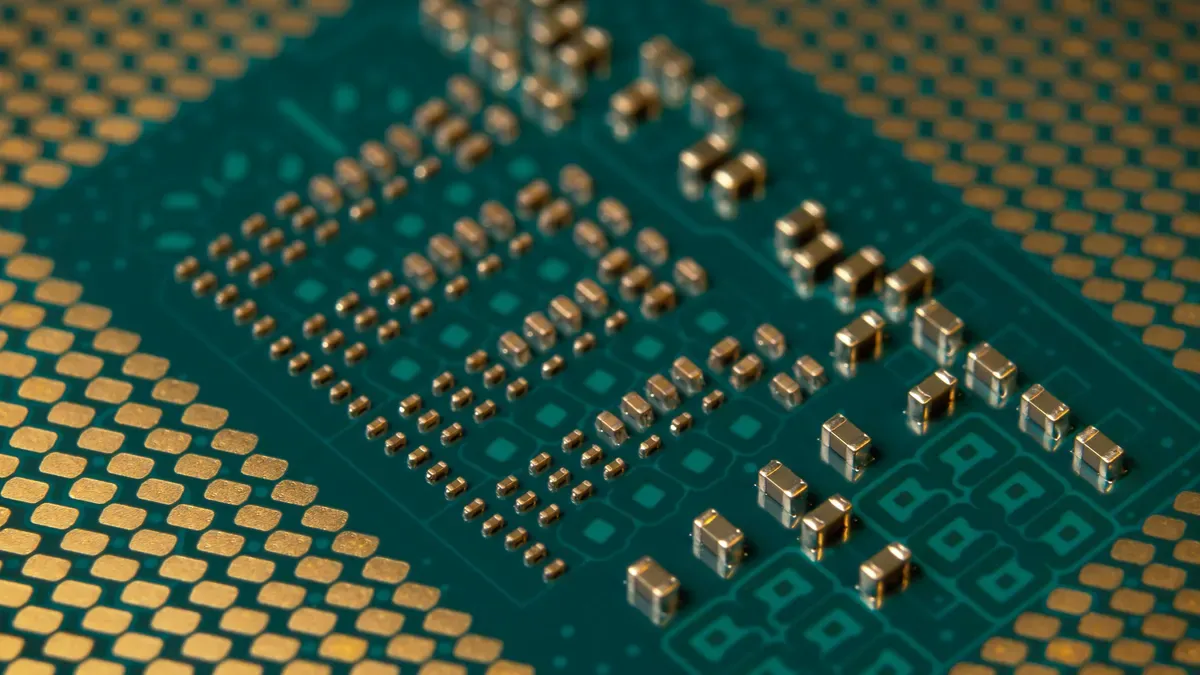
In edge AI applications, high-speed data processing is essential. You must maintain signal integrity to ensure reliable performance. High-speed signaling technologies, such as PCIe Gen4/Gen5/Gen6 lanes, NVLink, and HBM interfaces, play a crucial role in this process. Here are some key practices to consider:
Differential Pair Routing: This technique minimizes mutual interference. Keeping paired signals close together reduces crosstalk and enhances data integrity.
Controlled Impedance: You should match transmission line impedance with source and load impedance. This practice helps maintain signal integrity, especially at data rates exceeding 30–50+ Gb/s.
Minimizing Reflections: Avoid sharp bends, crossing angles, and parallel traces. These factors can lead to signal reflections and electromagnetic interference (EMI), which degrade performance.
By implementing these strategies, you can ensure that your edge AI PCB AI camera PCBA and other devices operate efficiently in demanding environments.
Power Management and Voltage Stability
Power management is critical for devices operating in harsh conditions. You need to ensure voltage stability to prevent performance issues. Here are some best practices for effective power management:
Decoupling Capacitors: Place these components close to power pins. They suppress noise and maintain stable voltage levels, which is vital for high-performance applications.
Power and Ground Planes: Utilize multiple ground and power planes. This approach provides low-impedance paths for return currents, reducing noise coupling and enhancing overall stability.
Signal Integrity Analysis: Use simulation tools to identify potential issues early in the design process. This proactive approach allows you to validate design choices and ensure robust power management.
By focusing on these aspects, you can enhance the reliability of your edge AI devices, ensuring they perform optimally even in challenging environments.
Thermal Solutions for Outdoor Devices
Thermal management is another critical aspect of edge AI PCB design, especially for outdoor devices exposed to varying temperatures. Effective thermal solutions help prevent overheating and ensure long-term reliability. Consider the following strategies:
Heat Sinks and Thermal Pads: Integrate these components to dissipate heat effectively. Proper placement can significantly improve thermal performance.
Thermal Simulation: Conduct simulations to predict thermal behavior under different operating conditions. This analysis helps you design PCBs that can withstand extreme temperatures.
Material Selection: Choose materials with good thermal conductivity. This choice enhances heat dissipation and contributes to the overall durability of your devices.
By addressing thermal management, you can enhance the performance and lifespan of your edge AI PCB assemblies, ensuring they meet the demands of Canadian weather conditions.
AI Camera PCBA and Drone Control Boards
AI Camera Hardware Integration
Integrating AI hardware into cameras requires careful selection of components to ensure optimal performance. You should consider the following key hardware components for your edge AI PCB AI camera PCBA:
High-performance AI processors (e.g., NVIDIA Jetson, Rockchip, Intel SoCs)
DDR4/DDR5 high-speed memory
eMMC and NVMe SSD storage
Gigabit or 10 Gigabit Ethernet
MIPI CSI camera interfaces
Wi-Fi, Bluetooth, and 5G communication modules
These components work together to enable real-time data processing, allowing your AI cameras to analyze and respond to their environment effectively. As you design your PCBA, ensure that these elements are integrated seamlessly to maximize performance.
PCB Design for Drone Control Systems
When designing PCB assemblies for drone control systems, you must focus on compactness and functionality. The following design requirements are essential for utilizing edge AI in Canadian applications:
Develop compact boards that integrate significant AI computing power.
Ensure boards are designed for edge computing, teleoperation, and sensor integration.
Maintain a small size to allow versatile application across various robotic platforms, including drones.
For instance, the Open-Q 8550 system-on-module is tailored for high AI/ML demands in edge computing. It supports advanced applications like video collaboration and AI integration, making it an ideal choice for drone control systems.
Reliability in Harsh Environments
Ensuring reliability in extreme Canadian weather conditions is crucial for the performance of your AI camera and drone systems. You should adhere to the following reliability standards for PCB assemblies:
Factor | Our Approach |
|---|---|
Temperature Resistance | High-Tg FR-4, ceramic, and metal-core PCBs for heat control. |
Moisture & Corrosion Protection | Conformal coatings (acrylic, silicone, parylene), potting solutions. |
Vibration & Shock Durability | Reinforced PCB design with through-hole soldering, thicker copper traces. |
EMI & RFI Shielding | Strategic grounding, shielding, and optimized component layout. |
Chemical & Contaminant Resistance | Sealed enclosures and chemical-resistant coatings. |
High-Altitude & Pressure Stability | Hermetic sealing and vacuum-rated materials for aerospace use. |
By implementing these strategies, you can enhance the durability and reliability of your edge AI devices, ensuring they perform optimally even in the harshest conditions.
In the words of industry expert Dr. Jane Smith, “The integration of AI hardware into monitoring devices is not just about performance; it’s about ensuring that these devices can withstand the challenges posed by their environments.” This perspective underscores the importance of robust design and assembly practices in the development of AI camera PCBA and drone control boards.
Custom PCB Assembly for Monitoring Devices

Prototyping and Manufacturing
Transitioning from prototyping to small-batch manufacturing is essential for custom PCB assemblies. This process involves several key steps:
Step | Description |
|---|---|
Concept & Feasibility Analysis | Evaluate the project’s viability and requirements. |
Design & Prototyping | Create designs and prototypes for testing and validation. |
Material Selection & Optimization | Choose materials that balance performance and cost. |
Manufacturing & Assembly | Ensure precision production and quality control during assembly. |
Testing & Certification | Verify compliance with standards and conduct durability tests. |
Scaling to Mass Production | Transition from prototypes to full-scale manufacturing. |
In Canada, quick-turn assembly services allow you to produce prototype boards in as little as 24 hours. This rapid prototyping method supports flexibility in product development, enabling you to test and refine designs quickly.
Functional Testing and Quality Control
Functional testing and quality control are vital for ensuring the reliability of PCB assemblies. Each component must undergo rigorous inspections throughout the manufacturing process. Here are some common quality control measures:
Automated Optical Inspection (AOI): Detects defects in PCBs using cameras.
In-Circuit Testing (ICT): Tests individual components for functionality before soldering.
Functional Testing: Evaluates overall performance under real-world conditions.
Environmental Testing: Assesses reliability under various environmental conditions.
The manufacturing process should document and monitor each step to ensure compliance with customer requirements and industry standards. Adhering to standards like IPC-A-600G and UL Certified Rating 94V-0 guarantees that your assemblies meet high-quality benchmarks.
Packaging for Industrial Applications
Proper packaging is crucial for protecting PCB assemblies during transport and storage. Environmental protection standards in Canada dictate specific requirements:
Aspect | Details |
|---|---|
Storage Practices | Define placement, stacking, and spacing of PCB drums and equipment. |
Labelling Requirements | Outline specific labelling requirements for containers and storage facilities. |
Inspections | Mandate monthly inspections of storage site components and equipment. |
Records | Specify inventory and inspection record-keeping requirements. |
Reporting | Establish guidelines for reporting changes in PCB inventories. |
By focusing on sustainable materials and eliminating environmentally sensitive chemicals, you can enhance your packaging practices. This commitment to sustainability not only meets regulatory requirements but also aligns with industry trends toward responsible recycling of electronics.
Edge AI PCB design and assembly are vital for enhancing the performance of Canadian vision and monitoring devices. You must meet higher standards for PCBA design, focusing on high-speed data transmission, advanced thermal management, and electromagnetic compatibility. Innovative technologies, such as AI-accelerated solvers, help you address challenges like power integrity and thermal management effectively.
As you look to the future, consider trends like AI-powered PCB inspection and the use of sustainable materials. These advancements will keep you competitive in a rapidly evolving market.
Trend/Technology | Description |
|---|---|
CMOS line scan cameras | Enhance accuracy and speed in PCB inspections, particularly for detecting defects. |
Miniaturization of PCBs | Increases complexity in inspections, driving demand for sophisticated systems. |
Integration of machine learning | Expected to improve efficiency and effectiveness in inspection processes. |
High-performance color line scan cameras | Essential for real-time inspection processes, providing high image quality and resolution. |
By embracing these innovations, you can ensure your edge AI devices remain at the forefront of technology.
FAQ
What challenges do edge AI devices face in cold outdoor environments?
Edge AI devices often struggle with low temperatures, which can affect battery performance and component reliability. You should consider thermal management solutions to ensure consistent operation in harsh Canadian winters.
How can I ensure power stability for my monitoring devices?
To maintain power stability, use decoupling capacitors and multiple ground planes. These strategies help reduce noise and ensure reliable performance, especially in remote locations where power fluctuations may occur.
What is the importance of prototype validation in PCB assembly?
Prototype validation allows you to test designs before mass production. This process identifies potential issues early, ensuring that your edge AI PCB AI camera PCBA meets performance standards and customer expectations.
How does remote maintenance benefit edge AI devices?
Remote maintenance enables you to monitor device performance and troubleshoot issues without physical access. This capability reduces downtime and enhances operational efficiency, especially for industrial monitoring applications.
What advantages does bonysn offer for AI camera PCBA customization?
Bonysn specializes in tailored solutions for AI cameras, sensors, and industrial monitoring. Our expertise in edge AI PCB assembly ensures high-quality, reliable products that meet specific customer needs and industry standards.