
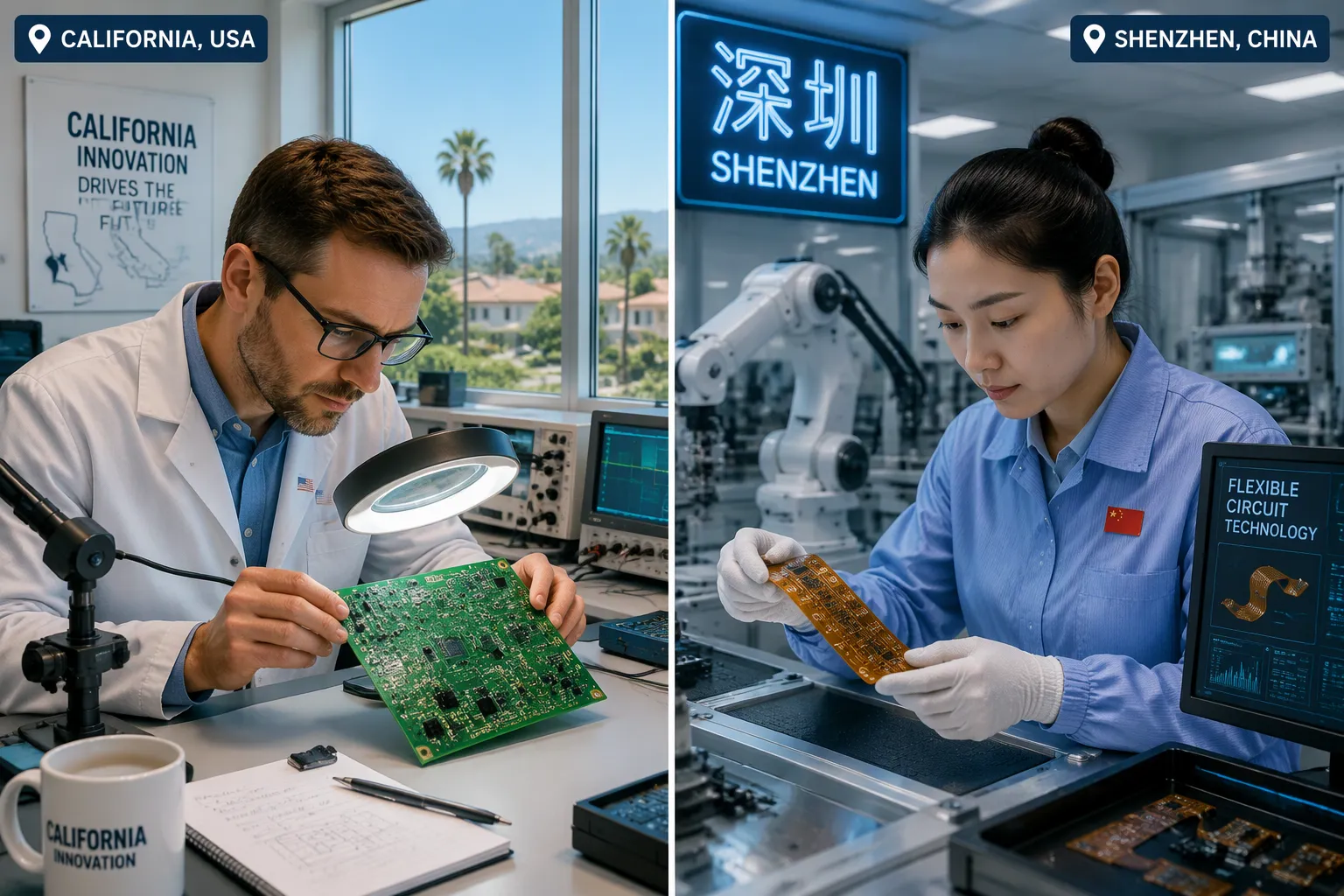
The right choice depends on project priorities; neither option wins universally. California quick-turn pcb manufacturers serve speed, proximity, and regulated programs. Shenzhen partners excel at flex/rigid-flex complexity, volume economics, and supply chain depth.
Priority | Best Fit |
|---|---|
Speed, proximity, controlled programs | California |
Flex/rigid-flex complexity, volume economics | Shenzhen |
Four dimensions guide the decision: technical performance, application fit, regulatory compliance, and cost. A pcb assembly manufacturer california teams trust and a Shenzhen turnkey pcba partner each fit different profiles.
Key Takeaways
Choose California for fast prototypes and regulated projects. Local shops speed up feedback and keep your work in the US.
Choose Shenzhen for complex flex boards and large orders. You get lower prices and deep manufacturing skills.
Use both: start with a California prototype, then move to Shenzhen for mass production. This saves time and money.
Technical Performance and Quick-Turn PCB Manufacturers
Capabilities and Process Depth
California quick-turn pcb shops build strong prototypes and low-volume runs. They handle standard rigid boards well, yet complex flex and rigid-flex stacks often exceed their everyday process window. Shenzhen houses specialize in HDI, flex, rigid-flex, and large-format RF panels. Fabrication depth runs deep there. Multilayer suppliers such as Jerico, Bomin, and WUS anchor the local supply chain, and those partners support heavy copper up to 12 oz with turnkey assembly in the same flow. Few us-based quick-turn pcb manufacturers match that breadth. Teams needing quick-turn multilayer pcb fabrication at high layer counts find more options in Shenzhen. A quick-turn pcb manufacturer on the West Coast still wins on simple rigid builds with tight deadlines. Most quick-turn pcb buyers compare process depth before price. A quick-turn pcb order with heavy copper demands careful plating control. A quick-turn pcb program starts with a clear stackup.
Quality Systems and Lead Times
Both regions run mature quality systems. US domestic quick-turn shops certify to IPC standards and document every lot. Shenzhen factories hold comparable certifications and audit well. DFM support differs in style. Local engineers often review files the same day. Offshore partners return DFM notes quickly too, though time zones shift the feedback loop. Lead times favor domestic quick-turn work for urgent builds. A quick-turn pcb fabrication order can ship within days. Offshore quick turn pcbs take longer in transit, yet the fabrication window stays competitive. Engineers order quick turn pcbs for bench validation. Teams planning turnkey pcba programs should weigh both clocks. Turnkey pcba partners manage fabrication, assembly, and test. A turnkey pcba flow reduces handoffs between vendors. Quick turn pcb manufacturers abroad handle turnkey smt assembly and test under one roof. Quick-turn pcb manufacturers nearby excel at fast iteration. Many quick-turn pcb manufacturers publish capability tables online. Several quick turn pcb manufacturers in Asia quote flex builds daily. Turnkey assembly covers sourcing, build, and functional test. A turnkey pcb assembly quote from either side should state lead time clearly.
Application Fit: PCB Assembly Manufacturer California vs Shenzhen
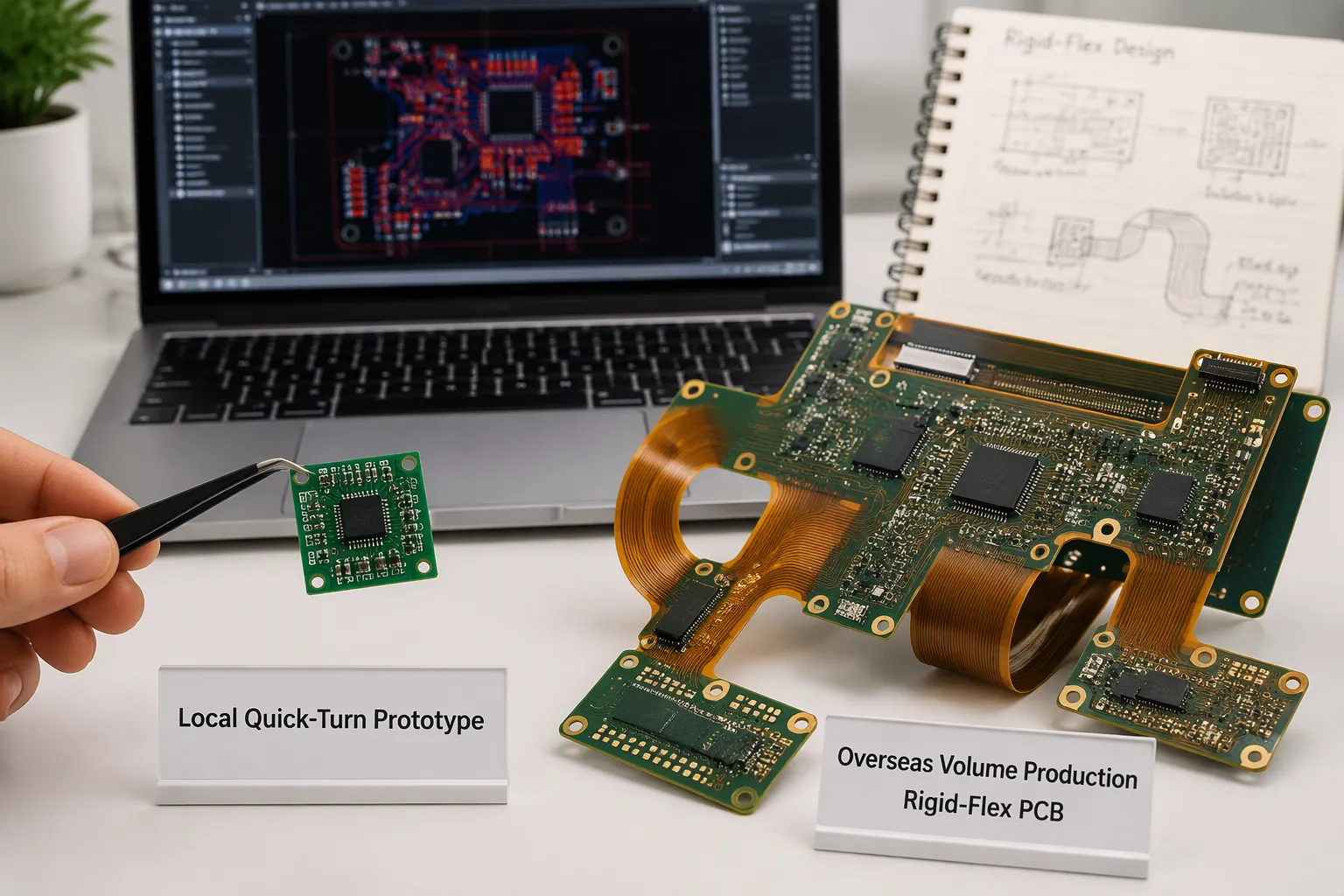
Quick-Turn PCB and PCBA Prototypes
US hardware teams generate steady demand for small prototype batches and low-volume assembly. A pcb assembly manufacturer california teams rely on often sits minutes from the lab, and that proximity shortens every feedback loop. Royal Circuit Solutions stands as a well-known US quick-turn example. Engineers send a design out at lunch and review boards the next morning. That rhythm suits early validation work.
Many engineers use JLCPCB without issues. The boards arrive, the builds work, and the price stays low. The friction sits in transit time, not quality. Teams seeking faster US turnaround weigh that tradeoff openly. Speed versus cost drives the decision, and neither side loses on workmanship.
Quick-turn pcb and pcba prototypes reward local execution. A quick-turn pcb manufacturer nearby can absorb a design change mid-week. Quick-turn pcb and pcba prototypes also feed directly into the next iteration. Several quick-turn pcb manufacturers now publish online quotes for instant pricing. Quick turn pcb manufacturers abroad compete hard on cost for the same files. US quickturn pcbs cost more per unit, yet they land sooner. A quick-turn pcb order for ten boards fits the California model well. Quick turn pcbs for bench testing rarely need volume pricing. One quick-turn pcb fabrication run can validate a stackup before commitment. A quick-turn pcb program at this stage favors flexibility over unit price.
Volume Production and Flex/Rigid-Flex Complexity
Shenzhen fits programs that demand flex and rigid-flex complexity at scale. Local houses build multilayer stacks, HDI designs, and populated rigid-flex assembly under one roof. Rigid-flex circuits need tight process control, and Shenzhen suppliers run that work daily. A turnkey pcb assembly manufacturer there coordinates fabrication, turnkey smt assembly, and test in a single flow. Turnkey pcba builds scale from hundreds to tens of thousands of units. Turnkey pcba partners also manage component sourcing across a deep supplier base. Teams moving past prototype often choose turnkey pcba for that reason. Turnkey assembly removes vendor handoffs, and turnkey pcb assembly quotes arrive with clear volume breakpoints. A quick-turn pcba run can still ship from Shenzhen when schedules allow. Vietnam has emerged as an alternative sourcing location for teams diversifying production. Shenzhen remains the default for rigid-flex assembly at volume. A turnkey pcba partner in Shenzhen handles quick-turn multilayer pcb fabrication and full build in one order.
Regulatory Compliance and IP Protection
ITAR, Export Controls, and Domestic Content
Some programs carry rules that narrow the sourcing map. ITAR-controlled work, certain export-control classifications, and contracts with domestic-content clauses often point toward California assembly. A local shop keeps the build inside US jurisdiction and simplifies the audit trail. Teams with these obligations should confirm the facility’s registration status before releasing files.
Other programs carry no such restrictions. Commercial hardware, consumer devices, and many industrial products move freely through offshore partners. A Shenzhen turnkey pcba partner handles those builds without added compliance burden. Neither path is inherently more compliant. The program requirements decide the fit, and the buyer should match the rule to the region.
Certifications and Documentation
US teams should request the same core documents from either option. ISO 9001 certification, IPC-A-610 Class 2 or Class 3 workmanship standards, UL recognition where relevant, and a current audit report form the baseline. ITAR registration matters for controlled work. A first-article inspection report and a certificate of conformance round out the package.
Documentation discipline separates strong partners from weak ones. Ask for traceability records, material declarations, and change-notification procedures in writing. A California shop often shares these records in person. A Shenzhen partner delivers them through a documented quality system. Both models work when the paperwork stays current. Teams running us domestic pcb manufacturing should verify the certificate scope covers the specific process. The same check applies to any turnkey assembly supplier abroad.
Cost, TCO, and California-Coordinated Quick-Turn PCBs
Unit Pricing and Volume Economics
Unit pricing tells only part of the story. California shops price small runs competitively, and their quotes stay stable across low quantities. Volume breakpoints arrive slowly, though. A buyer ordering a few hundred boards sees modest savings at each step. Shenzhen pricing behaves differently. Quotes drop sharply as quantities climb, and the breakpoints reward scale. Teams comparing quick-turn pcb options notice the gap widens with every added zero. A quick-turn pcb run of ten boards may cost similar amounts on both sides. A quick-turn pcb order of ten thousand boards does not. California-coordinated quick-turn pcbs make sense when volume stays low and schedules stay tight. California-coordinated quick-turn pcbs also suit programs that cannot absorb offshore transit. China hosts most PCB manufacturing worldwide. That concentration makes the offshore pricing advantage structural, not incidental. Buyers should treat the gap as a feature of the supply map, not a temporary discount.
Logistics, Rework, and Communication Costs
Hidden costs reshape the total picture. Freight, duties, and customs clearance add line items to every Shenzhen shipment. Rework loops cost more when boards must cross an ocean twice. Time-zone differences slow each feedback cycle by hours, and travel adds real expense for factory visits. Local quick-turn pcb fabrication removes most of these costs. A California vendor handles rework in days, not weeks. Communication stays synchronous, and engineers can walk the floor. Offshore partners offset these costs through lower unit prices and mature turnkey assembly workflows. A turnkey pcb assembly quote should list freight terms and rework responsibility in writing. Turnkey pcba buyers should model the full landed cost before comparing quotes. Turnkey pcba savings grow with order size, and turnkey pcba risk shrinks with clear contracts. Teams weighing quick turn pcbs against local builds should count every touchpoint. Quick turn pcbs from Shenzhen still win on landed cost at volume. Quick-turn pcb assembly locally wins on speed and control. A turnkey smt assembly partner abroad needs strong documentation to close the distance. Turnkey assembly pricing looks simple until freight and rework enter the math. Smart buyers compare quick-turn pcb manufacturers on total cost, not sticker price. Experienced quick turn pcb manufacturers publish landed-cost terms upfront.
Decision Framework for US Hardware Teams

Matching Project Profiles to the Right Option
Four criteria anchor the comparison: fabrication capability, order size flexibility, DFM support, and production transfer. Teams should score each project against all four before requesting quotes.
Project Profile | Best Fit |
|---|---|
Regulated, fast-iteration, low-volume | California |
Flex/rigid-flex, scaled volume | Shenzhen |
Prototype locally, transfer at volume | Hybrid flow |
Regulated programs, fast iteration cycles, and low-volume high-mix work point toward a pcb assembly manufacturer california teams can visit. A domestic quick-turn shop absorbs design changes mid-week and keeps the audit trail inside US jurisdiction. Flex and rigid-flex programs at scale point toward Shenzhen, where a turnkey pcb assembly manufacturer runs complex stacks and volume builds under one roof. Hybrid flows suit many teams best. They order quick-turn pcb and pcba prototypes locally, validate the design, then transfer files to a Shenzhen partner for turnkey pcba builds. That pattern protects early schedules and captures volume economics later. A quick-turn pcb manufacturer handles the first pass. A turnkey pcb assembly partner handles the ramp. Teams should document the transfer package early, because rapid prototype-to-production pcbs fail most often at handoff. One quick-turn pcb order proves the stackup. The next quick-turn pcb order proves the transfer.
A Pre-Decision Checklist
Readers can apply a short checklist to their own project:
Confirm the fabrication capability matches the stackup, including layer count and copper weight.
Verify order size flexibility across prototype and volume quantities.
Request DFM feedback turnaround in writing from each candidate.
Map the production transfer path, including file formats and first-article requirements.
Match compliance obligations to the region before releasing files.
Model landed cost, not unit price, for every option.
Teams comparing quick-turn pcb manufacturers should run this list against both regions. Several quick turn pcb manufacturers publish capability data online, and that data speeds the screen. A quick-turn pcb manufacturer with strong DFM support reduces rework loops. Quick turn pcbs from a local shop keep early iterations fast. A turnkey pcba partner abroad rewards teams that plan the transfer carefully. Turnkey assembly quotes should state rework responsibility. Turnkey pcba contracts should name the change-notification process. Turnkey smt assembly belongs in the same review. A quick-turn pcb program that passes this checklist rarely surprises the buyer. Teams should revisit the checklist at each design gate, because priorities shift as volume grows.
Priorities decide. A pcb assembly manufacturer california teams trust wins regulated, low-volume work. Shenzhen wins flex/rigid-flex complexity and scaled volume. Start with quick-turn pcb prototypes, then move to a Shenzhen turnkey pcba partner. Apply the checklist. Turnkey pcba and turnkey assembly plans follow design stability. One quick-turn pcb order tests fit. Turnkey pcb assembly quotes confirm ramp.
FAQ
Which option suits a first prototype run?
A California shop fits early prototypes best. Proximity shortens feedback loops, and engineers can review boards fast. Teams order a quick-turn pcb run locally to validate the stackup before any transfer.
When does a Shenzhen partner make more sense?
Flex and rigid-flex programs at scale favor Shenzhen. Local houses run complex stacks and volume builds daily. A turnkey pcba partner there also coordinates sourcing, assembly, and test in one flow.
Can a team use both options?
Yes. Many teams start with a quick-turn pcb order nearby, then move files to Shenzhen as volume grows. A quick-turn pcb transfer package keeps the handoff clean. Turnkey assembly at the offshore partner handles the ramp. One quick-turn pcb run proves the design, and a second quick-turn pcb order confirms the transfer works.
See Also
Tailored AI PCBA Production Services for Electronics Firms in Mexico
Bespoke Edge AI PCBA Solutions for American Hardware Startup Companies
AI Server PCB Fabrication for United States GPU Hardware Businesses
AI-Powered Inspection PCBA Solutions for Manufacturing Facilities in Mexico
AI IoT PCBA Production Services for Hardware Firms in Malaysia