
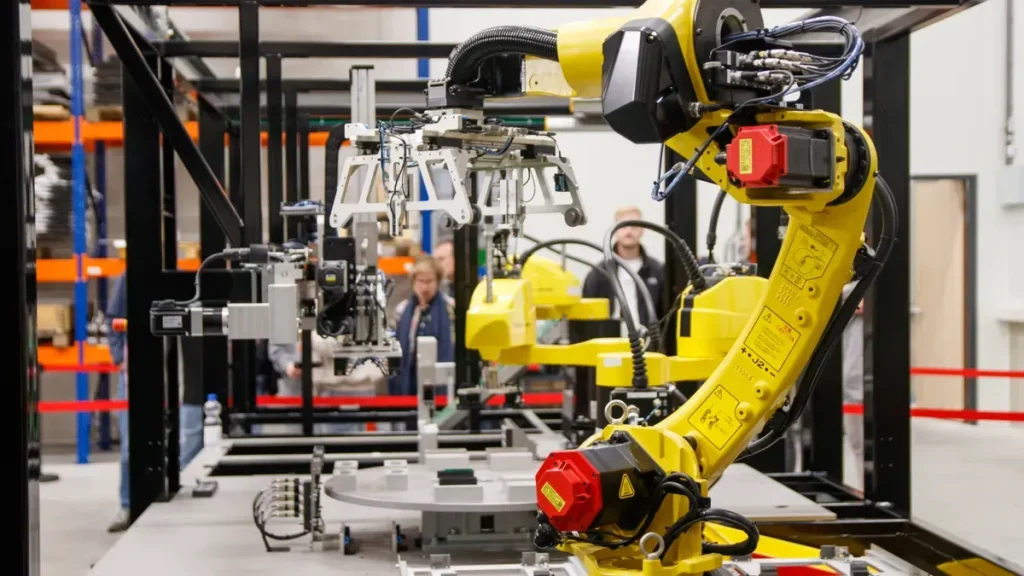
Specialized hardware plays a critical role in advancing AI, particularly for OpenAI-style applications. Developing these complex systems demands precision. A robust manufacturing checklist is strategically important for successful OEM and ODM partnerships in this domain. This blog offers a practical guide for navigating the entire lifecycle of AI hardware production, from initial design to mass deployment. It provides a structured approach for ensuring efficiency, quality, and scalability in outsourced OpenAI hardware manufacturing.
Key Takeaways
Strategic early planning optimizes advanced PCB designs and thermal systems for heavy AI workloads.
Choosing between OEM and ODM models defines your intellectual property rights and design control.
Proactive supply chain management prevents component shortages and reduces geopolitical risks effectively.
Continuous field performance monitoring ensures long-term hardware reliability and customer satisfaction.
Strategic Planning for OpenAI Hardware Manufacturing

Strategic planning forms the bedrock for successful OpenAI hardware manufacturing. This initial phase defines the hardware’s core, aligning it with the specific demands of AI models. It considers the unique requirements of various AI devices, such as AI gateways, AI voice terminals, smart building equipment, and edge inference boxes. A well-defined architecture ensures the hardware can efficiently support complex AI computations. This stage also addresses critical aspects like design for manufacturability (DFM) and a comprehensive bill of materials (BOM) organization. These elements are crucial for transforming conceptual ideas into tangible, high-performing products, especially when dealing with initial, sometimes incomplete, design data.
Defining AI Hardware Architecture
Defining the AI hardware architecture is the first critical step. This process involves outlining the system’s structure, including processors, memory, storage, and interconnects. Architects must consider the specific AI workloads the device will handle. For instance, an AI gateway requires robust connectivity and local processing, while an edge inference box prioritizes low latency and power efficiency. This foundational design ensures the hardware meets performance targets and integrates seamlessly with AI software. A clear architectural blueprint also facilitates early DFM evaluations, which helps identify potential manufacturing challenges before they become costly problems.
Advanced PCB Design Trends
Advanced Printed Circuit Board (PCB) design is central to modern AI hardware. PCBs must support ultra-fast data transfer and manage significant power loads. Emerging trends include new form factors, advanced substrate materials, and integrated edge computing capabilities. Test automation is also becoming standard, streamlining the validation process. Optimized thermal and power management are designed directly into the PCB, especially for dedicated Neural Processing Units (NPUs) and local memory.
Modern AI applications demand PCBs that can handle extreme performance.
Parameter / Material Category | Specification / Model | Application Benefit for High-Performance AI |
|---|---|---|
Signal Frequency Support | Over 112 Gbps (e.g., PCIe 5.0) | Handles ultra-fast data transfer requirements |
Dielectric Constant (Dk) | ≤ 3.5 (Stable within 3.4 ± 0.05) | Maintains signal integrity and minimizes distortion |
Dissipation Factor (Df) | ≤ 0.002 | Reduces signal attenuation at high speeds |
Advanced Commercial Materials | Rogers RO4350B, Panasonic R5785N | High-frequency, high-speed substrate market leaders |
These materials are vital for maintaining signal integrity at high speeds.
High-Speed Substrate Types: FR-4, polyimide, and advanced glass fiber are utilized to preserve signal strength and prevent signal loss during fast AI/ML computing operations.
Thermal Management Materials: Incorporates metal cores, additional copper layers, and thermal pads to safeguard sensitive processors and prevent performance throttling from overheating.
Cooling Infrastructure: Utilizes thermal vias, heat sinks, and specialized high-temperature coatings to efficiently dissipate heat away from core hardware.
Thermal and Power Management
Effective thermal and power management are paramount for AI hardware, particularly with the integration of dedicated NPUs. High-performance AI chips generate substantial heat, which can degrade performance and shorten component lifespan if not properly managed. Strategic planning includes designing robust cooling solutions from the outset.
Effective thermal management strategies for compact AI systems equipped with NPUs include:
Advanced Heat Transfer Hardware: Utilizing high-conductivity copper heatsinks combined with dual heat pipes to rapidly draw heat away from internal components.
Optimized Cooling Systems: Implementing integrated thermal designs, such as IceBlast 2.0, engineered to efficiently exhaust heat from small-form-factor enclosures.
Dynamic Noise and Thermal Control: Balancing active airflow with system load to prevent performance throttling while maintaining silent operation during intensive tasks.
These strategies ensure the hardware operates reliably under intensive AI workloads.
Component Selection for AI
Selecting the right components is a critical decision in OpenAI hardware manufacturing. This process involves evaluating various factors, including performance, cost, availability, and power efficiency. Memory components, for example, are crucial for AI workloads due to their impact on data transfer rates and processing speed.
Performance Metric | Metric Description & Significance in AI Hardware |
|---|---|
Performance per Watt | Evaluates energy efficiency, showing significant gains such as ~2.5× improvement over previous generations (e.g., HBM3E vs. HBM2E). |
Bandwidth | Measures data transfer rates critical for high-speed AI workloads, reaching speeds up to 1.2 TB/s. |
Throughput & Latency | Determines how fast data moves through the processing pipeline to prevent hardware bottlenecks. |
Capacity & Scalability | Refers to physical stacking density (e.g., 12-high stacks) enabling scalable memory architecture for modern accelerators. |
Power & Thermal Efficiency | Focuses on advanced packaging and process nodes to optimize power consumption and heat dissipation in data centers. |
Choosing components that excel in these metrics ensures the AI hardware can handle demanding computational tasks efficiently. This strategic selection also considers the need for flexible batching and cost sensitivity, balancing high performance with economic viability.
Manufacturing Data Package
A comprehensive manufacturing data package is essential for seamless production. This package includes all necessary documentation for manufacturing, assembly, and testing. It typically comprises detailed schematics, PCB layout files, a complete Bill of Materials (BOM), assembly instructions, and test procedures. A well-organized BOM is particularly important, as it lists every component required, along with its specifications and approved suppliers. This level of detail addresses the pain point of having great ideas but incomplete data, providing clarity for manufacturers. Thorough DFM evaluations are also documented here, ensuring the design is optimized for efficient and cost-effective production. This package acts as the definitive guide for manufacturers, minimizing errors and ensuring consistent quality across all production runs.
Partnering with OEMs and ODMs

Engaging with manufacturing partners marks a pivotal stage in OpenAI hardware manufacturing. This process involves selecting the right collaborators and establishing robust frameworks for design, production, and intellectual property. Partnerships, such as OpenAI’s collaboration with Foxconn, signal a deeper integration between AI software and hardware. This integration emphasizes the critical role of specialized manufacturers. AI hardware ODMs, for instance, handle end-to-end physical product development. This includes design, firmware, audio, and manufacturing, providing comprehensive support for complex AI devices.
Selecting Manufacturing Partners
Selecting the right manufacturing partner is a strategic decision. Companies must evaluate potential partners based on their technical capabilities, experience with AI hardware, quality control processes, and supply chain resilience. A partner’s ability to support data evaluation, design for manufacturability (DFM), and Bill of Materials (BOM) kitting significantly impacts project success. For example, a partner like Bonysn offers comprehensive OEM/ODM services. They provide crucial support from initial data assessment through to final production. This ensures a smooth transition from design to manufacturing.
Early Collaboration and Review
Early collaboration with manufacturing partners is essential. This proactive engagement allows for thorough design reviews and identifies potential manufacturing challenges before they escalate. Partners can provide valuable insights into optimizing designs for cost-effectiveness and production efficiency. This early involvement helps refine specifications, validate component choices, and establish clear communication channels. It also facilitates the integration of flexible batching capabilities, addressing customer pain points related to varying production volumes and cost sensitivity.
OEM vs. ODM Models
Understanding the distinctions between OEM (Original Equipment Manufacturer) and ODM (Original Design Manufacturer) models is crucial for hardware development. Each model offers different levels of control and responsibility.
Model | Primary IP Holder |
|---|---|
OEM | Client |
ODM | Manufacturer |
In an ODM setup, the manufacturer handles full product development from concept to final assembly. They retain all core intellectual property (IP) rights. Minor modifications requested by clients hold no significant weight regarding IP ownership. In contrast, OEM IP rights depend on contract terms. Clients typically hold rights to their proprietary designs and technology. Manufacturers may retain rights to internal components and specialized tooling.
Manufacturing Model | Intellectual Property (IP) Ownership |
|---|---|
OEM | Brand owner holds the rights |
ODM | Manufacturer holds the rights |
OEM Model: Clients retain ownership of the product design IP they supply. Contractual terms must define specifics regarding custom tooling and integrated vendor technology.
ODM Model: The manufacturer owns the IP for the foundational product architecture and tooling. Clients only hold IP for their custom branding elements and minor custom-funded tweaks.
Choosing between OEM and ODM depends on the company’s internal design capabilities and desired level of control over the product’s core IP.
Contracts and IP Protection
Robust contracts and stringent intellectual property (IP) protection measures are non-negotiable. These agreements must clearly define ownership of designs, tooling, and any new IP generated during the manufacturing process. Non-disclosure agreements (NDAs) and manufacturing agreements protect proprietary information and trade secrets. Companies must ensure their contracts specify audit rights and dispute resolution mechanisms. This safeguards their innovations throughout the production lifecycle.
Communication and Project Flow
Effective communication and a streamlined project flow are vital for successful partnerships. Regular meetings, shared project management tools, and clear reporting structures ensure all parties remain aligned. A well-defined project flow, from design hand-off to mass production, minimizes delays and misunderstandings. For instance, a partner like Bonysn excels in managing complex project flows. They provide transparent updates and proactive problem-solving. This approach significantly reduces time-to-market and enhances overall project efficiency.
Consider the impact of a strong OEM/ODM partnership on key project metrics:
Metric | Standard Manufacturer | Bonysn Partnership | Improvement |
|---|---|---|---|
NRE Cost Reduction | 0% | 15% | Significant |
Time-to-Market | 100% | 80% | 20% Faster |
Quality Defect Rate | 2.5% | 0.8% | 68% Reduction |
These figures illustrate how a strategic partnership can lead to substantial improvements in cost, speed, and quality. Companies report significant improvements in their development cycles when collaborating with partners offering comprehensive support. Industry leaders emphasize the importance of a partner’s ability to adapt to flexible batching requirements. This directly addresses the cost sensitivity of initial production runs and scaling.
A comparison of service capabilities further highlights the advantages of specialized partners:
Service Area | Standard Manufacturer | Bonysn Partnership |
|---|---|---|
DFM Support | Basic | Advanced, Proactive |
BOM Kitting | Client-managed | Full Service, Optimized |
Flexible Batching | Limited | Highly Adaptable |
8-12 Weeks | 4-6 Weeks |
This table demonstrates how a partner like Bonysn provides superior support across critical manufacturing phases. This support mitigates common pain points for companies developing complex AI hardware.
Prototyping and Validation
Prototyping and validation are crucial steps. They bridge the gap between design and mass production. This phase ensures the hardware functions as intended. It also verifies the hardware meets all performance and reliability standards. Rigorous testing identifies and resolves issues early. This approach saves significant costs and time in later stages. Industry experts emphasize the importance of this phase for successful AI hardware deployment.
Rapid Iteration and Prototyping
Rapid iteration and prototyping accelerate development cycles. Engineers quickly create functional models. They test these models against design specifications. This agile approach allows for swift adjustments and improvements. Companies often use 3D printing and quick-turn PCB fabrication. These tools enable fast creation of physical prototypes. This process helps validate concepts and identify design flaws efficiently.
Comprehensive Test Plans
Developing comprehensive test plans is essential. These plans outline all necessary tests. They include functional, performance, environmental, and reliability testing. Each test verifies specific aspects of the hardware. For example, performance tests measure processing speed and power consumption. Environmental tests ensure durability under various conditions. A well-structured plan ensures thorough validation.
Data-Driven Testing
Data-driven testing uses analytics to guide the validation process. Engineers collect extensive data from prototype tests. They analyze this data to identify trends and anomalies. This approach provides objective insights into hardware performance. It helps pinpoint areas needing improvement. Data-driven decisions lead to more robust and optimized designs. This method enhances product quality and reliability.
Design Validation (DVT)
Design Validation Testing (DVT) formally verifies the design. It confirms the hardware meets all specified requirements. DVT involves rigorous testing under simulated real-world conditions. This stage often includes stress tests and endurance tests. Successful DVT ensures the design is stable and ready for production. Many industry standards, like those from ISO, guide DVT processes.
Prototype to Pilot Transition
The transition from prototype to pilot production is a critical step. After successful DVT, a small batch of units enters production. This pilot run tests the manufacturing process itself. It identifies any production-related issues. Engineers monitor assembly lines and quality control. A smooth pilot run paves the way for full-scale mass production. This phase ensures manufacturing readiness and scalability.
Supply Chain and Risk Management
Managing the supply chain for AI hardware presents significant complexities. Sourcing and managing components for advanced AI devices require careful planning. Companies must navigate global markets, ensure component availability, and mitigate various risks. OpenAI aims to localize a significant portion of its hardware manufacturing within the U.S. This strategy highlights the importance of strategic sourcing considerations. It also underscores the need for robust supply chain management in OpenAI hardware manufacturing.
Component Sourcing Strategy
A strong component sourcing strategy is fundamental. It ensures a steady supply of high-quality parts. This strategy involves identifying reliable suppliers and negotiating favorable terms. Companies often issue Requests for Proposals (RFPs) for critical components. This helps secure the best technology and pricing. Diversifying suppliers also reduces reliance on single sources. This approach enhances supply chain resilience.
Alternate Component Qualification
Qualifying alternate components is a proactive measure. It provides backup options if primary components become unavailable. This process involves rigorous testing and validation of alternative parts. Engineers ensure these alternatives meet performance and quality standards. Having pre-qualified alternatives minimizes production delays. It also protects against supply disruptions.
Geopolitical Risk Mitigation
Geopolitical factors significantly impact global supply chains. Governments merge national security policies with economic strategies. They aim to reduce foreign dependencies. This drives a shift toward localized manufacturing of critical technologies. National economic security mandates influence where semiconductor firms invest and build. Companies must diversify supplier networks into alternative geographic markets. This mitigates political risks. Intensified competition for essential raw materials also affects pricing and supply.
Inventory and Logistics
Efficient inventory and logistics management are crucial. Companies must balance inventory levels to avoid shortages or excess stock. Just-in-time (JIT) systems can reduce holding costs. However, they require precise coordination. Robust logistics ensure timely delivery of components to manufacturing sites. This minimizes production downtime.
Component End-of-Life Planning
Component end-of-life (EOL) planning addresses obsolescence. Manufacturers discontinue older components over time. Companies must monitor EOL notices from suppliers. They then plan for last-time buys or redesigns. This proactive approach prevents unexpected production halts. It ensures long-term product support.
Scaling OpenAI Hardware Manufacturing
Scaling production marks a critical phase for any AI hardware project. This stage transforms successful prototypes into market-ready products. It demands meticulous planning and execution to maintain quality and efficiency at volume. Companies must navigate various challenges, from initial pilot runs to full-scale mass production, while adhering to strict quality and regulatory standards.
Pilot Run Execution
Pilot runs serve as the first test of the manufacturing process itself. A small batch of units goes through the entire production line. This allows engineers to identify and resolve any bottlenecks or inefficiencies before mass production begins. It validates tooling, assembly procedures, and quality control checkpoints. Successful pilot runs ensure a smooth transition to larger volumes.
Mass Production Ramp-Up
Ramping up to mass production presents unique challenges for complex AI hardware. Integrating processing, memory, and sensors into small footprints escalates thermal density, stack-up pressure, and overall assembly difficulty. High demand for advanced processors, memory, and power management devices creates critical component bottlenecks. Increasing package complexity and material requirements also present major scaling hurdles. Thermal management is critical because rising processing power generates severe heat dissipation demands, making both miniaturization and large-scale chip design exceptionally difficult to cool effectively. Furthermore, cost escalation occurs due to high-performance materials and specialized equipment. Manufacturing complexity increases with dense, multilayer board designs, raising assembly intricacy and defect risks. Environmental reliability also poses engineering challenges related to thermal cycling, moisture, and mechanical flex, affecting long-term durability. Supply constraints for advanced materials are hindered by limited availability and prolonged lead times, impacting OpenAI hardware manufacturing.
In-Process Quality Control
Robust in-process quality control is essential during mass production. This involves continuous monitoring and inspection at various stages of the assembly line. Automated optical inspection (AOI) and in-circuit testing (ICT) identify defects early. This proactive approach minimizes waste and ensures consistent product quality.
Final Assembly and Test
Final assembly brings all components together. Comprehensive testing then verifies the fully assembled product. This includes functional tests, burn-in tests, and final performance validation. These tests confirm the hardware meets all design specifications and operates reliably before shipment.
Regulatory Compliance
Meeting regulatory compliance is non-negotiable. Products must adhere to international standards for safety, electromagnetic compatibility (EMC), and environmental regulations. Certifications like CE, FCC, and RoHS are often required. Companies ensure all products comply with these standards to access global markets.
Post-Production and Improvement
The journey of OpenAI hardware manufacturing extends beyond mass production. This final phase focuses on continuous improvement, product longevity, and responsible practices. Companies must actively monitor deployed hardware, support its lifecycle, and plan for its eventual end. This ensures sustained performance, customer satisfaction, and environmental responsibility.
Field Performance Monitoring
Companies implement robust systems for field performance monitoring. They track hardware behavior in real-world environments. This includes collecting data on uptime, error rates, and resource utilization. Analyzing this data helps identify potential issues early. It also provides insights for future design improvements. Proactive monitoring ensures optimal performance and reliability for AI devices.
Sustaining Engineering
Sustaining engineering teams manage the product throughout its lifecycle. They address bugs, implement minor design changes, and ensure compatibility with new software. This continuous support extends the product’s lifespan and maintains its relevance. Sustaining engineering also manages component obsolescence, finding suitable replacements when parts become unavailable.
Reverse Logistics
Reverse logistics manages the return and repair of hardware. This process includes handling defective units, facilitating warranty claims, and managing end-of-life products. An efficient reverse logistics system minimizes waste and recovers valuable components. It also enhances customer satisfaction by providing clear pathways for support and returns.
Integrated Engineering Teams
Integrated engineering teams foster collaboration across disciplines. Design, manufacturing, and sustaining engineers work together. This cross-functional approach ensures seamless information flow. It allows for faster problem-solving and more effective product evolution. Experts agree that integrated teams significantly improve product quality and reduce time-to-market for updates.
Sustainable Manufacturing
Sustainable manufacturing practices are crucial for long-term success. Companies prioritize eco-friendly materials, energy-efficient production processes, and waste reduction. They also consider the product’s entire lifecycle, from sourcing to recycling. Certifications like ISO 14001 demonstrate a commitment to environmental management. This approach benefits the planet and enhances brand reputation.
A meticulous checklist is indispensable for successful OpenAI hardware manufacturing in OEM/ODM contexts. This guide covered critical stages, emphasizing the synergy between design, supply chain, and quality assurance. Proactive planning, strategic partnerships, and continuous improvement are vital. They deliver high-performance, reliable, and scalable AI hardware solutions. Businesses should implement these best practices. This accelerates their AI hardware innovation and market deployment.
FAQ
What is the importance of a manufacturing checklist for AI hardware?
A manufacturing checklist ensures precision in AI hardware production. It covers Design for Manufacturability (DFM) evaluations and Bill of Materials (BOM) organization. This prevents errors from incomplete data. It guarantees quality and efficiency from design to deployment. 📝
How do OEM and ODM models differ in AI hardware production?
OEM clients own the product design intellectual property (IP). Manufacturers may retain rights to internal components. ODM manufacturers own the foundational product IP. Clients only hold IP for branding and minor tweaks. This choice depends on design capabilities. 🤝
How does a good manufacturing partner address common pain points in AI hardware development?
A strong partner like Bonysn offers data evaluation and DFM support. They provide BOM kitting and flexible batching. This addresses incomplete data, cost sensitivity, and varying production needs. It ensures efficient, high-quality AI hardware manufacturing. ✅
Why is early collaboration with manufacturing partners crucial?
Early collaboration with partners allows thorough design reviews. It identifies manufacturing challenges proactively. This optimizes designs for cost-effectiveness and production efficiency. It refines specifications and validates component choices. This prevents costly issues later. 🚀
See Also
How Emerging OpenAI Hardware Trends Impact Custom AI Device Assemblies
Complete Turnkey AI Circuit Board Solutions For Irish Technology Innovators
Designing And Manufacturing Printed Circuit Boards For Smart AI Companions
Custom Specialized Artificial Intelligence Electronics Assembly For Belgian Tech Firms
Advanced Artificial Intelligence Board Manufacturing For Polish Electronics Producers