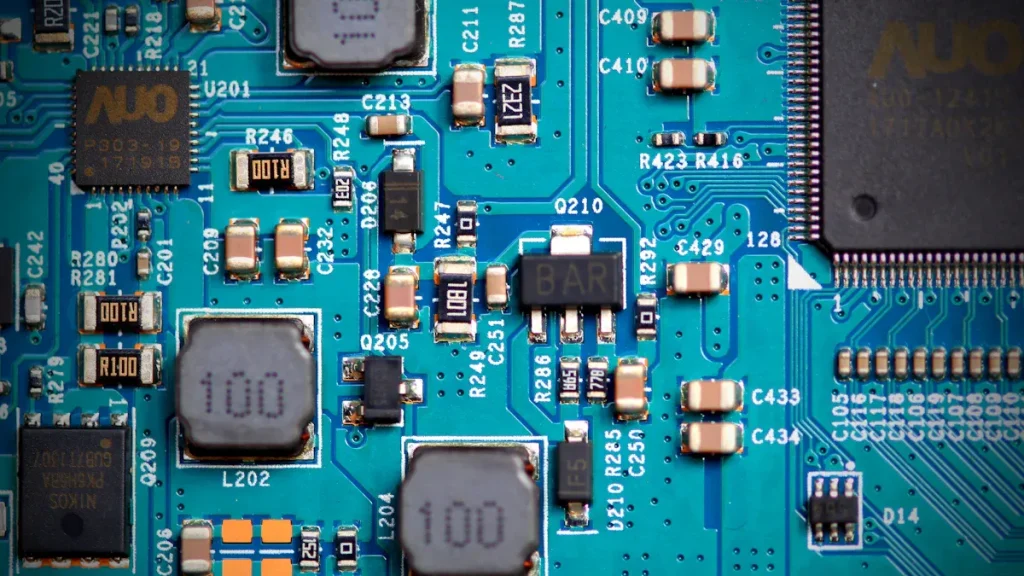
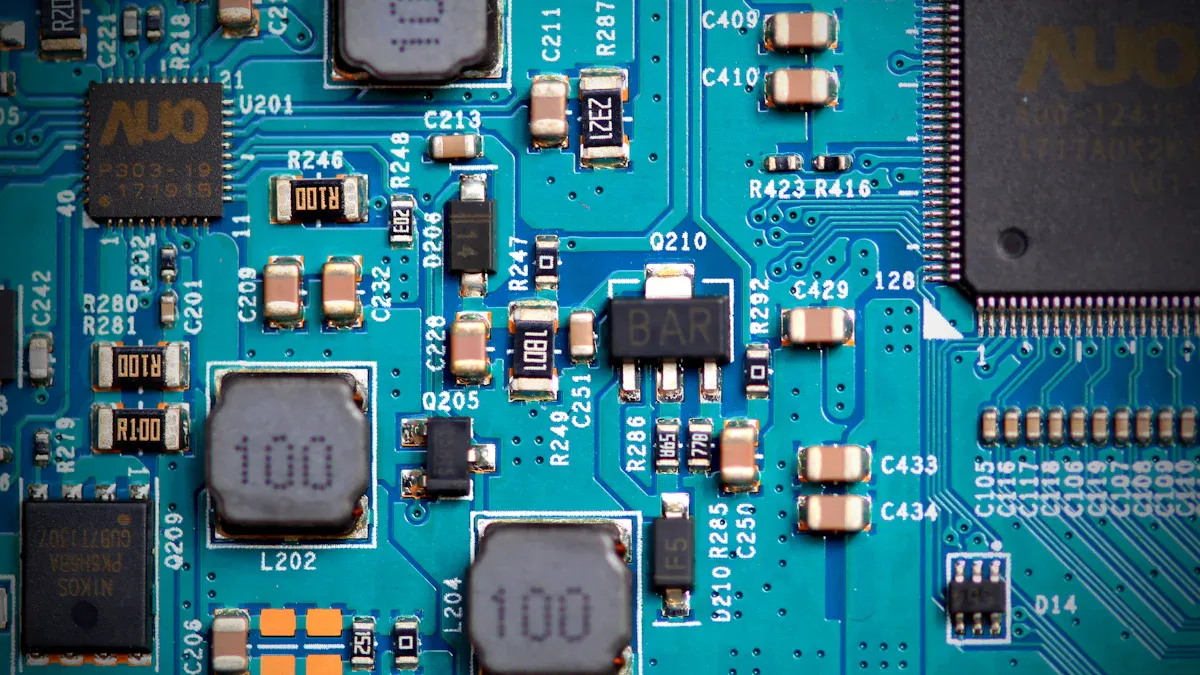
Custom AI server prototypes play a crucial role in meeting the unique demands of Israeli infrastructure startups. These tailored solutions enhance your PCB design processes and boost overall efficiency. By integrating advanced AI capabilities, you can streamline operations and accelerate development cycles. This leads to faster time-to-market for innovative solutions that address the challenges in infrastructure development. Embracing such technology empowers you to stay competitive in a rapidly evolving landscape.
Key Takeaways
Custom AI server prototypes enhance performance and efficiency for infrastructure startups, allowing for faster development cycles and quicker time-to-market.
Tailored PCB designs improve thermal management, signal integrity, and energy efficiency, ensuring reliable operation of AI applications.
Investing in customized PCBs leads to cost savings and scalability, enabling startups to adapt to evolving technology and market demands.
Addressing common PCB design challenges early, such as component placement and trace width, ensures high-quality and reliable AI systems.
Utilizing automated PCB design tools streamlines processes, enhances collaboration, and reduces development time, positioning startups for success.
PCBA in AI Infrastructure
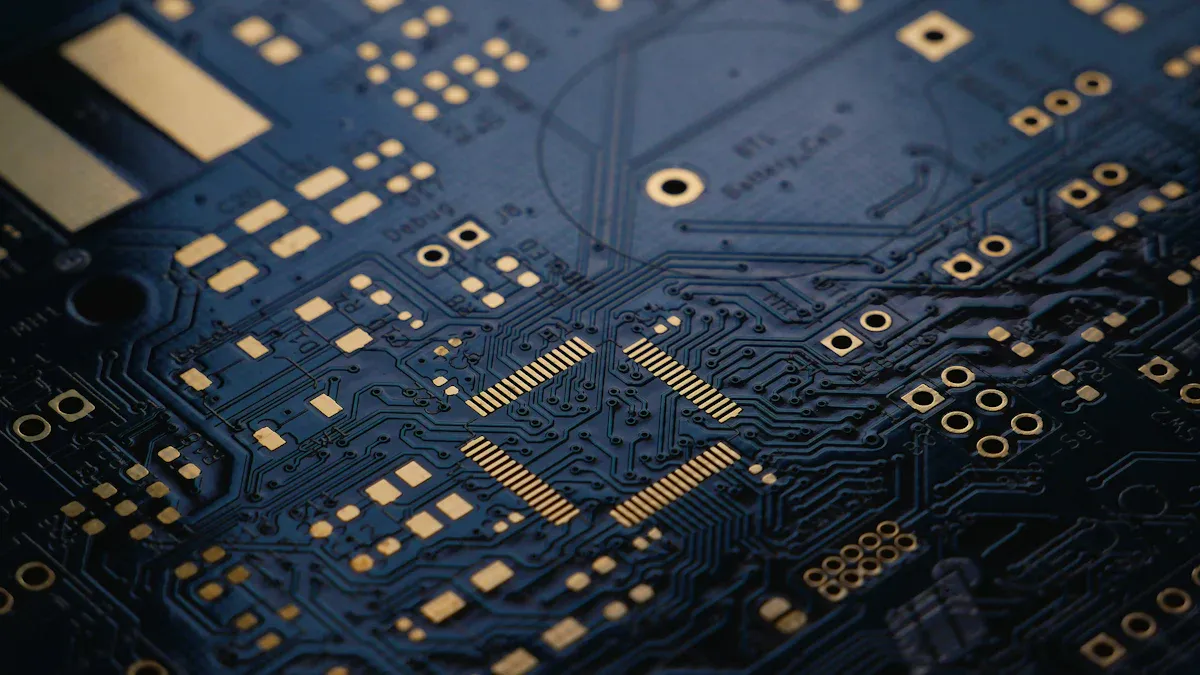
Role of PCBA
Printed Circuit Board Assemblies (PCBA) serve as the backbone of AI infrastructure. They play a vital role in supporting high-performance computing, which is essential for artificial intelligence applications. Here are some key functions of PCBA in AI:
Thermal Management: PCBs help manage heat, ensuring that AI hardware operates safely under high loads.
Signal Integrity: Advanced PCB designs maintain signal integrity, crucial for accurate AI computations.
Energy Efficiency: Optimized board designs minimize energy loss, translating to cost savings for startups.
High-Density Interconnects: HDI boards facilitate faster data communication, necessary for demanding AI workloads.
Heat Dissipation: Thermal vias and heat sinks integrated into PCBs effectively dissipate heat generated by GPUs and CPUs.
Stable Voltage: Low-loss dielectric materials and optimized trace geometry ensure stable voltage, reducing computation errors.
These features empower you to build robust AI systems that can handle complex tasks efficiently.
Customization Benefits
Customization in PCB design offers significant advantages for your AI infrastructure projects. Tailored solutions allow you to meet specific requirements that off-the-shelf products may not fulfill. Here are some benefits of customization:
Enhanced Performance: Custom PCBs can be designed to optimize performance for specific AI applications, ensuring that your systems run smoothly.
Cost-Effectiveness: By designing PCBs that fit your exact needs, you can avoid unnecessary features that increase costs.
Faster Prototyping: Custom designs enable rapid prototyping, allowing you to test and iterate quickly.
Scalability: As your startup grows, customized PCBs can be adapted to accommodate new technologies and increased workloads.
Investing in customized PCBs positions you to leverage the full potential of AI infrastructure, driving innovation and efficiency in your projects.
Custom AI Server Prototypes
Performance Enhancement
Custom AI server prototypes significantly enhance performance in AI workloads. These tailored solutions address the unique demands of artificial intelligence applications, leading to superior results compared to off-the-shelf servers. For instance, custom AI server prototypes can support 4 to 8 GPUs, while standard servers typically manage only 1 to 2 GPUs. This capability ensures full PCIe bandwidth, preventing GPU starvation and maximizing processing power.
Moreover, custom designs tackle critical issues such as memory capacity and thermal management. Standard servers often fall short in meeting the memory requirements for large AI models. In contrast, custom solutions provide the necessary memory to operate efficiently, allowing you to run complex algorithms without bottlenecks. By optimizing thermal management, these prototypes maintain safe operating temperatures, ensuring reliability during intensive computations.
Case Studies
Several successful implementations of custom AI server prototypes demonstrate their effectiveness. Below is a summary of notable case studies showcasing measurable outcomes:
Case Study Description | Measurable Outcomes |
|---|---|
Cloud Infrastructure | 40-70% cost reduction, 5-10x faster deployment cycles, full ROI within 3-6 months |
n8n Automation | 85% cost reduction, 10x efficiency improvement |
Customer Support Automation | 80% reduction in response times |
Cloud Infrastructure Optimization | 60% cost reduction, 99.9% uptime |
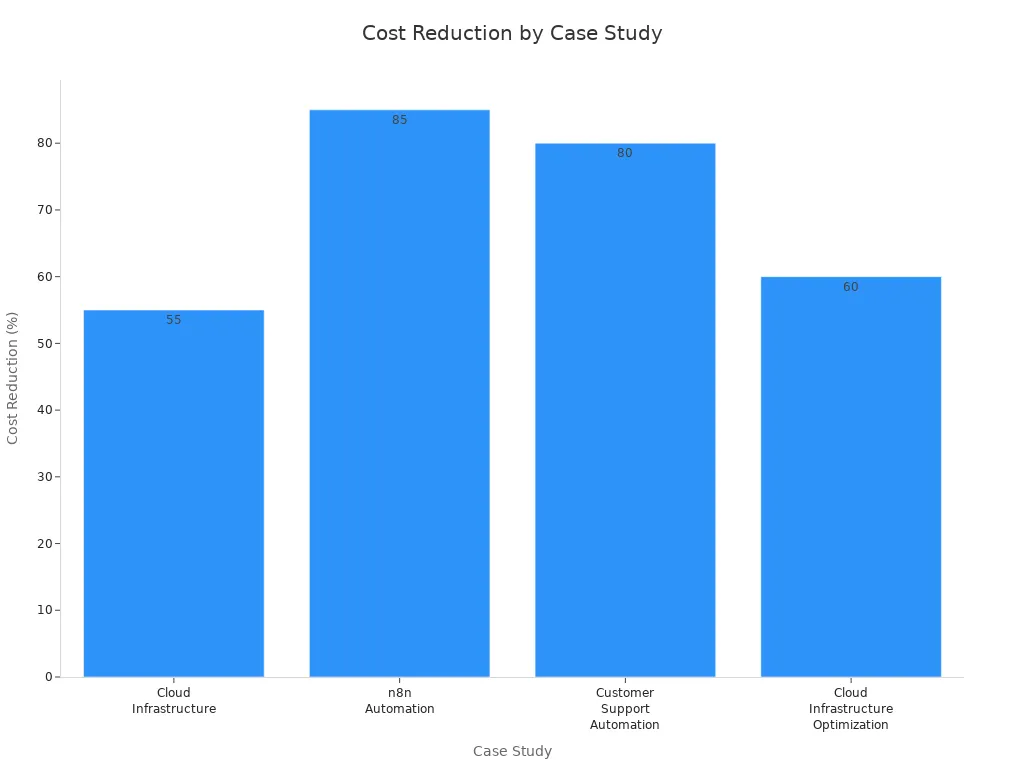
These case studies illustrate the transformative impact of custom AI server prototypes on operational efficiency and cost-effectiveness. By investing in these tailored solutions, you position your startup to leverage advanced AI capabilities, driving innovation and enhancing your competitive edge in the infrastructure sector.
Challenges in PCB Design
Common Issues
When developing PCBs for AI server prototypes, you may encounter several common issues that can hinder your progress. Addressing these challenges early in the design process is crucial for ensuring a successful outcome. Here are some prevalent problems you might face:
Component Placement: Incorrect placement can lead to signal integrity problems, affecting the overall performance of your AI systems.
Trace Width: Insufficient trace width may cause overheating and potential failure, which can disrupt your operations.
Via Size: Using the wrong via size can impact the overall performance of the PCB, leading to inefficiencies in your AI applications.
Identifying these issues early can lead to first-pass success, ensuring that your designs meet quality and reliability standards.
DFM and BOM Importance
Design for Manufacturability (DFM) plays a critical role in the PCB design process for AI server prototypes. By focusing on DFM, you can ensure that your designs are not only functional but also easy to manufacture. Here are some key reasons why DFM is essential:
DFM helps identify potential issues early, reducing the risk of costly revisions later in the process.
It ensures that your designs meet quality and reliability standards, which is vital for AI applications that require high performance.
Component Placement: Incorrect placement can lead to signal integrity problems.
Trace Width: Insufficient trace width may cause overheating and failure.
Via Size: Using the wrong via size can affect the overall performance of the PCB.
An optimized Bill of Materials (BOM) also significantly impacts the cost and reliability of your AI server PCBAs. A well-structured BOM can streamline your procurement process and enhance your project’s efficiency. Consider the following strategies for optimizing your BOM:
Strategy | Impact |
|---|---|
Systematic analysis of BOM material costs | Identifies high-value components for cost savings |
Component standardization | Achieves cost reductions and simplifies inventory management |
Design for Manufacturability (DFM) | Reduces assembly costs and improves product quality |
Strategic supplier partnerships | Yields better pricing and enhances resilience against disruptions |
Cross-functional collaboration | Prevents siloed decision-making and enables holistic cost optimization |
Outdated information in your BOM can lead to inadequate parts procurement, resulting in increased costs and timelines due to mistakes in purchasing. This can necessitate the use of substitute components, further complicating your design process. By prioritizing DFM and maintaining an optimized BOM, you can mitigate these challenges and enhance the overall success of your PCB design efforts.
Solutions with Automated PCB Design
Rapid SMT Feedback
Rapid feedback from Surface Mount Technology (SMT) and engineering teams can significantly enhance your PCB design processes. By implementing automated PCB design tools, you can streamline communication and reduce the time it takes to identify and resolve issues. For instance, tools like Flux AI offer built-in simulation features that allow you to test designs in real-time. This capability helps you catch errors early, minimizing costly revisions later.
Moreover, rapid SMT feedback enables you to adhere to industry standards while addressing customer pain points. You can quickly adjust designs based on performance metrics, ensuring that your printed circuit boards (PCBs) meet the specific needs of your AI applications. As one industry expert noted, “The ability to receive immediate feedback on design iterations can cut development time in half.” This efficiency is crucial for startups aiming to stay competitive in the fast-paced data center infrastructure market.
Collaboration Models
Collaboration models play a vital role in the success of your PCB projects. Engaging in partnerships through Non-Disclosure Agreements (NDAs), Original Equipment Manufacturer (OEM) agreements, and Original Design Manufacturer (ODM) collaborations can provide you with the flexibility and security needed for innovation.
NDA Projects: These agreements protect sensitive information, allowing you to share your ideas without fear of intellectual property theft.
OEM Partnerships: Collaborating with OEMs can help you leverage their manufacturing capabilities, ensuring high-quality production of your custom PCBs.
ODM Collaborations: Working with ODMs allows you to focus on design while they handle manufacturing, streamlining your workflow.
Utilizing these collaboration models can enhance your project outcomes and foster innovation. By integrating automated PCB design tools, you can further improve efficiency and reduce costs, ultimately positioning your startup for success in the competitive landscape of AI infrastructure.
Tool Name | Description | Key Features |
|---|---|---|
CADY | Platform-agnostic tool supporting various CAD software. | Quick inspection run-time, concise reporting. |
Circuit Tree | GUI-based online tool for generating PCB designs. | High-level requirement inputs, saves 70-90% design effort. |
JITX | Next-generation software for automating circuit board design. | Flexible engagement options, backend tools for faster delivery. |
Flux AI | Browser-based tool for rapid PCB design. | Reusability, collaboration, built-in simulation, AI assistant Copilot. |
By leveraging these automated PCB design solutions, you can enhance your design processes and drive innovation in your AI infrastructure projects.
Custom AI server prototypes revolutionize the way you approach PCB design in your infrastructure startup. These tailored solutions enhance performance, streamline processes, and reduce costs. By leveraging advanced AI capabilities, you can optimize your PCBs for specific applications, ensuring efficiency and reliability.
As you navigate the challenges of PCB development, remember that investing in custom designs positions you for success. With support for rapid prototyping and small batch production, you can adapt quickly to market demands. Embrace the transformative potential of custom AI server prototypes to drive innovation and maintain a competitive edge in the evolving landscape of infrastructure technology.
FAQ
What is a custom AI server prototype?
A custom AI server prototype is a tailored computing solution designed to meet specific needs in AI applications. It optimizes performance, supports multiple GPUs, and enhances thermal management, making it ideal for demanding workloads.
How does customization benefit my startup?
Customization allows you to design PCBs that fit your unique requirements. This leads to enhanced performance, cost savings, and faster prototyping, enabling you to adapt quickly to market changes and technological advancements.
What challenges might I face in PCB design?
Common challenges include component placement, trace width, and via size. Addressing these issues early can prevent performance problems and ensure your designs meet quality standards.
Why is DFM important in PCB design?
Design for Manufacturability (DFM) ensures your designs are easy to manufacture. It helps identify potential issues early, reducing costly revisions and ensuring high-quality production for your AI applications.
How can automated PCB design tools help?
Automated PCB design tools streamline the design process by providing rapid feedback and simulations. They enhance collaboration and reduce development time, allowing you to focus on innovation and efficiency.
See Also
Prototype PCBA Solutions for Israeli AI Startup Infrastructure
PCBA Prototypes for Israeli Vision and Security Hardware
PCBA for Israeli Autonomous Devices and Security Vision
Comprehensive AI Server PCBA Services for Singapore Data Centers