AI control boards revolutionize the PCB assembly process for Austrian manufacturers. These advanced systems streamline automation, significantly improving efficiency and reducing errors. By utilizing data-driven models, industrial AI PCB adapts to complex challenges and enhances product quality. With AI tools managing layout optimization and defect detection, you can achieve unparalleled accuracy in your manufacturing processes.
Key Takeaways
AI control boards significantly enhance automation in PCB assembly, improving efficiency and reducing errors.
Real-time data sharing and communication foster a responsive manufacturing environment, allowing for quick adjustments and better collaboration.
Investing in AI technology can lead to long-term savings through improved quality control and reduced production costs.
AI Applications in PCBA
Enhancing Automation
AI control boards play a crucial role in enhancing automation processes within PCB assembly. By integrating advanced algorithms, these systems streamline various manufacturing tasks. Here are some key ways that industrial AI PCB enhances automation:
Automated Visual Inspection: AI systems significantly improve inspection accuracy and speed. They detect defects that human inspectors might overlook, ensuring higher quality products.
Predictive Maintenance: AI analyzes real-time data to predict equipment failures. This capability reduces downtime and maintenance costs, allowing you to maintain a smooth production flow.
Quality Assurance Enhancement: Continuous monitoring of manufacturing processes enables early identification of issues. This proactive approach improves product reliability and customer satisfaction.
Cost Optimization: AI identifies inefficiencies in your manufacturing processes. By optimizing material usage, it helps reduce scrap rates and overall production costs.
Real-Time Decision Support: AI provides insights that facilitate agile decision-making. You can make informed choices regarding production scheduling and supplier selection.
Enhanced Supply Chain Management: AI predicts demand and optimizes inventory levels. This capability reduces lead times and ensures timely deliveries to your customers.
Real-Time Communication
Real-time communication is another significant benefit of AI in PCB assembly. With AI control boards, you can achieve seamless interaction between machines and operators. This connectivity fosters a more responsive manufacturing environment.
AI systems facilitate:
Instant Data Sharing: You can access real-time data from various machines and sensors. This information allows for quick adjustments to production processes.
Improved Collaboration: AI enhances communication between different departments. Teams can work together more effectively, sharing insights and addressing issues as they arise.
Enhanced Monitoring: AI continuously monitors equipment performance. You receive alerts about potential problems, enabling you to take corrective actions before they escalate.
Incorporating AI into your PCB assembly processes not only enhances automation but also fosters a culture of continuous improvement. By leveraging these technologies, you position your manufacturing operations for success in a competitive market.
Benefits of Industrial AI PCB
Stability and Reliability
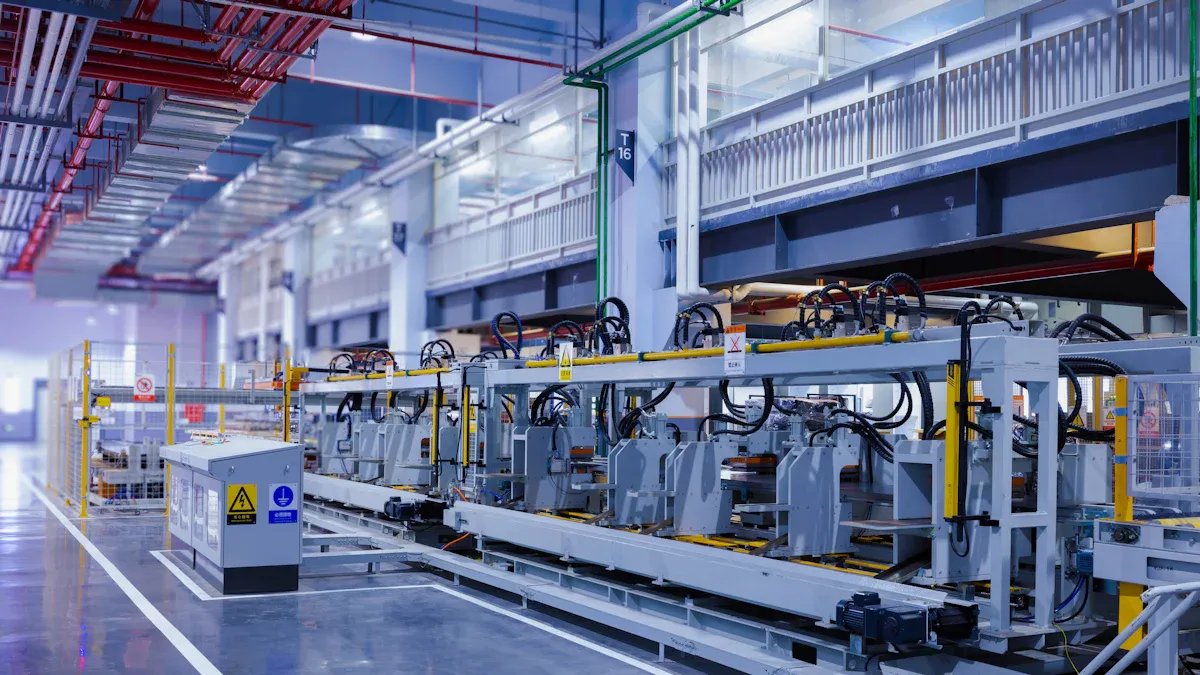
Integrating industrial AI PCB into your manufacturing processes significantly enhances stability and reliability. These systems manage power and signal integrity, ensuring consistent performance across your production lines. Here are some key aspects of how AI contributes to increased reliability in PCB assembly:
Power Management: AI algorithms optimize power distribution, reducing fluctuations that can lead to equipment failure. This stability ensures that your machinery operates smoothly, minimizing unexpected downtimes.
Signal Integrity: AI monitors signal paths in real-time, identifying potential issues before they escalate. By maintaining signal quality, you enhance the overall performance of your automation equipment.
Continuous Operation: With AI-driven systems, you can expect uninterrupted operation. These technologies support the continuous, reliable functioning of critical electronics, which is essential for high-reliability applications.
Aspect | Description |
|---|---|
Company | SVI Public Company Limited |
Focus | High-reliability electronics manufacturing, including PCB assembly for automation equipment |
AI Contribution | Enhances manufacturing processes, particularly in AI infrastructure for data centers |
Reliability Impact | Supports continuous, reliable operation of critical electronics, contributing to increased reliability |
Quality Control Enhancements
Quality control is paramount in PCB manufacturing, and industrial AI PCB systems excel in this area. By leveraging advanced analytics and machine learning, you can achieve superior quality assurance. Here are some advantages of AI-driven quality control:
Automated Defect Detection: AI systems analyze images from automated visual inspections, identifying defects with remarkable accuracy. This capability reduces the risk of faulty products reaching the market.
Data-Driven Insights: AI collects and analyzes data from various stages of production. You gain valuable insights into process variations, allowing you to make informed adjustments that enhance product quality.
Predictive Analytics: By predicting potential quality issues, AI enables you to implement corrective measures proactively. This approach minimizes waste and ensures that your products meet stringent quality standards.
Incorporating industrial AI PCB into your operations not only boosts stability and reliability but also elevates your quality control processes. By embracing these technologies, you position your manufacturing for success in an increasingly competitive landscape.
Challenges of AI Integration
Technical Barriers
Integrating AI into your PCB assembly processes presents several technical barriers. You may encounter complexities in industrial applications, which can hinder smooth implementation. Here are some common challenges:
Complexity of Applications: Many industrial processes require sophisticated AI solutions that can adapt to various scenarios.
Data Quality Issues: A lack of high-quality data can impede AI performance. You might spend 40-50% of your time preparing data for analysis.
Domain Understanding: Achieving a solid grasp of your business and industry can require 25-40% of your effort.
To overcome these barriers, consider the following solutions:
Solution Description | Examples |
|---|---|
Optimisation of work processes | Project Helix by Dell and NVIDIA enhances customer service through AI. |
Data analysis and utilisation of unused data | Project Helix unlocks value from previously unused data. |
Provision of training and tools | AWS Generative AI Innovation Centre offers workshops for AI implementation. |
Specific AI applications for industry | MVTec and Techman Robots create tailored AI solutions for image recognition. |
User-friendly integration | Solutions like “horstOS” allow easy integration into existing systems. |
Improve accuracy and efficiency | Techman Robots’ AI achieves precision up to 0.03 millimetres. |
Security and data protection | STMicroelectronics microprocessors ensure data protection during AI integration. |
Cost Considerations
Cost is another significant factor when integrating AI into your manufacturing processes. Initial investments in AI technology can be substantial. You must also consider ongoing costs related to maintenance and updates. Additionally, hiring skilled personnel to implement and manage AI solutions can add to your expenses.
Investing in AI can yield long-term savings through improved efficiency and reduced errors. However, you should carefully evaluate your budget and resources before proceeding.
By addressing these challenges, you can successfully integrate AI into your PCB assembly processes, enhancing your manufacturing capabilities and maintaining a competitive edge.
AI control boards offer significant benefits for your PCB assembly processes. They enhance automation, improve quality control, and ensure stability. However, you must navigate technical barriers and cost considerations. Embrace these technologies to elevate your manufacturing efficiency and maintain a competitive edge in the automation industry.
FAQ
What are the main benefits of using AI control boards in PCB assembly?
AI control boards enhance efficiency, reduce errors, and improve product quality, leading to streamlined manufacturing processes.
How does AI contribute to predictive maintenance in automation?
AI analyzes real-time data to predict equipment failures, minimizing downtime and maintenance costs for your operations.
Why should I consider bonysn for my industrial control PCB needs?
Bonysn offers reliable support, proven case studies, and positive user reviews, ensuring high-quality solutions for automation equipment manufacturers.
See Also
Tailored AI PCBA Solutions for Czech Industrial Electronics
AI Prototype PCBA Development for Israeli Security Technologies
OEM Production of AI PCBA for Polish Electronics Firms
Precision AI PCBA Solutions for Swiss Medical Instruments
Bespoke AI PCBA Production for Mexican Electronics Businesses