

An OEM should split PCBA, box build, and testing by matching each task to a partner’s main strengths, volume and complexity fit, location, and total landed cost. Many teams base this split on a lead-partner model.
The acronym covers PCB assembly. Box build covers final product assembly and integration. Testing covers in-circuit, functional, and system-level checks.
A well-planned split lowers total cost, speeds time-to-market, protects quality, and reduces supply chain risk. An original equipment manufacturer can use the same logic across electronic contract manufacturers. This guide gives every electronics contract manufacturing company a step-by-step framework and a decision checklist for electronic contract manufacturing success.
Key Takeaways
First, look at how complex your product is and how many you need. Then you can match each task to the right partner.
Rate partners on their specific skills for PCBA, box build, and testing to make sure quality stays high.
Choose one lead partner or several partners based on cost, risk, and how much coordination you need.
Make clear handoff and quality agreements so all partners stay on the same page and are held responsible.
Check your partner split often as your product and volumes change, so you stay efficient.
Assess Product and Volume First
Map Complexity, Mix, and Lifecycle
Board complexity is the first thing to check. A weighted score helps here: below 50 is very simple, 50–125 is moderately complex, and above 125 is high complexity, and these thresholds can be adjusted to a firm’s capability. Layer count, component count, unfamiliar assembly processes, new board materials, and special interconnection needs all push the score upward. Cost follows that curve. A simple 2-layer board might cost roughly $20–$80 per unit at 1–10 units, while an 8+ layer or HDI design can go over $150 per unit even at low volumes. Removing one layer can save about 20–30% on fabrication.
Product mix and lifecycle stage then point toward different partner profiles. Prototype and ramp phases reward engineering depth, so buyers should ask whether the supplier offers DFM review during onboarding and documents experience with HDI, BGA, or flex boards. Mature and end-of-life phases reward stable process control and volume scaling without a forced partner switch. High-complexity designs deserve a specific quote from Gerber and BOM data before any budgeting.
Quantify Volume and Logistics Profile
Volume bands turn complexity into a shortlist. Low-volume, high-mix work suits partners with flexible lines and quick changeovers. Higher volumes favor suppliers with dedicated capacity and turnkey component sourcing. Buyers should ask for realistic lead times for their quantity tier, both with and without component sourcing, and confirm the supplier can scale later.
Forecast stability and shipping profile complete the picture. Volatile forecasts call for partners who hold buffer inventory or sit close to the market. Stable, high-volume programs tolerate longer freight lanes and consolidated shipments. An electronics contract manufacturing company should record these inputs before scoring partners, because they shape every later allocation decision, including where testing sits.
How to Choose the Right ECM Partner for Each Activity
Score PCBA, Box Build, and Test Skills
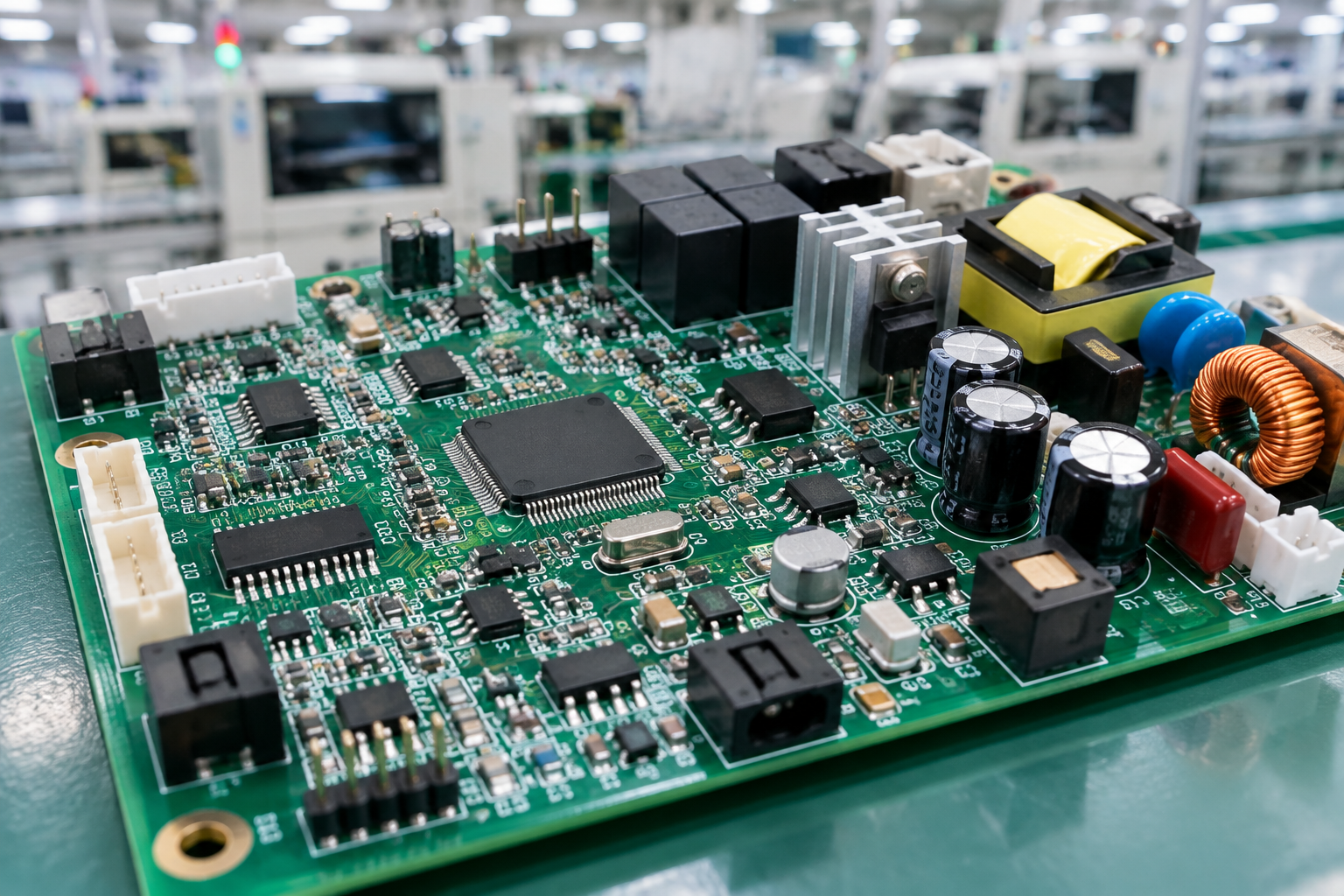
Each activity fits a different supplier role. A PCBA supplier handles PCB fabrication, component sourcing, SMT, and DIP. It delivers finished boards from a complete BOM, Gerber files, and test specifications. A box build factory puts together structural parts, cables, and screws, and joins the PCBA with the enclosure into a finished unit. A test supplier can be an independent third-party lab or part of the assembly factory. When an OEM splits testing out separately, it must define test standards, fixture ownership, and report format up front.
Scoring should rest on measurable indicators, not impressions. For PCB assembly, look at flying probe testing, in-circuit testing (ICT), burn-in testing, automated optical inspection (AOI), and other functional testing. For box-build and system integration, weigh functional testing, system-level testing, environmental testing, burn-in testing, and customer-specific validation requirements. Supply chain strength matters too: supplier management processes, material planning, obsolescence management, global sourcing expertise, inventory strategies, and risk mitigation programs. Track first pass yield (the share of boards passing on the first try), defect rates, on-time delivery, and process capability (Cp/Cpk) as ongoing scorecard metrics.
Check Certifications, Capacity, and Location
Choosing a partner goes beyond capacity and cost, especially for high-reliability electronics. Operating quality systems and supply chain coordination decide whether a split works in practice.
The core certifications to look for are ISO 9001 (quality baseline), IATF 16949 (automotive), AS9100 (aerospace/defense), ISO 13485 (medical devices), and ITAR registration (defense and export-controlled programs). Certifications must be verified at the specific facility level, not just accepted as corporate-level claims — a supplier’s headquarters may be certified while a particular production site is not.
Certification
Relevance to PCB Assembly, Box Build & Testing
ISO 9001
Global quality management baseline for any serious manufacturing partner.
ISO 13485
Required for medical devices; stricter process controls and traceability.
IATF 16949
Automotive quality standard covering risk management and defect prevention.
IPC-A-610, J-STD-001
Workmanship benchmarks for PCB assembly and soldering.
AS9100
Aerospace and defense requirements with stricter traceability.
Location shapes total landed cost. A supplier may be 4% more expensive at source yet 7% cheaper landed once freight, tariffs, inventory, and risk enter the math. The chart below shows how 5–10% FOB savings can disappear through logistics and duties.
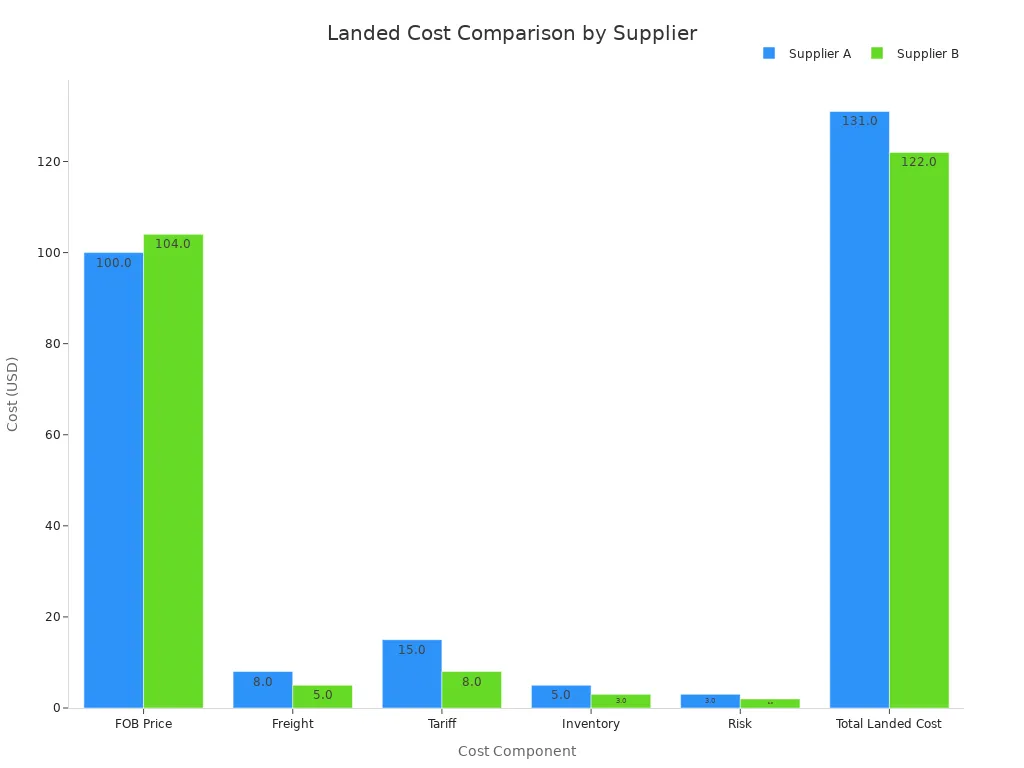
Nearshoring shortens transportation time and lowers logistics complexity, though manufacturing cost may run higher. This is the practical core of how to choose the right ECM partner: compare supplier, country, and distribution center together, not FOB price alone.
Choose Single or Multiple Electronic Contract Manufacturing Partners
Weigh Electronic Manufacturing Services Trade-Offs
The choice between one partner or many comes down to five areas: cost, quality, risk, time-to-market, and logistics. Each setup fits a different case, and neither one is best in every situation.
A single partner brings sourcing, assembly, and logistics together into one relationship. The table below shows where that setup pays off.
Trade-off Dimension | Effect of a Single Partner |
|---|---|
Supply chain | One trusted partner means fewer vendors to manage, which saves time and resources |
Cost efficiency | Combining sourcing, assembly, and logistics lowers overhead |
Quality | Putting assembly, inspection, and testing in one place keeps output steady and compliant |
Time-to-market | Joined-up processes and skilled engineering make production cycles shorter |
Integration | PCB assembly, wiring, enclosures, and software come together as one fully tested system |
Multiple partners fit a different profile. An OEM with a strong supply chain setup can buy each activity on its own and get sharper pricing on commodity work. That model works best for firms with the staff to handle several relationships.
Cost structure explains the trade-off. A turnkey quote bundles component cost (the contract manufacturer’s landed BOM cost plus a procurement markup for sourcing and logistics overhead), PCB cost, NRE for stencils and programming, assembly labor, and test labor into one invoice. The markup is the price of simplicity. Firms without dedicated supply chain teams often find that price worth paying.
Decide Where a Lead Partner Fits
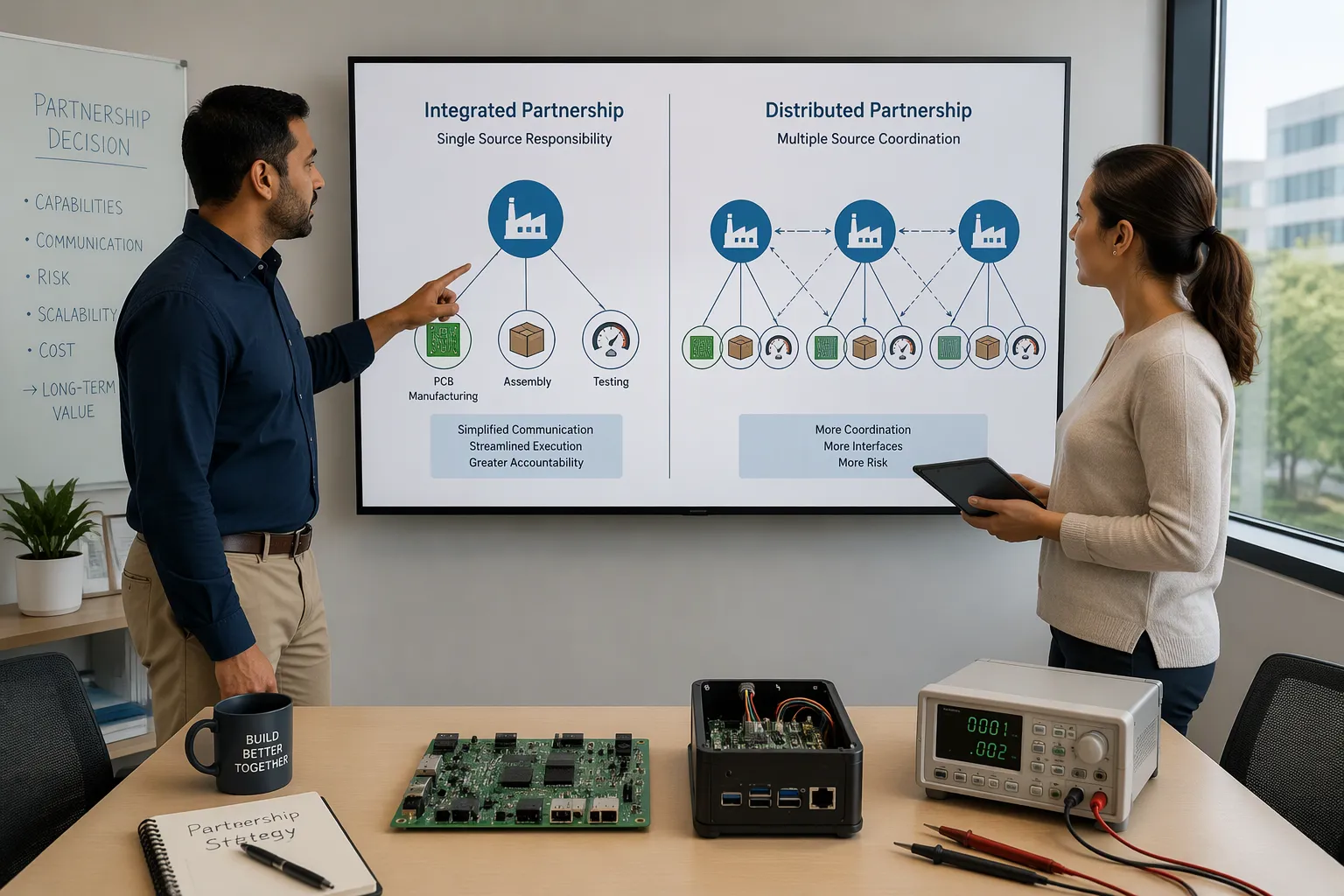
Splitting production between separate board suppliers and system integrators often creates friction. Managing separate suppliers for PCB assembly, cable assembly, and box build adds cost in coordination, documentation, logistics, and quality management. Every handoff adds a risk point for errors, delays, and gaps in accountability.
A lead-partner model takes on that coordination. One full-service EMS provider covering PCB assembly, cable assembly, box build, and protection processes cuts down handoffs, simplifies traceability, streamlines change management, and puts commercial leverage in one relationship. The OEM keeps a single point of accountability for testing and final integration.
Responsiveness shows how a partner performs under pressure. Timely, technically informed answers, proactive risk identification, and steady communication directly affect timelines and outcomes. Certifications signal process maturity in the same way. ISO-certified quality systems and ITAR compliance show structured, repeatable processes, consistency, traceability, and accountability for high-reliability applications.
The lead-partner designation does not force every activity under one roof. An electronics contract manufacturing company can name a lead EMS contract manufacturer for integration and testing while keeping a specialized board shop for niche work. The lead partner then owns the handoffs, the documentation flow, and the quality agreement across the chain. This structure gives the OEM the coordination benefits of a single relationship without giving up specialized capability. Contract manufacturing arrangements of this kind work best when the lead partner holds clear authority over scheduling and change control.
Allocate Activities and Lock In Coordination
Assign PCB Assembly, Box Build, and Testing
The allocation step turns partner scores into written duties. The OEM names the party that gives the BOM, Gerber files, and test specs to the PCBA supplier. It also says who owns consigned inventory at each stage. A clean split gives pcb fabrication and assembly to the board shop, box-build integration to the assembly factory, and functional testing to whichever partner holds the right fixtures and standards.
Each activity needs a named owner for every handoff. The board shop ships finished boards to the integrator against an agreed acceptance record. The integrator holds the enclosure and cable inventory. When testing sits with a third party, the OEM sets the test limits, the fixture owner, and the report format before work starts. This clarity keeps an electronics contract manufacturing company from paying twice for the same step.
Set Handoffs, Quality Agreements, and Governance
A quality agreement turns product requirements into inspection and test instructions. It states who supplies the limits, who approves the procedure, and which records the OEM receives. Key elements include:
IP protection for designs, firmware, and specifications
Component traceability and IPC standards compliance
RoHS and FCC conformity where applicable
Secure transfer of design files and manufacturing data
The agreement also covers failure reporting, disposition authority, and how corrective work is recorded. Certification claims need current verification at the facility level.
Governance keeps multiple electronic contract manufacturers aligned. A practical cadence looks like this:
Mechanism | Practice |
|---|---|
Performance reviews | Quarterly reviews tiered by risk, tied to KPIs |
Communication | Named contacts per issue type and scheduled touchpoints |
Escalation | Documented paths for disruptions and disputes |
A dedicated relationship owner per partner manages daily coordination. This structure supports contract manufacturing across several sites. It also lets an EMS provider absorb change control. Strong governance makes contract manufacturing predictable for every electronics contract manufacturing company involved.
The framework moves in four steps. An OEM first checks the product and volume. Next, it scores partners for each activity. Then it weighs one partner against several, using clear trade-offs. Last, it writes down who does what and how they will work together. A short checklist keeps the decision on track:
Complexity tier and volume band written down
Partner scorecard results compared for each activity
Lead-partner choice confirmed
Handoff and quality agreement status checked
An electronics contract manufacturing company should review this split as volumes and product lines change. A partner that fits a prototype program may not fit a mature one. Regular reviews keep the structure matched to current demand.
FAQ
Which activity should an OEM keep closest to the end market?
Box build and final testing usually stay closest to the customer. Shipping finished units long distances adds freight and damage risk. An OEM often places integration near the destination market and keeps board fabrication wherever capability and cost favor it.
How does an OEM split testing when the assembly factory offers it?
The assembly factory can take on functional testing when it already has the fixtures and limits. The OEM must still name the test standard, the fixture owner, and the report format in writing. A separate lab fits cases that need independent verification.
When does a lead-partner model make sense?
A lead-partner model fits programs with several handoffs and tight schedules. One ems provider then owns scheduling, change control, and quality records across the chain. The OEM keeps a single point of accountability for integration and final test.
What should a quality agreement cover across partners?
The agreement should define inspection limits, approval authority, traceability records, and failure disposition. It should also cover IP protection and design file transfer. Certification claims need verification at the facility level, such as ISO 9001 or IATF 16949.
How often should an OEM revisit the split?
An OEM should review the split whenever volumes, product mix, or lifecycle stage shifts. A partner suited to prototype work may not suit mature production. Regular reviews keep aligned with current demand and protect total landed cost.
See Also
Tailored AI PCBA Production Services for Electronics Firms in Mexico
AI-Driven Lab Automation PCBA Solutions for Irish Medical Technology Firms
OEM AI PCBA Production for Electronics Manufacturing Plants in Poland
AI-Powered Inspection PCBA Systems for Manufacturing Facilities in Mexico
AI IoT PCBA Production Services for Hardware Businesses in Malaysia