
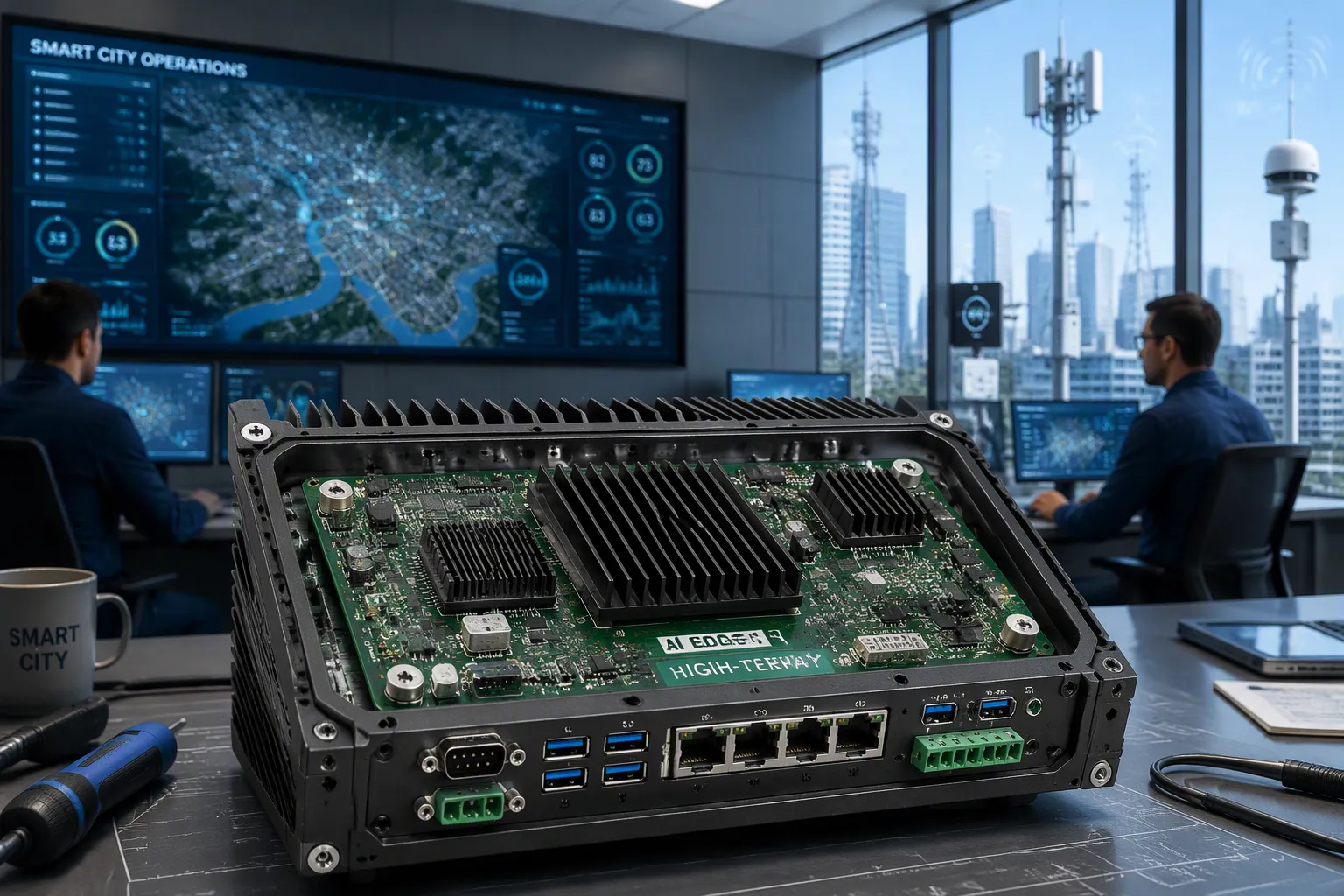
High-temperature PCB assembly for a smart city AI gateway PCBA requires specialized materials, processes, and design rules. Standard commercial-grade practices fall short here. Three thermal load sources drive that gap: AI inference chips that dissipate concentrated heat, sealed outdoor enclosures that trap it, and 24/7 operation that leaves no cool-down window. Together, these conditions push boards toward elevated, sustained temperatures that ordinary laminates and assembly flows cannot tolerate. This post compares the available material and process options neutrally. It shows where each option fits best. It also covers qualification methods and cost optimization, so engineers can match assembly choices to the real deployment environment.
Key Takeaways
AI chips and sealed outdoor cases create trapped heat that standard PCBs cannot handle.
High-Tg FR-4 works well for most gateway boards and keeps costs low.
Polyimide, metal-core, and ceramic substrates fit special needs like compact or high-power sections.
Test boards with powered burn-in and thermal cycling to match real outdoor conditions.
Compare total cost of ownership, not just unit price, to avoid field failures.
Why AI Gateways Demand High-Temp PCBA
Heat From AI Chips and 24/7 Operation
Local AI inference creates a dense, continuous thermal load. The SoC runs vision models and decision logic at high utilization. Its memory devices sit close by and add their own heat. Unlike a cloud server, an edge gateway has no room for large fans or chilled air. Heat builds inside a small case.
Continuous operation removes the recovery window. A gateway that runs all day never returns to ambient temperature. Thermal cycling still occurs as workloads rise and fall, and each cycle stresses solder joints and laminate. A smart city AI gateway PCBA must therefore tolerate sustained heat and repeated swings, not just brief peaks.
Outdoor Enclosures and Device Inventory
Field deployments share one trait: sealed enclosures. The hardware inventory includes smart city AI gateways, parking terminals, outdoor security boxes, and traffic vision devices. Each unit sits in a closed case that traps heat and blocks airflow. Sun load adds further energy to dark housings.
Dust and moisture push designers toward tighter seals, and tighter seals reduce heat escape. Power fluctuations on outdoor lines add stress to protection components. Field experience shows that thermal margin, not raw chip speed, often decides whether a unit survives its service life. Designers who plan for the sealed case early avoid costly redesigns later.
Key High-Temp Assembly Considerations
High-Temperature PCB Materials
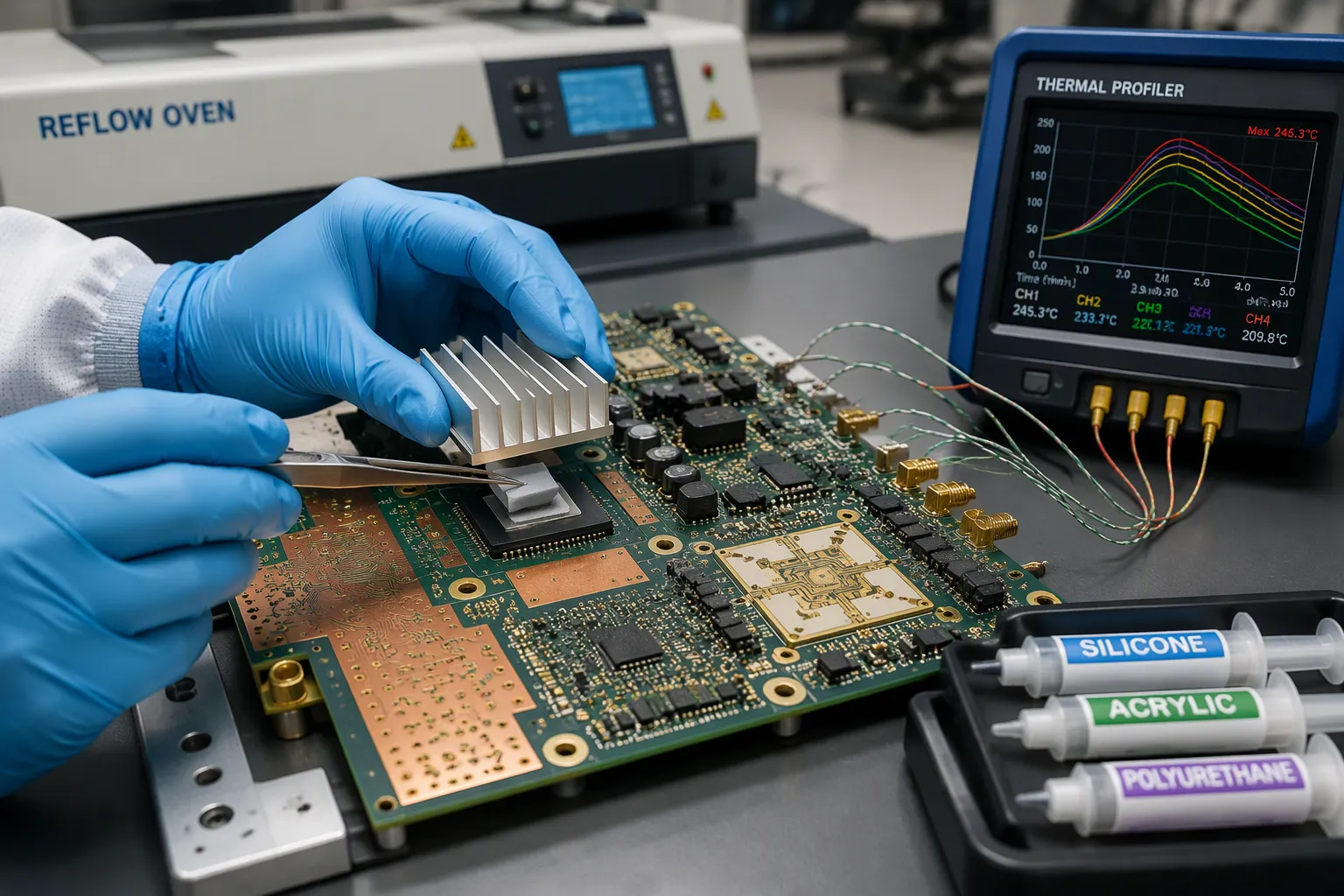
Material choice sets the ceiling for everything downstream. High-Tg FR-4 raises the glass transition temperature well above standard laminate, so the board keeps its stiffness and dimensional stability under sustained heat. It suits most smart city AI gateway boards and keeps cost predictable. Polyimide goes further. It tolerates higher continuous temperatures and flexes without cracking, which fits compact boards and flex-rigid sections. Metal-core PCBs conduct heat away from hot components through an aluminum or copper base, and they fit designs where a few power devices dominate the thermal load. Ceramic substrates offer the strongest thermal path and the closest match to silicon expansion, and they fit high-power RF and dense compute modules where cost is secondary. Each option earns its place; none wins everywhere.
Soldering, Coating, and Thermal Design
Assembly planning starts with the reflow profile. High-temperature alloys need a profile tuned to the actual board, not a generic recipe. Thermal profiling with thermocouples on real assemblies confirms that every joint reaches liquidus without overheating nearby parts. Via stitching spreads heat across copper planes. Thermal pads bridge the gap between the SoC and the heat sink fins, and component placement keeps heat generators apart and away from temperature-sensitive parts. Surge and ESD protection devices sit close to connectors, where transients enter.
Conformal coating adds a second defense layer. The table below summarizes how coating chemistries differ.
Coating Type | High-Temperature Performance | Humidity / Moisture Protection |
|---|---|---|
Silicone | Wide temperature range | Good chemical resistance; resists sea salt |
Acrylic | Rated -55 °C to 130 °C | Protects against moisture, chemicals, salt spray |
Polyurethane | — | Excellent moisture and chemical resistance |
Epoxy | — | Good humidity resistance |
Sealed connectors and packaging treatment for sensitive components complete the barrier. Even small amounts of condensation then cannot easily reach sensitive circuits.
Assembly planning also covers power sequencing, SoC and memory control, storage imaging, and high-speed signal integrity. These concerns shape stackup, test coverage, and fixture design before production begins. A partner with high-Tg PCB expertise, in-house conformal coating, thermal design cooperation, and outdoor functional testing can validate all of this on one line.
Comparing Smart City AI Gateway PCBA Options
Performance, Fit, and Compliance
Performance targets vary widely across the smart city fleet. A parking terminal and a traffic vision device run modest vision models. A central on-prem node handles many camera streams at once. The table below maps typical performance tiers to their thermal profile.
Platform Class | AI Performance | Power Draw | Latency |
|---|---|---|---|
Edge gateway (6-core class) | 20–40 TOPS | 6–47 W, fanless industrial | Not specified |
Edge gateway (8-core class) | 70–100 TOPS | 6–47 W, fanless industrial | Not specified |
On-prem node | 870 TOPS (INT8), 290 TFLOPS (FP8) | 150 W per card | Millisecond response |
The fanless edge tiers suit sealed outdoor boxes, where a 6–47 W envelope keeps case temperature manageable. The on-prem tier demands metal-core or ceramic substrates and a deliberate heat path to fins. Material fit follows the same logic. High-Tg FR-4 covers most gateway boards, polyimide covers compact and flex-rigid sections, and ceramic covers dense compute modules.
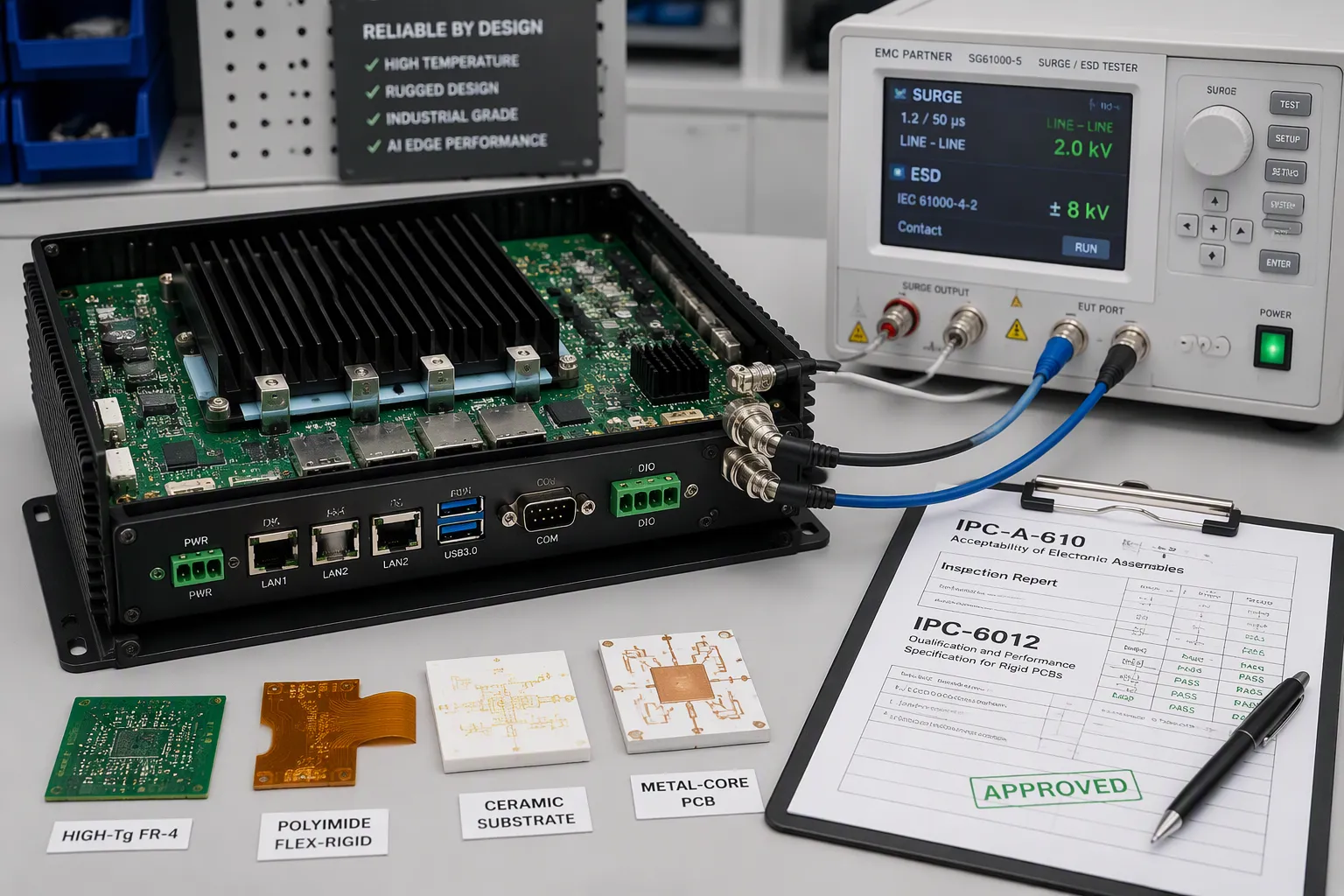
Compliance closes the comparison. A smart city AI gateway PCBA should pass IPC-A-610 Class 2 inspection and IPC-6012 qualification for rigid boards. Outdoor units also need surge and ESD testing at the connector level. Buyers should request test reports, not verbal assurances.
Cost Trade-Offs
Cost tracks thermal ambition. High-Tg FR-4 sits closest to standard laminate pricing and delivers the best cost-per-board for volume gateway builds. Polyimide adds material and process cost, and it earns that premium only in compact or high-cycle designs. Metal-core and ceramic substrates carry the steepest material and tooling costs, and they make sense only where a few hot devices or dense compute modules justify them.
Assembly choices carry their own cost curve. A high-temperature alloy reflow profile takes longer to tune and slows the line slightly. Conformal coating adds a process step and inspection time. Both costs stay modest against the price of a field failure in a sealed box.
Volume changes the math. A large parking terminal rollout spreads tooling and profiling costs across many units, so premium materials become affordable per board. Small batches of specialized traffic vision devices favor proven, lower-cost laminates with generous thermal margin designed in.
Lifecycle cost deserves equal weight. A board that survives its service life without rework protects the operator’s maintenance budget. Buyers should compare total cost of ownership, not unit price alone.
Best Practices for Reliable High-Temp PCBA
Qualifying Smart City AI Gateway PCBA
Qualification starts before the first board is built. Engineers should define the maximum case temperature the sealed enclosure will see, then design the laminate and heat path to that number with margin. A board qualified only at room temperature proves little about field survival.
Testing should mirror the deployment. Thermal cycling between cold night and hot afternoon conditions stresses solder joints the way a parking terminal experiences them. Powered burn-in at elevated temperature confirms that the SoC and memory hold their clocks under sustained load. Connector-level surge and ESD tests verify the protection devices placed near entry points. Inspection follows IPC-A-610 Class 2, and rigid board construction follows IPC-6012. Buyers should ask for the actual reports.
The table below compares qualification depth across three build tiers, using figures established earlier in this article.
Build Tier | Typical AI Load | Thermal Test Focus |
|---|---|---|
Fanless edge gateway (6-core) | 20–40 TOPS, 6–47 W | Powered burn-in in a sealed case |
Fanless edge gateway (8-core) | 70–100 TOPS, 6–47 W | Burn-in plus thermal cycling |
On-prem node | 870 TOPS INT8, 150 W per card | Full heat-path validation to fins |
Cost Optimization
Cost control works best when it follows thermal need, not habit. High-Tg FR-4 covers most gateway boards at a price close to standard laminate. Engineers should reserve polyimide, metal-core, and ceramic substrates for the compact sections and dense compute modules that truly require them.
Process spending deserves the same discipline. A well-tuned reflow profile and a proven coating step cost far less than a field failure in a sealed box. Volume rollouts spread tooling and profiling costs across many units, which makes premium materials affordable per board. Small batches favor proven laminates with thermal margin designed in. Buyers should weigh total cost of ownership against unit price, because a board that lasts its service life protects the maintenance budget.
Thermal loads in smart city deployments make material, process, and design choices decisive. No single option wins everywhere. High-Tg FR-4 fits volume gateway boards, polyimide suits compact sections, and metal-core or ceramic substrates serve dense compute modules. Matching high-temperature PCB assembly practices to the sealed enclosure and its duty cycle yields robust, long-life AI edge hardware. Designers should build thermal margin now, because edge AI workloads keep growing. A smart city AI gateway PCBA designed with headroom today will absorb tomorrow’s heavier inference models without a redesign.
FAQ
Which laminate suits a sealed outdoor AI gateway?
High-Tg FR-4 fits most gateway boards and keeps cost predictable. Polyimide suits compact or flex-rigid sections. Metal-core and ceramic substrates serve dense compute modules. The sealed case and duty cycle decide the choice, not habit.
How does a team verify a board will survive field heat?
Engineers define the maximum case temperature inside the enclosure, then design the laminate and heat path to that number with margin. Powered burn-in, thermal cycling, and connector-level surge testing mirror real deployment. IPC-A-610 Class 2 and IPC-6012 reports provide the paper trail.
What causes most field failures in these units?
Trapped heat ranks first. Sealed housings block airflow, and 24/7 operation removes any cool-down window. A board qualified only at room temperature proves little. Thermal margin, not raw chip speed, often decides whether a unit reaches its service life.
How should buyers weigh cost against thermal ambition?
High-Tg FR-4 sits closest to standard laminate pricing and delivers the best cost-per-board for volume builds. Polyimide, metal-core, and ceramic earn their premium only where compact sections or dense compute modules justify them. Total cost of ownership beats unit price.
See Also
Heat-Resistant AI Server Circuit Boards for UAE Data Centers
UK Edge Computing AI Inference Server PCB Assembly Solutions
Singapore IoT MedTech Turnkey AI Gateway PCBA Services
Malaysian Data Center IoT Edge AI Server PCBA Solutions
Tailored Edge AI PCBA for American Hardware Startup Companies