
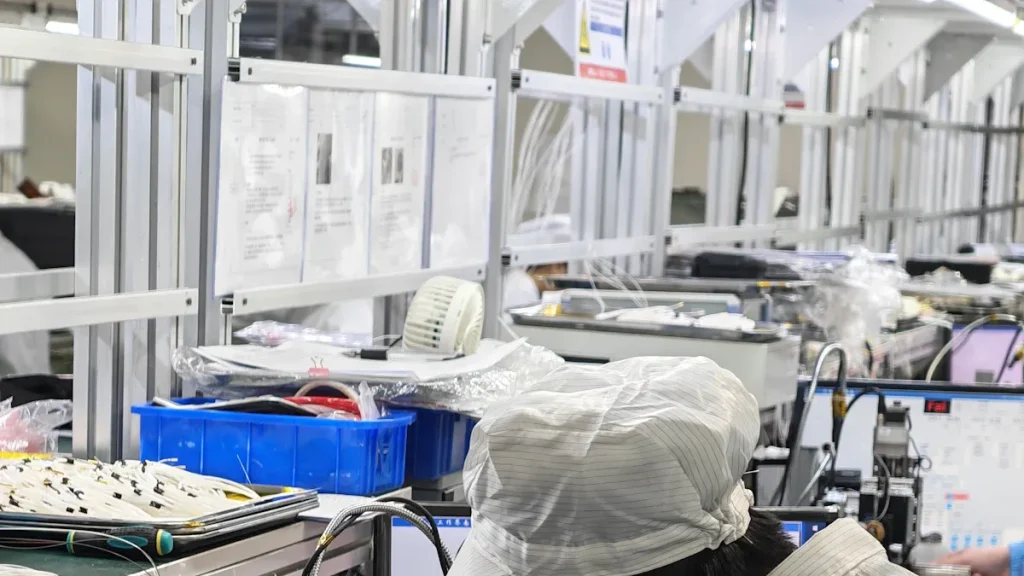
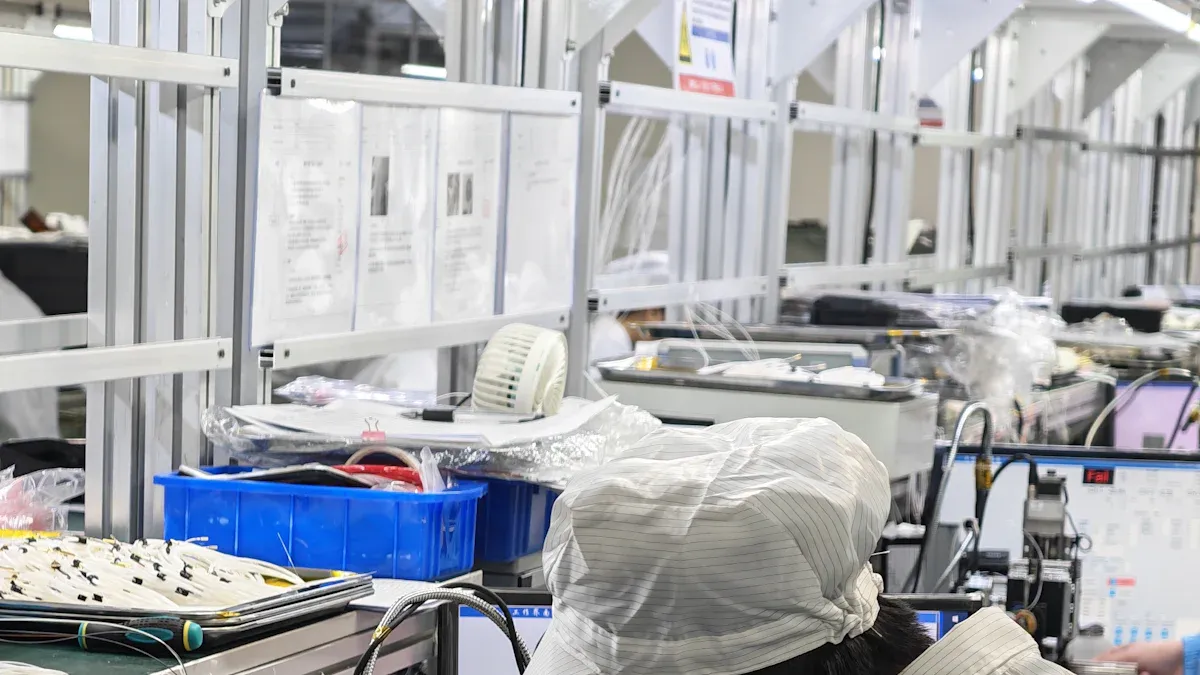
Printed Circuit Board Assemblies (PCBAs) form the technological heart of modern medical devices, demanding non-negotiable standards of quality, reliability, and patient safety. UK innovators face unique challenges and significant opportunities within this highly regulated sector. They must ensure unwavering consistency, reliability, and robust data recording in their medical pcba. This blog guides UK innovators through essential processes for superior medical pcba assembly and robust traceability. It also covers the critical guidelines for achieving these standards. The stakes are profoundly high, directly impacting patient outcomes and demanding stringent regulatory compliance. Adherence to these principles is paramount for success.
Key Takeaways
Adhere to ISO 13485 and IPC Class 3 standards for mandatory medical assembly quality.
Assign unique serial numbers to track every component and step across the supply chain.
Apply Design for Manufacturability early to prevent costly redesigns and manufacturing errors.
Conduct rigorous AOI, X-ray, and functional testing to guarantee complete device reliability.
Partner with certified manufacturers to easily secure UKCA marking and MHRA regulatory approvals.
Understanding Medical PCBA Fundamentals
Medical Printed Circuit Board Assemblies (PCBAs) represent a distinct category from standard commercial PCBs. They form the backbone of critical healthcare devices, where failure carries significant risk. Unlike consumer electronics, medical pcba directly impacts patient well-being, demanding unparalleled precision and reliability. Examples of devices relying on high-quality medical pcba include diagnostic equipment, laboratory instruments, remote health terminals, and wearable devices. These applications require a robust medical pcb design and manufacturing process.
The high stakes involved in healthcare applications necessitate a rigorous approach to medical pcb assembly. Life-critical systems, such as pacemakers, defibrillators, ventilators, and infusion pumps, incorporate specially designed PCBs. These boards must meet stringent reliability standards, as failure could have life-threatening consequences. This inherent risk drives the need for specialized manufacturing processes and quality controls that far exceed those for typical commercial products.
Criticality of Medical Grade PCBs
Medical-grade PCBs are fundamental to the safety and efficacy of modern healthcare devices. Their production adheres to strict regulatory frameworks, notably ISO 13485, a quality management system ensuring comprehensive traceability throughout the manufacturing lifecycle. Furthermore, the workmanship standard for medical pcba is IPC-A-610 Class 3, which mandates zero-void soldering and precise solder fillets. These standards are not merely guidelines; they are mandatory for obtaining regulatory approvals from bodies like the FDA and for achieving MDD compliance.
The distinction between medical-grade and commercial PCBs is clear. Commercial products often use IPC-A-610 Class 1 or 2, whereas medical devices demand Class 3 for high reliability. Quality management for medical pcba follows ISO 13485, while commercial products typically use ISO 9001. This elevated standard minimizes risk and ensures that every medical device pcb performs flawlessly under critical conditions.
Core Manufacturing Requirements
Manufacturing medical pcba involves stringent requirements to ensure consistent quality and long-term reliability. Component-level serial and lot-code traceability is mandatory for medical devices, allowing manufacturers to track every part from its origin through to the final product. This contrasts with commercial products, which often rely on basic batch tracking. Manufacturers must also implement advanced inspection techniques to achieve zero defects. These include 3D Solder Paste Inspection (SPI) before reflow to verify paste volume, 3D Automated Optical Inspection (AOI) for surface defects, and X-ray (AXI) analysis to inspect internal solder joints, such as those found in Ball Grid Arrays (BGAs). In-circuit functional testing further validates performance.
The demands for consistency, reliability, and robust data recording are paramount for UK innovators in medical pcb assembly. Manufacturers must maintain stable component sources and ensure executable functional tests throughout the production cycle. Medical pcba also requires ultra-fine pitch trace and space widths, down to 50 μm for High-Density Interconnect (HDI) designs, compared to the standard 100-150 μm in commercial applications. Strict ionic contamination testing, such as the Resistivity of Solvent Extract (ROSE) test, is also required for cleanliness verification, whereas commercial products may only have an optional wash. These rigorous requirements mitigate risk and ensure the long-term supply of reliable healthcare devices.
Quality Standards: ISO 13485 and IPC Class 3
Achieving superior medical PCBA assembly relies heavily on adherence to stringent quality standards. For UK innovators, two primary frameworks govern this sector: ISO 13485 for quality management and IPC Class 3 for workmanship. These compliance standards ensure that medical devices meet the highest benchmarks for safety, performance, and reliability, directly impacting patient outcomes and regulatory compliance. Manufacturers must implement these frameworks rigorously to navigate the complexities of medical device production.
ISO 13485: Quality Management for Medical Devices
ISO 13485 establishes a comprehensive quality management system specifically for medical devices. This standard mandates a systematic approach to every stage of a device’s lifecycle, from design and development to production, installation, and servicing. It places significant emphasis on risk management, ensuring manufacturers proactively identify and mitigate potential hazards. The medical device manufacturer manages product-level risk, while the PCBA supplier supports this by controlling manufacturing failure modes, documenting results, and communicating changes that may affect product risk. The OEM decides if the supplier’s controls adequately reduce risk and whether revalidation is needed after changes. For instance, a PCBA supplier prevents incorrect sensor readings through Bill of Materials (BOM) control and first article inspection, verifying this with In-Circuit Test (ICT) or Functional Test (FCT). They prevent intermittent operation through profile and process control, verifying it with X-ray or FCT.
Implementing ISO 13485 controls offers substantial benefits. It helps avoid errors in design and manufacturing, directly reducing rework and scrap costs. Manufacturers implement well-defined risk analysis methods to prevent expensive safety issues after final production. This standard ensures thorough understanding among all parties about the device’s end use, minimizing costly miscommunications. Audits hold contractors fully accountable for quality and safety, lowering the risk of compliance penalties. ISO 13485 integrates risk management through Process Failure Mode and Effects Analysis (PFMEA), which provides a scoring system to prioritize actions based on the highest risk. This aligns with ISO 14971, the medical device risk assessment standard.
Documentation forms a critical pillar of ISO 13485. Manufacturers must maintain detailed records, including Device History Record retention policies, controlled document systems, and risk management files. They also require supplier qualification processes and, where necessary, cleanroom or controlled environment validation. For full traceability, documentation must include component lot numbers, operator identification, inspection records, and process validation evidence. Key documents include a Quality Manual, Quality Policy, Document Control Procedure, and Production and Process Control Records. These rigorous documentation requirements ensure accountability and transparency throughout the medical pcb assembly process.
IPC Class 3: The Gold Standard for Medical Electronics
IPC Class 3 represents the highest standard for electronic assembly workmanship, specifically tailored for high-reliability medical PCBA. This standard is crucial for devices where continued high performance or performance-on-demand is critical, equipment downtime cannot be tolerated, the end-use environment may be uncommonly harsh, and the equipment must function when required, such as life support or other critical systems. This zero-failure tolerance is paramount for medical pcb assembly.
IPC Class 3 significantly reduces the risk of field failures in medical devices by mandating maximum reliability and extensive testing. It requires extremely precise soldering and crimping, ensuring robust connections. Manufacturers use higher-quality materials and implement enhanced inspection processes, along with tighter workmanship tolerances. This standard demands full traceability for all components and processes, which is vital for medical PCBA. Environmental hardening further ensures device resilience. For example, IPC Class 3 requires zero-void soldering and precise solder fillets, exceeding the requirements for commercial products. This commitment to quality ensures that every medical pcb design translates into a highly reliable and safe product. Adherence to IPC Class 3 is not merely a recommendation; it is a fundamental requirement for regulatory compliance and patient safety in the medical device industry.
End-to-End Traceability in Medical PCB Assembly

End-to-end traceability forms a cornerstone of quality assurance in medical device manufacturing. This comprehensive system tracks medical devices from the earliest production stage through shipping, automatically building a complete digital history. This history includes assembly, testing, packaging, and sterilisation. Total lifecycle traceability across all stages of medical device development and post-market activities is a requirement under EU MDR. It enables tracking of parts and products from the point of manufacture forward. For UK innovators, robust traceability and manufacturing records are not merely a regulatory burden; they represent a critical tool for managing risk, ensuring patient safety, and maintaining market trust. The high demands for consistency, reliability, and robust data recording necessitate meticulous attention to every detail throughout the production process.
Component and Material Traceability
Component and material traceability begins at the very foundation of the medical pcba. Manufacturers ensure traceability by assigning each medical device pcb a unique serial number, often laser-etched as a barcode. This code acts like a birth certificate. This unique identifier links to comprehensive manufacturing data such as build date, component lot codes, and assembly machines. This system allows precise identification of only the affected boards during recalls, for example, 1,500 out of 500,000. This transforms a potentially catastrophic event into a manageable fix. This end-to-end tracking is mandatory for safety-critical modules in various industries, and especially for medical pcba.
Full component authenticity and traceability significantly reduce the impact of component recalls. Bi-directional tracking allows querying multiple levels of bill-of-materials data to identify all affected products quickly. This leads to reduced recall costs, as AI-generated summaries of impacted finished goods help assess recall scope faster. Accelerated response times result from where-used reporting with Copilot summaries, enabling faster evaluation of which recalled products require action. Real-time location data, integrated with asset management modules, tracks device location across hospital logistics. This identifies whether recalled products are in inventory, deployed, or need retrieval. Real-time insight into product location gives much better control up and down the supply chain. This ensures a business has agility when it needs it – if it needs to recall products quickly, or track products, or issue replacement parts. This, in turn, reduces exposure to regulatory risk, improves stock control, prevents counterfeit goods, and builds trust with customers and suppliers.
Process Traceability and Batch Consistency
Process traceability ensures every step in the medical pcb assembly process is meticulously recorded, guaranteeing batch consistency and overall product quality. A Manufacturing Execution System (MES) captures extensive data throughout production. This data includes product identification, such as serial number, batch number, and order number, linking the physical product to its digital record. It also records material consumed, detailing raw material batches or components, supplier information, batch numbers, and incoming inspection results. The system logs process steps completed, including the sequence of production steps with start and end times. It identifies the specific machine or workstation that processed the part at each step.
Furthermore, the MES captures critical process parameters, such as temperature, pressure, torque, speed, and cycle time, recorded per part per step. It documents the quality status, including OK/NOK, defect type, defect location, disposition, and inline inspection results. The system also records the operator ID, qualification level, and authorisation at each station. Finally, it links parts by recording the serial numbers of sub-components assembled into the finished product. This comprehensive data capture provides component-level traceability, detailing which component (from which reel, from which supplier) was placed at which position on which PCB. It also records soldering process parameters per board. For medical devices, this includes Unique Device Identification (UDI), a complete production history per device, material traceability, sterilisation records, and post-market surveillance linkage. Serial-level traceability is essential for implantable and high-risk devices, while batch-level traceability suffices for others. This rigorous approach to traceability and certification compliance minimises risk and ensures the highest standards for medical pcb assembly.
Controlled Medical PCB Assembly Process
A controlled medical PCBA assembly process is fundamental for producing devices that meet the rigorous demands of patient safety and long-term reliability. This systematic approach encompasses precise surface-mount and through-hole soldering techniques, alongside comprehensive process management from the initial prototype phase through to full-scale production. These controls are not merely best practices; they are essential safeguards that ensure every medical pcba functions flawlessly, thereby directly contributing to patient well-being and device dependability. The high demands for consistency, reliability, and robust data recording necessitate meticulous attention to every detail throughout the production.
Manufacturers implement a controlled pcb assembly process to mitigate risk at every stage. This includes stringent environmental controls, validated equipment, and highly trained personnel. The goal is to achieve prototype-to-production consistency, ensuring that devices produced in volume maintain the same high quality as initial prototypes. This controlled environment minimises variables that could compromise device performance, making it a cornerstone of high-reliability medical pcba.
Design for Manufacturability (DFM)
Design for Manufacturability (DFM) is a critical early step in the controlled medical pcb assembly process. Performing DFM analysis early in the medical pcb design process significantly improves manufacturability and reduces costly redesigns later. This proactive approach helps identify potential manufacturing challenges before production begins, thereby reducing overall project risk. It ensures that the medical pcb design is optimised for efficient and reliable production.
Key DFM considerations for medical PCB boards include incorporating standardised test points to facilitate In-Circuit Test (ICT) inspection and simplify troubleshooting. Manufacturers must select medical-grade materials, such as high Tg laminates (with a glass transition temperature of 170°C or higher), ultra-thin polyimide flexible PCBs, and lead-free materials, to meet stringent sterilisation, reliability, and environmental requirements. Employing advanced manufacturing technologies like multilayer PCB, High-Density Interconnect (HDI), sequential lamination, laser-drilled microvias, and precision imaging enables compact and complex medical pcb design. Comprehensive quality assurance, including Automated Optical Inspection (AOI), X-ray inspection, electrical testing, impedance verification, and environmental stress screening, is also vital. This risk-based manufacturing approach ensures the highest quality from the outset.
Advanced Assembly Techniques
Advanced assembly techniques are indispensable for the controlled medical pcb assembly process, ensuring the precision and durability required for medical devices. Manufacturers use hybrid Surface Mount Technology (SMT) and Through-Hole Technology (THT) assembly, employing controlled reflow profiles to ensure accurate component placement and robust mechanical strength. This combination allows for the integration of diverse components while maintaining structural integrity.
Furthermore, manufacturers conduct multi-level functional testing, including ICT, Functional Test (FCT), and reliability testing, to verify circuit integrity and long-term operational stability. This rigorous testing regimen ensures that each medical pcba meets its performance specifications under various conditions. Achieving prototype-to-production consistency is paramount, meaning that the assembly processes must be repeatable and verifiable for every unit in production. This meticulous approach to production minimises risk and guarantees the consistent supply of reliable medical devices.
Comprehensive Testing and Validation

Comprehensive testing and validation are indispensable for medical device PCBA, ensuring devices meet the highest standards for patient safety and performance. These rigorous processes address the high demands for consistency, reliability, and robust data recording throughout the entire production lifecycle. They provide critical assurance that medical devices will function flawlessly in diverse healthcare applications. This systematic approach to testing significantly reduces the risk of field failures and protects patient well-being.
AOI, X-Ray, and Functional Testing
Automated Optical Inspection (AOI), X-ray inspection, and functional testing form the bedrock of quality assurance in medical PCBA production. These advanced inspection methods identify manufacturing defects and verify circuit integrity. A structured validation protocol is essential before mass production begins. This protocol starts with an initial prototype inspection, where a small test run of the first-off board undergoes microscopic examination for build defects and design adaptations. This step assesses whether the design is fit for purpose.
Following initial approval, Engineering Validation Tests (EVT) are conducted on a larger run of PCBs. Failure analysis is performed on any boards that fail, and cosmetic checks ensure compliance with updated specifications. Concurrent with EVT, Design Validation Tests (DVT) verify the design meets all intended requirements. Any necessary design alterations or production process amendments are made at this stage. Finally, Production Validation Tests (PVT) represent the final build stage before mass production. PVT confirms that the sample PCBs are acceptable for volume manufacturing, ensuring a seamless transition to full-scale production with minimal risk. This risk-based medical pcba testing approach ensures robust data recording and supports comprehensive traceability.
Environmental and Reliability Testing
Environmental and reliability testing are crucial for ensuring the long-term performance and durability of medical devices in real-world healthcare applications. These tests simulate various environmental stresses, confirming that the PCBA can withstand harsh conditions without compromising functionality. Such rigorous testing addresses customer pain points regarding device longevity and stability, providing confidence in the product’s reliability throughout its operational life. This proactive testing strategy is vital for mitigating potential failures and maintaining high quality.
Medical devices must comply with specific environmental stress tests, such as those mandated by IEC 60601. For instance, external power adaptors require at least an IP21 rating according to IEC 60529, meaning no object larger than 12.5 mm can penetrate under 30 N force, and a drip test at 1 mm/min for 10 minutes is required. Shock tests must comply with IEC 60068-2-27:2008, applying three half-sine pulses of 150 m/s² peak acceleration, 11 ms duration along each axis. Vibration tests, per IEC 60068-2-64:2008, involve 30 minutes per perpendicular axis with specific acceleration amplitudes. This comprehensive risk-based medical pcba testing ensures devices perform reliably under demanding conditions, safeguarding patient safety and device quality throughout their production.
Navigating UK Regulations and Partnerships
UK innovators in medical device manufacturing face a complex regulatory landscape. They must also forge strategic partnerships to ensure their medical pcba assembly meets stringent quality and compliance standards. Successfully navigating these challenges is crucial for market access and patient safety. This requires a deep understanding of current regulations and careful selection of manufacturing partners.
UKCA Marking and Compliance
Post-Brexit, the regulatory environment for medical devices in the UK has diverged from the European Union. Products intended for the Great Britain (GB) market must comply with the UK Medical Devices Regulations 2002 (as amended), which the Medicines and Healthcare products Regulatory Agency (MHRA) administers. Conversely, products targeting the EU market remain subject to EU Medical Device Regulation 2017/745. These frameworks are distinct, each possessing separate documentation requirements, conformity assessment pathways, and post-market surveillance obligations. This distinction significantly impacts medical pcb design and overall product development.
The ISO 14971 risk management process and IEC 62304 software lifecycle documentation underpin medical device compliance. These standards shape architecture decisions, component selection, and traceability requirements from the first design review. MHRA registration is mandatory for GB market access. For Class IIa devices and above, engaging an approved body and planning for review timelines must begin at project inception. This proactive approach ensures regulatory compliance and minimises delays in production.
Strategic Manufacturing Partnerships
Selecting the right manufacturing partner is paramount for successful medical pcba assembly. Innovators should seek partners demonstrating compliance with ISO 13485, FDA regulations, and EU MDR. A robust partner implements rigorous quality assurance, including inspection, testing, and traceability protocols at every stage of production. They invest in automation, robotics, and advanced PCB assembly technologies for precision and consistency. Such partners also offer continuous supply, which is vital for uninterrupted production.
Key criteria for selecting a partner include adherence to IPC Class 3 workmanship standards for the highest reliability and full component traceability from receipt through assembly and inspection. A partner with dual-market access, for example, via Northern Ireland under the Windsor Framework, can simplify market entry into both the UK and EU. They should provide rigorous inspection methods such as AOI, continuity testing, and hi-pot testing. Furthermore, a strong partner offers engineering support and Design for Manufacturability (DFM) input during product development, alongside prototype-to-production scalability. This ensures the medical pcb design is optimised for efficient production. Innovators must avoid selecting partners based solely on cost, instead prioritising quality, reliability, and the potential for a long-term partnership that supports all regulatory compliance needs.
For UK innovators, the paramount importance of quality, traceability, and regulatory compliance in medical device PCBA assembly cannot be overstated. Adherence to ISO 13485 and IPC Class 3 standards ensures superior medical pcba, guaranteeing patient safety and device reliability. Comprehensive traceability, from component to process, provides critical data for managing risk and maintaining market trust. Robust testing and validation further confirm device performance and durability. Strategic partnerships with experienced manufacturers are crucial for navigating complexities and accelerating market entry. These collaborations ensure that medical pcba meets all stringent requirements. The future of medical device innovation in the UK depends on strict adherence to these guidelines, driving advancements that benefit healthcare globally.
FAQ
How do UK innovators ensure the quality of medical device PCBA?
UK innovators ensure quality by adhering to ISO 13485 for quality management and IPC Class 3 for workmanship. These standards mandate rigorous controls, precise manufacturing, and extensive testing. This ensures high reliability and patient safety. Manufacturers implement these frameworks to meet strict regulatory requirements.
Why is end-to-end traceability crucial for medical PCBA?
Traceability tracks devices from production to shipping. It provides a complete digital history, including assembly and testing data. This system manages risk, facilitates efficient recalls, and ensures patient safety. Robust data recording is essential for regulatory compliance and market trust.
What makes the medical PCBA assembly process “controlled”?
A controlled process involves precise surface-mount and through-hole soldering techniques. It includes comprehensive process management from prototype to production. Design for Manufacturability (DFM) optimises the design early. These controls ensure consistent quality and device reliability, directly contributing to patient well-being.
How do UK regulations impact medical device PCBA, and what role do manufacturing partners play?
UKCA Marking and MHRA registration are mandatory for the GB market. Strategic manufacturing partners ensure compliance with these regulations, ISO 13485, and IPC Class 3. They provide rigorous quality assurance, DFM input, and scalability, which is crucial for market entry.
See Also
Advanced Healthcare AI Electronics Manufacturing Services For British Innovators
Cutting-Edge Laboratory Intelligence Circuit Board Assembly For Ireland MedTech
Complete Smart Hardware Assembly Solutions For Irish Medical Technology Firms
Precision-Engineered Intelligent Circuit Boards For Swiss Healthcare Instrument Makers
Tailored On-Device Artificial Intelligence Assemblies For American Hardware Pioneers