
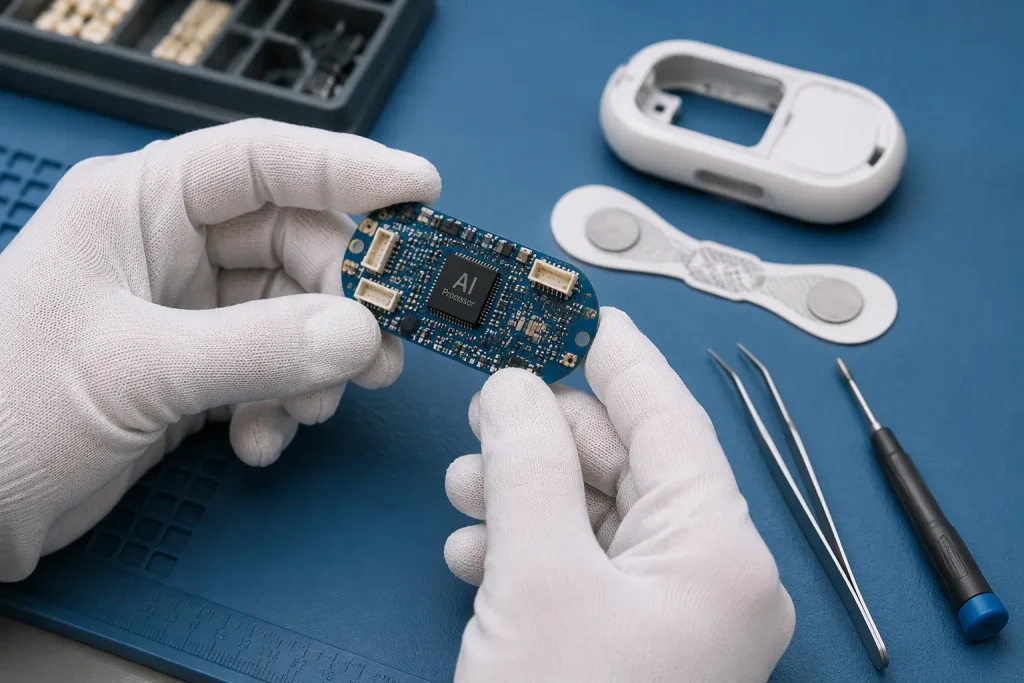
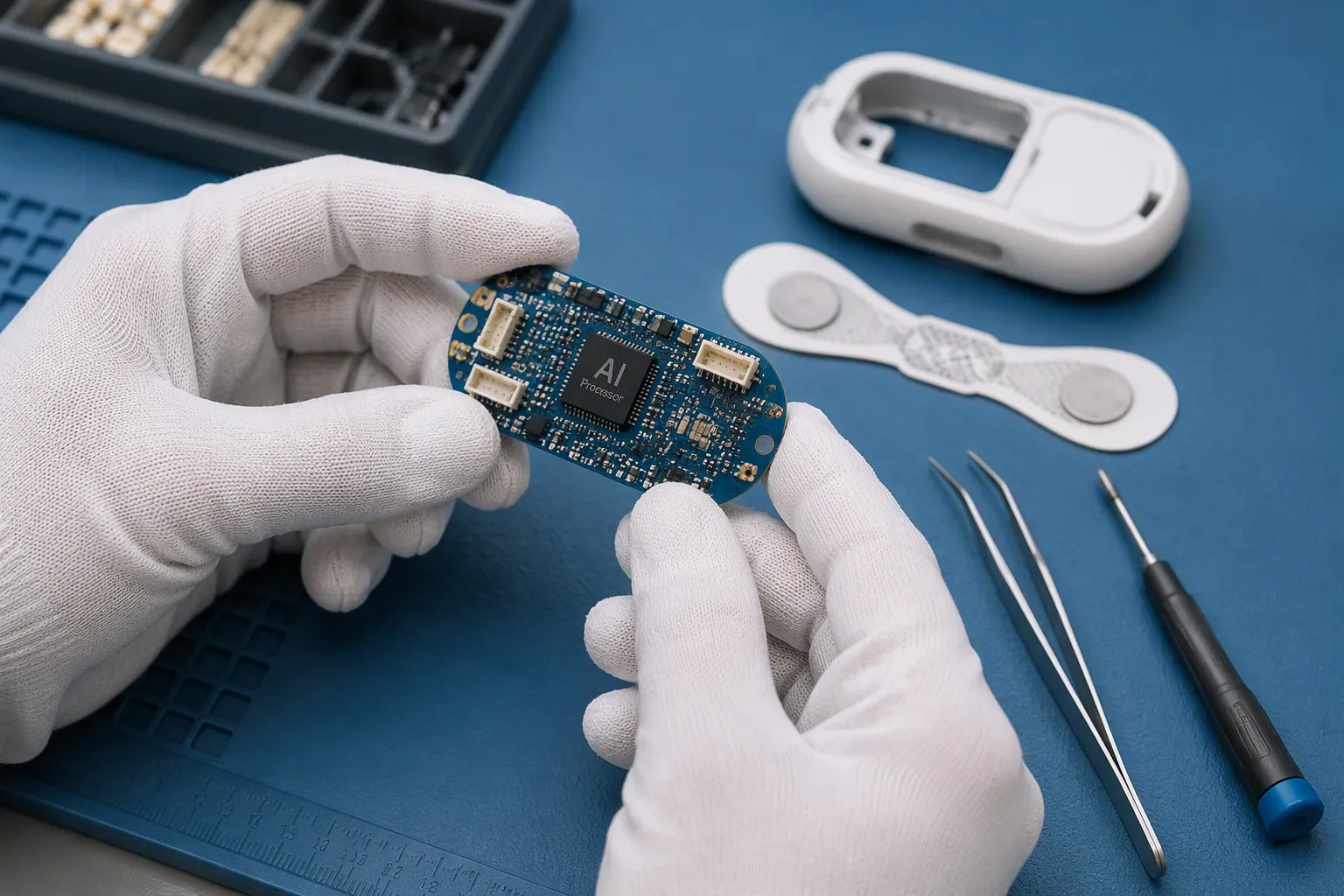
AI wearable health sensor PCBA assembly for compact medical devices integrates sensing, AI processing, and communication onto a single miniaturized board. This integration enables continuous, real-time patient monitoring. Healthcare shifts from reactive to proactive. Three core enablers drive this change: AI wearable PCBA, health sensor PCB assembly, and compact medical PCBA. These technologies form the hardware foundation for next-generation patient monitoring. They allow devices to capture physiological data, analyze it on-device, and transmit results wirelessly. This capability supports early detection and remote care. Engineers and medical device developers can use these building blocks to create smaller, smarter wearables. Patients benefit from continuous insights without frequent clinical visits.
Key Takeaways
AI wearable PCBA analyzes health data directly on the device. This approach enables real-time alerts and reduces cloud dependency.
Health sensor PCB assembly combines PPG, IMU, temperature, and ECG sensors. Careful routing and shielding protect signal quality.
Compact medical PCBA meets strict medical standards. These standards include IPC-A-610 Class 2 and ISO 13485.
Engineers choose FPC or rigid-flex based on space, durability, and cost. Rigid-flex supports dense assemblies and repeated flexing.
Continuous wearable monitoring shifts healthcare from reactive to proactive care. Clinicians receive automatic EMR updates and detect early warning signs.
The Three Building Blocks of Wearable Health Monitoring
What Is an AI Wearable PCBA
An AI wearable PCBA is a printed circuit board that combines AI processing with sensor inputs for on-device health analysis. The board carries a microcontroller or AI chip alongside the sensor front end. This design lets the device interpret physiological signals locally instead of sending raw data to the cloud. On-device analysis reduces latency and supports real-time alerts. A fall detection wristband, for example, can classify motion patterns within milliseconds. The AI chip runs lightweight models trained to recognize irregular heart rhythms or sleep stages. This local intelligence defines the AI wearable PCBA and separates it from conventional sensor boards.
Health Sensor PCB Assembly and Compact Medical PCBA
Health sensor PCB assembly describes the specialized integration of PPG, IMU, temperature, and ECG sensors onto one board. Each sensor type demands careful trace routing, shielding, and placement to protect signal quality. PPG optical sensors need tight coupling to the skin. IMU sensors require stable mechanical mounting to capture accurate motion data. ECG electrodes demand low-noise analog front ends.
Compact medical PCBA takes this integration further. These miniaturized, medical-grade assemblies meet strict reliability and regulatory standards, including IPC-A-610 Class 2 and ISO 13485 manufacturing controls. Designers must manage thermal load, signal integrity, and power delivery within a very small footprint.
Together, these three building blocks form the hardware foundation for next-generation patient monitoring. The AI wearable PCBA supplies intelligence. Health sensor PCB assembly supplies accurate physiological data. Compact medical PCBA supplies the miniaturization and reliability that clinical use demands. Engineers who master all three can build wearables that deliver continuous, trustworthy health insights.
AI Wearable Health Sensor PCBA Assembly for Compact Medical Devices
Market demand for miniaturized, low-power, precision PCBA keeps rising across the medical wearable sector. Customers want smaller devices, longer battery life, comfortable wear, and accurate sensors. AI Wearable Health Sensor PCBA Assembly for Compact Medical Devices addresses these pain points directly. The assembly combines five functional blocks on one board and supports continuous monitoring in a compact form factor. Regulatory pressure and patient expectations push device makers toward tighter integration.
Device Composition and PPG/IMU Sensor Layout
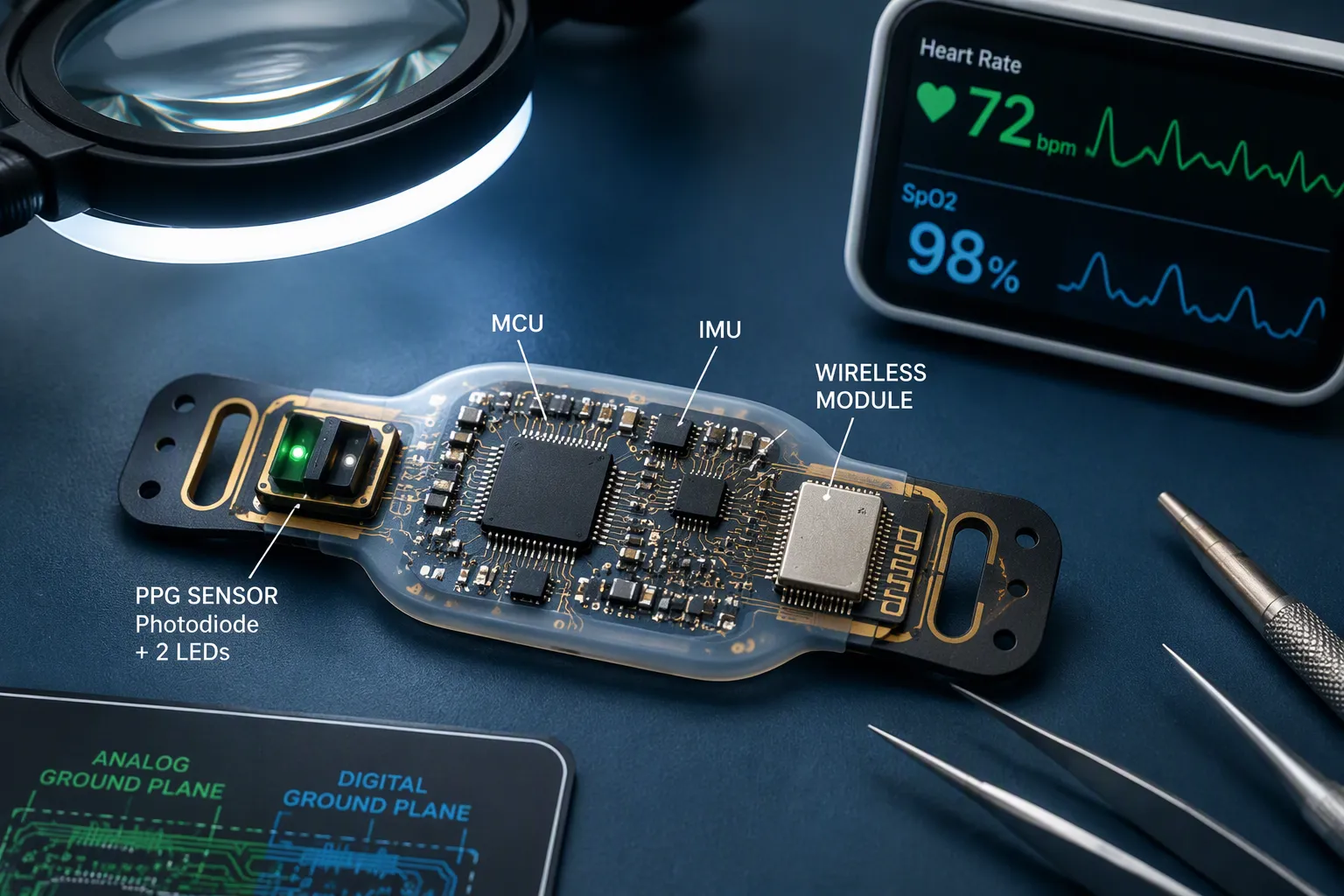
An AI wearable device contains an MCU or AI chip, a sensor front end, power management, a wireless module, and an enclosure. The MCU runs lightweight inference models for heart rhythm classification or sleep staging. The sensor front end conditions raw analog signals before digitization. Power management regulates voltage rails and charging current. The wireless module handles Bluetooth Low Energy or a similar protocol for data transfer. The enclosure protects the electronics and provides a comfortable skin interface. Each block consumes a share of the limited power budget. Designers balance processing speed against battery drain.
PPG and IMU sensors demand careful layout on small form factors. PPG optical components need direct skin contact and minimal ambient light leakage. Designers place the photodiode and LEDs close together with an opaque barrier between them. IMU sensors require rigid mounting and isolation from vibration sources. Trace routing must avoid noisy power lines and keep analog and digital grounds separate. HDI PCB technology enables continuous heart rate, SpO2, and temperature sensing within a compact wearable. Silicone insulation protects electronics and sensors worn directly on the body. It also cushions the skin against hard components and seals out moisture. Sensor placement also affects comfort. A poorly positioned PPG sensor can cause pressure marks during long wear.
Battery Charging Protection and FPC vs. Rigid-Flex Selection
Battery charging protection circuits are essential for safe, compact medical wearables. These circuits prevent overcharge, overdischarge, and short circuits. They also manage thermal conditions during charging. A compact medical wearable often uses a small lithium-polymer cell. The protection IC monitors cell voltage and current continuously. It cuts off charging when the cell reaches its limit and disconnects the load when voltage drops too low. Medical wearables must also meet safety standards for battery management. Designers select protection ICs rated for the cell chemistry and capacity.
Board selection involves a trade-off between FPC and rigid-flex. The table below compares key factors.
Factor | FPC | Rigid-Flex |
|---|---|---|
Space efficiency | High in thin, bendable areas | High in mixed rigid and flexible zones |
Durability | Good for static bends | Better for dynamic flexing |
Cost | Lower for simple designs | Higher due to complex fabrication |
Assembly | Limited component support | Supports components on rigid sections |
FPC suits simple, low-cost designs with few components. Rigid-flex supports denser assemblies and repeated flexing. A rigid-flex design costs more upfront but reduces assembly steps and connector count. Engineers weigh these trade-offs against device lifetime and comfort goals.
Manufacturers with wearable manufacturing experience support FPC, rigid-flex, small-component SMT, precision inspection, and functional testing. Bonysn provides these capabilities for compact medical projects. This support helps engineers meet size, battery life, comfort, and sensor accuracy targets. AI Wearable Health Sensor PCBA Assembly for Compact Medical Devices therefore depends on both design skill and manufacturing discipline.
Real-World Applications in Compact Medical Devices
Health monitoring wristbands, sleep monitors, and posture sensors demonstrate AI Wearable Health Sensor PCBA Assembly for Compact Medical Devices in daily use. These products capture physiological signals, classify patterns, and send results to clinicians.
Health Monitoring Wristbands and Sleep Monitors
A wristband mounts a PPG sensor, an IMU, and an AI chip on one compact board. The board processes optical and motion data continuously. Users see heart rate, SpO2, and sleep stages on a phone app. In one representative case, a man with hypertension wore a wristband continuously. The device flagged an irregular heart rhythm. His doctor reviewed the waveform remotely and adjusted his medication.
Sleep monitors use the same assembly in a thin patch or a ring. They track breathing patterns, body position, and movement. AI models assign sleep stages and mark apnea events. A patient with insomnia can share several nights of data with a specialist. This approach shortens waiting time.
Device category | Core sensors | AI task | Monitoring value |
|---|---|---|---|
Wristband | PPG, IMU | Rhythm classification | Continuous cardiac insight |
Sleep patch | PPG, temperature | Sleep-stage detection | Apnea and insomnia trends |
Posture sensor | IMU | Movement analysis | Recovery progress |
Posture Sensors and Rehabilitation Wearables
Posture sensors rely on IMU data to measure spine angle and movement quality. The PCBA interprets the motion and sends feedback through vibration or a phone app. A physical therapist sets safe thresholds for each patient. After knee surgery, a patient attaches the sensor to the thigh. The device counts successful knee bends. It warns the user when the joint exceeds a safe range. Recovery becomes measurable at home.
Rehabilitation wearables also support remote monitoring. Clinicians receive daily summaries from the patient’s home. They adjust exercise plans without a clinic visit. Immediate feedback keeps patients engaged. Manufacturing controls such as IPC-A-610 Class 2 and ISO 13485 ensure these devices survive daily wear and cleaning.
Form factor | Board type | Best use | Trade-off |
|---|---|---|---|
Thin patch | Flexible | Skin-contact sensing | Less rigid support |
Cloth-embedded module | Rigid-flex | Long-term wear | Higher manufacturing cost |
Next-generation skin patches and sensor-embedded clothing extend these capabilities. Continuous data flows to the electronic medical record, shifting care from episodic to proactive.
What This Means for Next-Generation Patient Monitoring
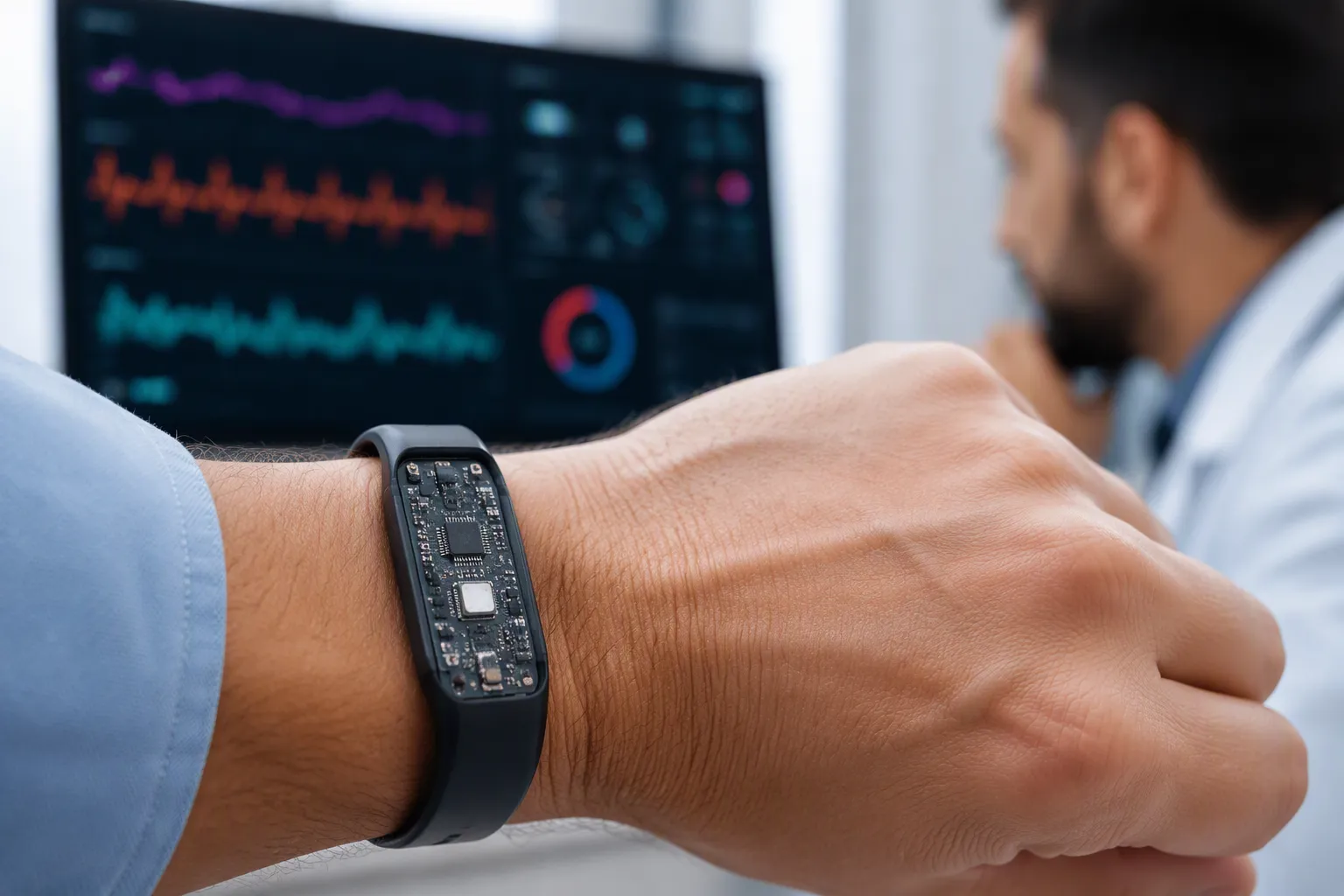
AI Wearable Health Sensor PCBA Assembly for Compact Medical Devices pushes patient monitoring beyond the clinic walls. A small board turns a wristband into a continuous observer. It captures and analyzes signals on the device, sending only meaningful results to a care team. This creates a detailed view of a patient’s health that episodic visits cannot match.
Continuous Data, Early Detection, and Remote Monitoring
Continuous data changes how clinicians find trouble. AI-enhanced sensors watch heart rate, blood oxygen, skin temperature, and motion around the clock. The AI chip recognizes subtle patterns. A wristband detects an irregular rhythm before palpitations begin. A sleep patch captures oxygen drops that suggest apnea. A rehabilitation sensor reveals recovery trends without a return visit. These detections pull care closer to the moment of need.
Remote patient monitoring connects the wearable to the health system. The device sends data over Bluetooth Low Energy to a phone. The phone relays encrypted data to a provider dashboard. The dashboard writes each reading to the electronic medical record (EMR). Staff no longer retype vital signs from paper logs. In the wristband case described earlier, a doctor spotted an irregular rhythm and adjusted medication without an office visit. Sleep specialists and physical therapists follow the same workflow. A full day of data reaches the clinical team within minutes.
The table compares episodic care with continuous wearable monitoring.
Dimension | Episodic care | AI wearable care |
|---|---|---|
Data cadence | Once per visit | Every second |
Detection trigger | Reported symptoms | Algorithm sees trends first |
Care setting | Clinic | Home and anywhere |
Documentation | Manual entry | Automatic EMR sync |
Efficiency improves with detection. Clinicians act on data instead of gathering it. Patients receive feedback in real time instead of waiting weeks. The longitudinal record changes clinical judgment. A single reading can mislead; a trend over several nights tells the true story.
From Reactive Care to Proactive Health Management
This technology moves medicine from reaction to prevention. Reactive care waits for a heart attack, a hypertensive crisis, or a failed rehab session. Proactive care identifies early warning signs. AI models recognize unstable heart-rate variability, nocturnal oxygen drops, or movement patterns that signal decline. Each trend becomes an alert before a serious event occurs.
The roles of each side shift as well. The patient becomes a partner. The care team becomes a monitoring service. A patient with chronic disease sees daily trends and knows when to call. A physical therapist receives a posture summary every morning. The clinician adjusts remotely. That is personalized management based on live data.
The second table shows the system-level shift.
Care element | Reactive | Proactive |
|---|---|---|
Clinical question | What did you feel? | What is the trend? |
Intervention | After the episode | Before the episode |
Follow-up | Scheduled visit | Data-driven |
Health goal | Treat symptoms | Preserve function |
AI Wearable Health Sensor PCBA Assembly for Compact Medical Devices supplies the hardware engine for this model. Sensing, AI, and wireless communication in a compact assembly make prevention practical. Once data flows continuously into the EMR, the system can act early, respond faster, and keep patients healthier. That is the promise of next-generation patient monitoring.
Challenges and Future Directions
Design, Regulatory, and Power Challenges
Compact medical wearables face tight design constraints. Engineers must fit the MCU, sensor front end, power management, and wireless module into a very small footprint. Thermal management becomes difficult because the enclosure traps heat near the skin. Signal integrity also suffers when analog sensor traces run close to digital lines. Designers separate grounds and shield sensitive routes to protect PPG and ECG signals.
Regulatory and reliability demands add further pressure. Medical-grade wearable PCBA must meet ISO 13485 manufacturing controls and IEC 60601 safety requirements. The FDA and CE marking processes require documented traceability, biocompatibility evidence, and rigorous functional testing. A single field failure can trigger a recall. Bonysn addresses this risk through precision inspection and functional testing at every build stage.
Power and battery life create a constant trade-off. Continuous monitoring drains a small lithium-polymer cell quickly. The AI chip, wireless module, and optical sensors all compete for limited current. Designers reduce duty cycles, lower clock speeds, and use sleep modes to extend runtime. Each power-saving choice can reduce sensor accuracy or alert speed.
What Comes Next for Compact Medical PCBA
The next generation of compact medical PCBA will push flexibility further. Flexible wearables and multi-sensor patches will conform to the body and capture more parameters at once. AI-driven personalized monitoring will adapt models to each patient’s baseline. A wristband could learn one user’s normal heart-rate variability and flag only true deviations.
Manufacturing must keep pace with these designs. Tighter integration demands advanced HDI PCB capability, small-component SMT, and automated optical inspection. Partners with wearable manufacturing experience will help device makers move from prototype to certified production. That partnership will define how quickly proactive, continuous care reaches patients everywhere.
AI wearable PCBA, health sensor PCB assembly, and compact medical PCBA together move patient monitoring from episodic visits to continuous, proactive care. These technologies power wristbands, sleep monitors, and rehabilitation wearables that track heart rate, SpO2, and movement in real time. Engineers and medical device developers now build smaller, smarter devices that detect early warning signs and sync data directly to electronic medical records. AI Wearable Health Sensor PCBA Assembly for Compact Medical Devices gives healthcare technology professionals the hardware foundation for personalized, preventive medicine. As flexible patches and multi-sensor designs mature, these boards will define how next-generation healthcare reaches patients everywhere.
FAQ
What defines an AI wearable PCBA?
An AI wearable PCBA carries an MCU or AI chip plus a sensor front end on one board. The chip runs lightweight models locally. This on-device analysis cuts latency and supports real-time alerts, such as rhythm classification or fall detection, without sending raw data to the cloud.
Which sensors does health sensor PCB assembly integrate?
Health sensor PCB assembly integrates PPG, IMU, temperature, and ECG sensors onto a single board. Each type needs specific routing, shielding, and placement. PPG needs tight skin coupling. IMU needs stable mounting. ECG needs a low-noise analog front end.
What makes a compact medical PCBA different from a standard board?
Compact medical PCBA meets medical-grade reliability and regulatory standards, including IPC-A-610 Class 2 and ISO 13485 manufacturing controls. Designers manage thermal load, signal integrity, and power delivery in a very small footprint. Standard consumer boards do not carry these documented traceability and testing obligations.
How do engineers choose between FPC and rigid-flex?
The choice depends on space, durability, and cost. The table below summarizes the trade-offs.
| Factor | FPC | Rigid-Flex | | | | |
Space efficiency | High in thin, bendable areas | High in mixed rigid and flexible zones |
|---|---|---|
Durability | Good for static bends | Better for dynamic flexing |
Cost | Lower for simple designs | Higher due to complex fabrication |
Assembly | Limited component support | Supports components on rigid sections |
FPC suits simple, low-cost designs. Rigid-flex supports denser assemblies and repeated flexing.
Why does battery charging protection matter in wearables?
A compact wearable often uses a small lithium-polymer cell. The protection IC monitors cell voltage and current continuously. It prevents overcharge, overdischarge, and short circuits, and it manages thermal conditions during charging. Medical wearables must also meet safety standards such as IEC 60601.
How does continuous monitoring differ from episodic care?
The table below compares the two models.
| Dimension | Episodic care | AI wearable care | | | | |
Data cadence | Once per visit | Every second |
|---|---|---|
Detection trigger | Reported symptoms | Algorithm sees trends first |
Care setting | Clinic | Home and anywhere |
Documentation | Manual entry | Automatic EMR sync |
Continuous data lets clinicians act on trends instead of waiting for reported symptoms.
What manufacturing capabilities support these devices?
Wearable production demands FPC, rigid-flex, small-component SMT, precision inspection, and functional testing. Bonysn provides these capabilities for compact medical projects. This support helps engineers meet size, battery life, comfort, and sensor accuracy targets from prototype through certified production.
See Also
Artificial Intelligence PCBA Solutions for UK Medical and Health Device Creators
AI Circuit Board Assemblies for Danish Smart Healthcare and IoT Innovations
Precision AI PCBA for Swiss Medical and Measurement Equipment Manufacturers
AI Sensor PCBA for Dutch Greenhouse and Semiconductor Machinery Applications
AI PCBA for Laboratory Automation in Irish Medical Technology Firms