
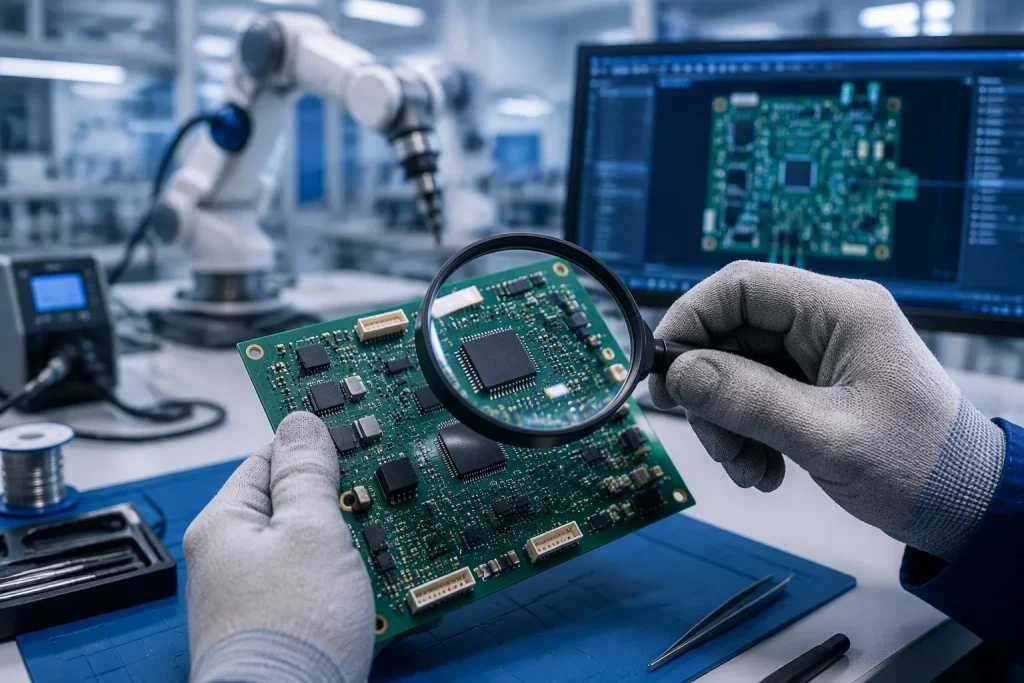
Time-to-market is your biggest challenge when building an ai hardware prototype for robotics. Traditional PCBA assembly drags on for weeks and costs you critical iteration speed. Your robotics project — a drone, perception board, or Edge Box — demands rapid, frequent testing to validate AI performance. Without fast prototyping, you lose your competitive advantage. The slow, expensive old process simply won’t work. Speed is no longer optional; it’s the only way to survive and win in this market.
Key Takeaways
Speed is critical for robotics startups to iterate and reach market faster.
Rapid PCBA assembly compresses development from weeks to days.
AI-driven inspection and robotic precision ensure high-quality prototypes.
Turnkey services handle design, sourcing, assembly, and testing seamlessly.
DFM review catches most issues early, saving time and money.
The Need for Speed for AI Hardware Prototypes
Why Speed Is Non-Negotiable for Robotics
Your robotics startup lives or dies by iteration speed. A drone perception board that takes six weeks for a board spin kills your runway. Competitors ship weekly firmware updates while you wait for a single prototype batch. This gap destroys momentum.
Software teams push code daily. Hardware teams historically wait weeks for each revision. That asymmetry makes hardware the bottleneck in every robotics program. You cannot validate your ai models without physical boards. You cannot test sensor fusion without assembled units. Every delay compounds into lost market share.
Market demand now favors rapid engineering feedback. Investors expect working demos in months, not years. Customers want low MOQ runs for pilot deployments. Your NDA protects your design, yet your partner must still deliver fast. A prototyping cycle measured in days instead of weeks changes everything. You test more ideas. You find failures earlier. You reach product-market fit faster.
The Bottlenecks of Traditional Prototyping
Traditional PCBA processes punish first-time designs. Your initial layout often carries manufacturability issues. A missing thermal relief or wrong footprint forces a full re-spin. Each re-spin costs weeks and thousands of dollars. That pain repeats across every prototyping round.
Overseas fabrication adds shipping delays and communication gaps. You email files, wait for quotes, then wait again for boards. Design for Manufacturing reviews happen late or not at all. Errors surface after assembly, not before. Your engineering team wastes time on preventable fixes.
Domestic quick-turn services solve this problem. They run DFM checks before fabrication. They catch component placement errors early. They follow standards like IPC-A-610 for acceptability. This approach compresses your development timeline dramatically. You iterate in days. You learn faster. You ship sooner.
How AI Hardware Prototype Prototyping Works
The Core Accelerated Process Steps
Modern rapid prototyping follows a streamlined sequence. You submit your manufacturing files first. This includes Gerber files, a bill of materials, and pick-and-place centroid data. Your intellectual property stays protected while the manufacturer receives everything needed to begin.
Next comes automated DFM and DFA review. These checks flag incorrect trace widths, insufficient copper spacing, or components placed too close together. Resolving these issues upfront avoids costly redesigns later. This early design optimization saves 30 to 40 percent of the time you would otherwise spend on debugging and rework.
Component sourcing follows. The manufacturer checks your BOM against more than 600,000 in-stock parts and a trusted supplier network. They recommend alternatives before production if a part is unavailable. This step prevents supply-chain stalls that could delay your entire project.
Robotic pick-and-place machines then assemble components with plus or minus 0.01 mm accuracy. Reflow soldering follows. Technicians assist on small prototype runs for flexibility. This human plus AI plus robotics approach delivers 40 to 60 percent faster development compared to manual methods.
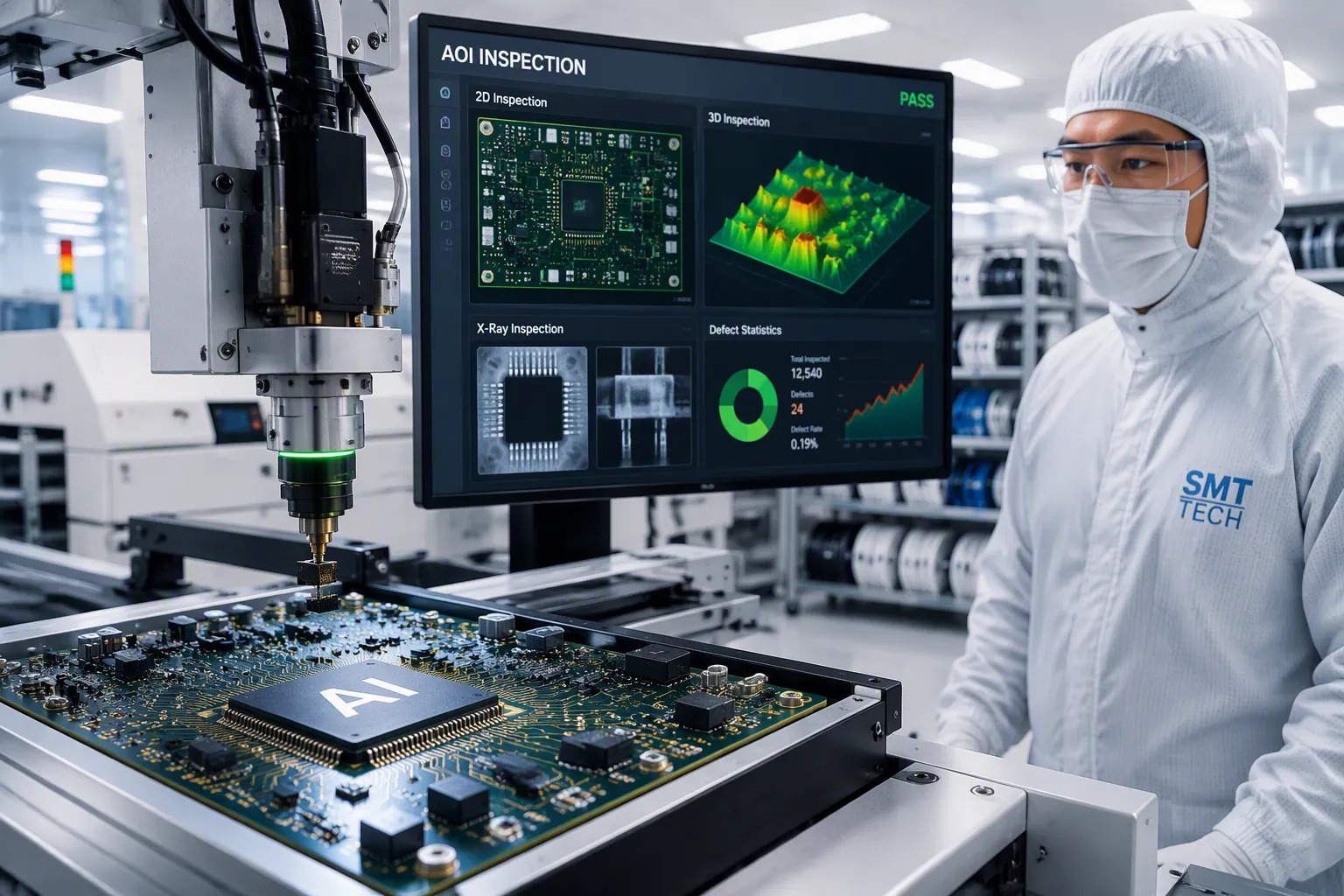
Inspection and testing complete the cycle. 2D and 3D AOI plus X-ray testing catch hidden defects like voids under BGAs. AI-enhanced AOI reduces false positives by 50 to 70 percent. AI-driven inspection improves first-pass yield by up to 25 percent. Functional testing is available for up to 10 prototype units.
You receive a working prototype faster with fewer surprises. Early design checks, intelligent sourcing, precision assembly, and careful inspection combine into one complete workflow.
Leveraging Turnkey Services for Faster Iteration
Turnkey services compress your entire development cycle. You hand off your design files and receive assembled boards. This eliminates the coordination burden of managing multiple vendors for fabrication, assembly, and testing.
A turnkey partner handles design optimization through validation. They run DFM checks before fabrication begins. They source components from their network. They assemble your printed circuit board using automated SMT lines. They test every unit against your specifications.
This integrated approach matters for robotics startups building drones, perception boards, or Edge Boxes. You cannot afford weeks of back-and-forth between separate vendors. Each handoff introduces delay and risk. A single partner removes those friction points.
Flexible pcbs and rigid boards both benefit from this model. Your AI sensor boards often use flexible pcbs to fit tight enclosures. Your perception boards may use rigid-flex designs. A turnkey partner with diverse capabilities handles both without you managing separate supply chains.
The time savings compound across iterations. AI-driven design tools shorten your prototype iteration cycle by 30 to 40 percent. You test more ideas in less time. You find failures earlier. You reach a production-ready design faster.
Turnkey services also reduce your internal workload. Your engineers focus on AI model development and system integration. The manufacturing partner focuses on building boards. This division of labor accelerates your entire program.
The Role of AI in PCBA Assembly
AI-Driven Quality Control Systems
Modern factories now use ai to inspect every board as it leaves the line. A deep learning system captures high-resolution images directly from pick-and-place machines. Deep neural networks then process those images. These networks train on millions of component examples, so they recognize normal joints and flag anything unusual.
The detection runs in two stages. First, unsupervised learning highlights visual features that deviate from the norm. Second, a classification network names the specific defect. This ai powered defect detection catches solderability issues, corrosion, damaged leads, coplanarity problems, metallization loss, and foreign object debris. The method embeds IPC-A-610 and IPC-J-STD-001 compliance parameters, so your quality checks follow recognized standards.
The scale matters for your project. One cloud platform collects data from sites worldwide and processes roughly 1 million components per day. Across tens of SMT lines, that platform has analyzed about 5 billion components. This volume trains the models far beyond what any single shop could achieve. Your prototype benefits from that shared learning. Fewer false calls mean faster release of your boards.
Robotic Precision for High-Speed Assembly
Robotic arms handle placement for the smallest parts on your board. AI sensors and perception boards use fine-pitch components that demand tight accuracy. A robotic placement head repeats the same motion thousands of times without drift. Human hands cannot match that consistency at speed.
This precision supports your design goals directly. You can specify smaller footprints and denser layouts, because the machine holds tolerance. The assembly line then places, reflows, and inspects in one pass. Each step feeds data to the next, and the system adjusts before defects multiply.
For robotics startups, this combination shortens the path from file to working unit. You gain speed without trading away quality. The same ai that inspects your board also guides the optimization of placement and reflow profiles. Your printed circuit board assembly partner delivers consistent output, and your team spends its time on the sensor fusion and control code that differentiates your product.
Choosing a PCBA Partner for AI Hardware Prototypes
Key Capabilities for Fast Iteration
Your partner’s turnaround time defines your iteration speed. Leading services advertise aggressive windows for rapid work:
Unit Circuits offers 24–72 hour turnaround for quick-turn PCB assembly
PCB Prototype delivers in 24–72 hours
Low-volume PCBA runs in 3–5 working days
Engineering samples ship in 2–4 working days
Simple prototype boards finish in 24 to 48 hours
Standard quick-turn orders for complex boards take 3 to 5 business days
Some fast fabs may take 5–7 days during peak periods. You should confirm capacity before you commit. A partner who misses your window stalls your entire robotics program.
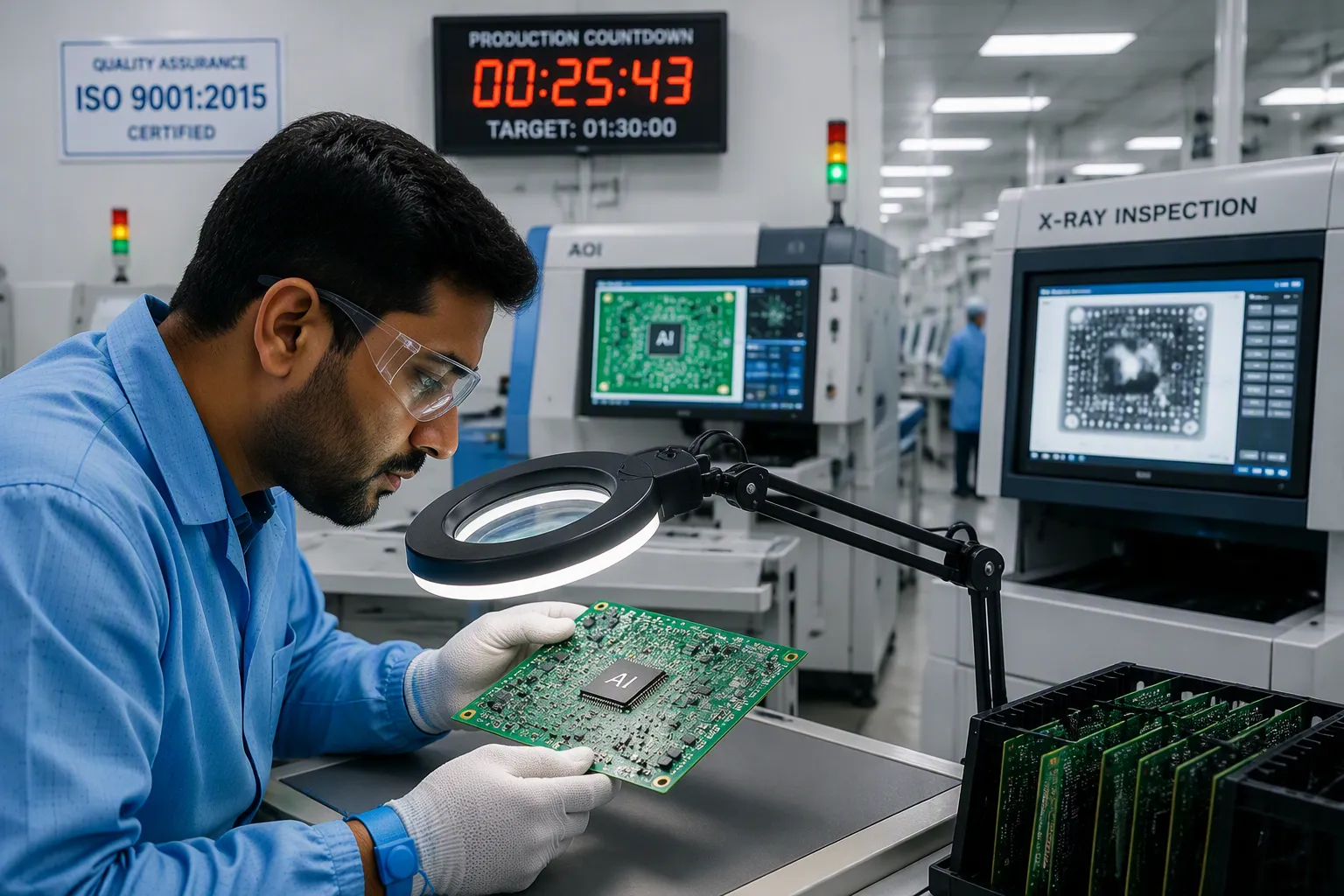
Certifications matter too. Look for ISO quality management and IPC-A-610 acceptability standards. These prove your partner follows recognized process controls. Advanced inspection closes the loop. AOI catches surface defects. X-ray reveals hidden voids under BGAs. Functional testing validates your board before shipment.
Bonysn supports NDA protection, rapid prototyping, component procurement, SMT assembly, AOI and X-ray inspection, and functional testing under one roof. This turnkey model removes vendor handoffs that slow your development.
Capability | Bonysn | Typical Quick-Turn Shop |
|---|---|---|
Turnaround | 24–72 hours | 3–5 business days |
NDA support | Yes | Varies |
AOI and X-ray | Both included | Often extra |
Functional testing | Up to 10 units | Limited |
Component sourcing | 600,000+ parts | Partial |
Design for Manufacturing (DFM) Essentials
DFM review is the single highest-value service you can demand. It catches errors before fabrication begins. This step saves you weeks of rework and redesign.
DFM checklist reviews catch 60-80% of production issues before they reach the factory floor. A 2-day DFM review saves 2-3 weeks in production delays and costly ECOs.
Your design files go through automated checks first. The system flags trace widths, copper spacing, and component clearance problems. Engineers then review your layout for assembly risks. They verify footprint accuracy and thermal relief. They confirm your bill of materials matches available stock.
This early optimization protects your schedule. You avoid a board spin caused by one wrong pad. You avoid assembly failures from parts placed too close together. Each avoided re-spin returns weeks to your timeline.
Flexible pcbs need extra DFM attention. These boards bend and flex during assembly, so pad geometry and stiffener placement matter. Your partner must understand flexible pcbs for AI sensor designs. Rigid-flex builds demand the same care. A partner without this experience introduces risk.
Ask your partner for a DFM report before you approve fabrication. Review every flagged item with your engineering team. Fix issues in the design file, not on the factory floor. This discipline separates fast prototyping from expensive guessing.
Your ai hardware prototype deserves a partner who treats DFM as standard practice, not an upsell. The right partner turns your concept into working hardware in days.
Rapid PCBA assembly is a strategic necessity for your robotics startup, not a luxury. You now understand how automation, ai, and robotic precision compress months of development into weeks. Your ai hardware prototype moves from design files to working hardware faster when you choose a partner who runs DFM checks, sources components, and inspects every board. That partner turns your design into reality. The next step is simple—send your design for a DFM review to see how fast we can turn your concept into a reality.
FAQ
How fast can I get my AI hardware prototype assembled?
You can receive assembled boards in 24 to 72 hours for quick-turn orders. Standard complex boards take 3 to 5 business days. Bonysn delivers this speed with NDA protection, component sourcing from over 600,000 parts, and functional testing for up to 10 units.
Does rapid PCBA assembly protect my intellectual property?
Yes. A reliable partner signs an NDA before receiving your files. Bonysn supports NDA protection as standard practice. Your Gerber files, bill of materials, and centroid data stay confidential throughout the process. This protection lets you share designs freely and iterate without legal risk.
How does DFM review save time on my robotics board?
DFM review catches 60 to 80 percent of production issues before fabrication. A 2-day review saves 2 to 3 weeks in delays and costly engineering change orders. Your partner flags trace widths, copper spacing, and component clearance problems early. You fix issues in the design file, not on the factory floor.
What inspection methods ensure my prototype works?
Your partner should run AOI and X-ray inspection on every board. AOI catches surface defects. X-ray reveals hidden voids under BGAs. Functional testing validates performance before shipment. Bonysn includes both inspection methods and follows IPC-A-610 acceptability standards. This combination delivers working hardware with fewer surprises.
Why does low MOQ matter for my robotics startup?
Low MOQ lets you order small prototype batches without large upfront costs. You test more design iterations within your budget. Bonysn supports rapid prototyping runs and pilot production. This flexibility helps you validate sensor fusion and control code before committing to volume manufacturing.
See Also
Tailored Edge AI Circuit Boards For American Hardware Startups
Bespoke AI Server Prototype PCBs For Israeli Infrastructure Firms
Custom AI Hardware Prototype Circuit Boards For Belgian Tech Companies
OpenAI Inspired AI Companion Device PCB Design And Fabrication