
AI sensor PCBAs play a crucial role in enhancing industrial IoT applications and energy devices across Sweden. These advanced technologies improve efficiency, enabling devices to operate at optimal levels. By utilizing intelligent sensors, you can achieve better data collection, which leads to informed decision-making. For example, the Smart Grid Surveillance system in Malå significantly enhances fault detection and maintenance efficiency, reducing downtime. Additionally, Skellefteå Kraft’s real-time monitoring capabilities ensure operational reliability through automatic fault responses. These innovations showcase the transformative power of AI in your energy devices.
Key Takeaways
AI sensor PCBAs enhance industrial IoT and energy devices by improving data collection, decision-making, and operational efficiency.
Key components like self-powered sensors, non-invasive monitors, and AI-assisted setups enable real-time monitoring and predictive maintenance.
Low power AI modules extend battery life, reduce heat, and lower energy costs, making devices more efficient and sustainable.
Designing for stability and signal integrity ensures reliable communication and minimizes data loss in AIoT devices.
AI sensor PCBAs support smart buildings and environmental monitoring, optimizing energy use and contributing to sustainability.
AI Sensor PCBA Overview
Importance in Industrial IoT
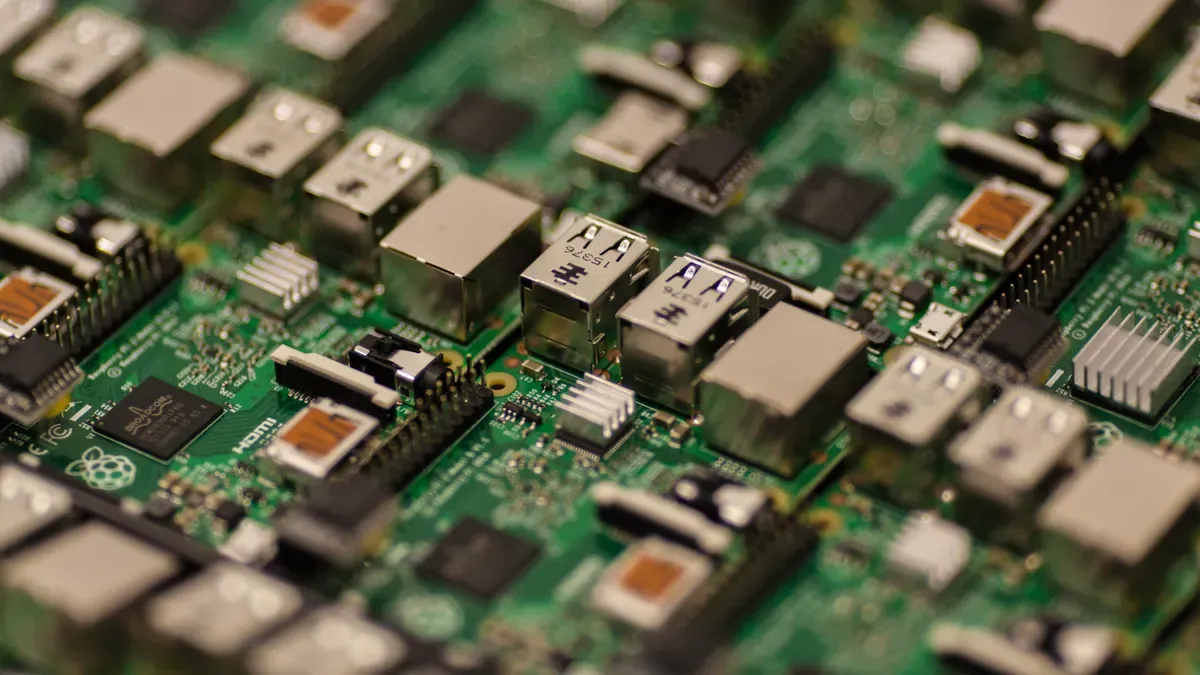
AI sensor PCBAs serve as the backbone of modern industrial IoT systems. These printed circuit board assemblies integrate advanced sensors and AI algorithms, enabling devices to collect and analyze data in real time. The relevance of AI sensor PCBAs in IoT cannot be overstated. They empower you to monitor critical parameters, optimize processes, and enhance decision-making.
In industrial applications, AI sensor PCBAs play a significant role in improving operational efficiency. Here are some key components and their functions:
Component | Function |
|---|---|
Self-powered industrial sensor | Monitors various parameters like power quality and machine health with drag-and-drop firmware control. |
Non-Invasive energy Monitor | Clamps onto mains to monitor energy cost, power factor, and detect anomalies. |
Asset Tracker | Monitors vibration, temperature, and location to predict failures before they halt production. |
Industrial Bridge | Connects legacy PLCs and controllers to modern cloud systems. |
Programmable Device Logic | Controls data sampling and filtering before it leaves the machine. |
AI-Assisted Setup | Uses generative AI to help configure systems and build flows instantly. |
Latent sensors (Vibration, Tilt, Temperature, Humidity) | Can be activated via software updates for machine health monitoring. |
Stacked PCB architecture | Allows for the addition of specialized hardware modules without changing the device footprint. |
The growing adoption of AI sensor PCBAs in Sweden reflects broader market trends. You can observe that AI and IoT are reshaping industries by enabling data-driven decision-making, automation, and real-time monitoring. These technologies integrate across sectors to improve operational efficiency, reduce costs, and optimize performance. The convergence of AI and IoT drives measurable improvements in productivity and innovation, particularly in the energy sector, which is crucial for Sweden’s industrial landscape.
Engineers developing AIoT devices focus on PCBAs for effective communication with cloud servers. The integration of APIs like DeepSeek highlights the importance of hardware development in AIoT applications. By leveraging these advancements, you can ensure that your industrial IoT systems remain competitive and efficient.
Design Considerations for AIoT Devices
Low Power AI Modules
When designing AIoT devices, you must prioritize low power consumption. Low power AI modules enable battery-powered devices to operate efficiently, extending their lifespan. These modules often utilize advanced techniques such as energy harvesting and power management strategies. By implementing smart PCB control boards, you can optimize power usage while maintaining high performance.
Consider the following benefits of low power AI modules:
Extended Battery Life: Devices can run longer without frequent recharging.
Reduced Heat Generation: Lower power consumption leads to less heat, enhancing device reliability.
Cost Efficiency: You save on energy costs and reduce the need for complex cooling systems.
Stability and Signal Integrity
Stability and signal integrity are critical in AIoT device design. A well-optimized PCB layout ensures that signals remain clear and reliable, which is essential for effective communication. Poor signal integrity can lead to data loss or miscommunication between devices.
To enhance stability, consider these design practices:
Use of Shielding: Implement shielding techniques to minimize electromagnetic interference.
Proper Grounding: Ensure that your PCB has a solid grounding strategy to reduce noise.
Signal Routing: Optimize signal paths to minimize delays and maintain integrity.
Incorporating wireless connectivity options like Bluetooth Low Energy or LoRa communication can also improve the performance of your AIoT devices. These technologies allow for seamless data transmission while maintaining low power consumption. By focusing on these design considerations, you can create robust AIoT devices that meet the demands of modern industrial applications.
Applications of AIoT PCBA in Energy Monitoring
Smart Building Solutions
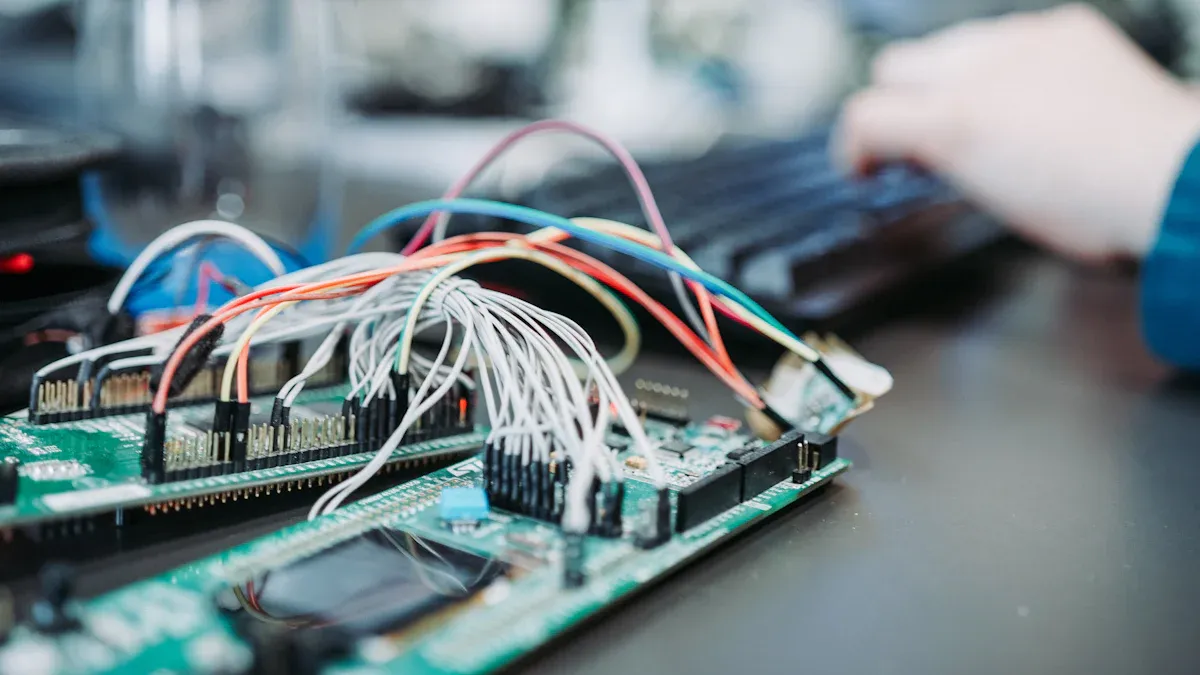
AI sensor PCBAs significantly enhance smart building solutions by enabling real-time monitoring and control of various systems. These systems can manage lighting, heating, ventilation, and air conditioning (HVAC) to optimize energy usage. By integrating AI-driven controls, you can achieve a more efficient building environment. However, several challenges may arise during implementation:
Sparse or inaccurate sensors can lead to suboptimal AI decisions.
Many buildings lack comprehensive instrumentation, such as CO₂ sensors or detailed sub-meters.
Sensor drift or malfunction can feed bad data into the system.
Data from various sources, including energy meters and occupancy counters, must be consolidated and cleaned for accurate AI interpretation.
AI systems require a learning period to understand building patterns, during which recommendations may need manual fine-tuning.
Maintaining data quality is an ongoing task to ensure reliable AI performance.
Integrating AI sensor PCBAs into older building infrastructures can be particularly challenging. Compatibility issues with legacy building management systems often arise, making it difficult to implement modern AI solutions. Additionally, connecting building systems to AI platforms introduces cybersecurity risks. Merging various data sources and linking to cloud services can increase vulnerabilities. Potential risks include hacked or malfunctioning AI systems causing disruptions, such as lights or alarms malfunctioning or HVAC systems turning off unexpectedly. To mitigate these risks, you should implement robust security measures, including data encryption, network firewalls, strict access controls, and regular security audits.
Environmental Monitoring Systems
Environmental monitoring systems benefit greatly from AIoT PCBAs, allowing for precise tracking of air quality, temperature, and humidity levels. These systems utilize environmental monitoring sensors to gather data that informs energy management strategies. By analyzing this data, you can make informed decisions that enhance energy efficiency and sustainability.
AI sensor PCBAs enable predictive maintenance by monitoring equipment health and performance. This capability allows you to identify potential issues before they escalate, reducing downtime and maintenance costs. Furthermore, the integration of smart PCB control boards ensures that your environmental monitoring systems operate at high performance while managing power effectively.
In Sweden, the demand for energy-efficient solutions continues to grow. By leveraging AIoT technology, you can contribute to a more sustainable future. The combination of AI and IoT in environmental monitoring systems not only enhances energy efficiency but also supports compliance with environmental regulations.
Case Study: Successful AIoT Implementation in Sweden
Project Overview
One of the most notable AIoT projects in Sweden focuses on environmental monitoring for industrial and urban applications. This project integrates advanced sensors, such as temperature (SHT31), humidity, gas detection (MQ-135), and flame detection (LM393), with the ESP32-S3 microcontroller. The ESP32-S3 stands out for its AI acceleration capabilities, low power consumption, and built-in Wi-Fi and Bluetooth connectivity. These features enable seamless communication between devices and cloud platforms, ensuring real-time data analysis.
The project employs LoRa modules for long-range data transmission, which minimizes power usage while maintaining reliable communication. To further optimize energy efficiency, the system incorporates a 5V relay module and MOSFET-based power switching. The PCB layout is meticulously designed, featuring centralized microcontroller placement, thermal vias for heat dissipation, and noise reduction techniques. Firmware optimizations, including quantized AI models, adaptive sampling, and event-driven AI processing, enhance the system’s performance and extend battery life. This comprehensive approach demonstrates how AIoT PCBA can transform monitoring systems into highly efficient and intelligent solutions.
Results and Benefits
The implementation of this AIoT system has delivered remarkable results. The environmental monitoring device now provides real-time anomaly detection, enabling you to identify and address issues before they escalate. The integration of advanced sensors ensures accurate data collection, while the optimized PCBA design enhances the system’s stability and reliability.
Key benefits include:
Improved Energy Efficiency: The power management techniques reduce energy consumption, making the device more sustainable.
Extended Device Lifespan: The low power design and firmware optimizations minimize wear and tear, ensuring long-term operation.
Enhanced Monitoring Accuracy: The combination of high-quality sensors and AI-driven analysis improves the precision of environmental data.
Scalability: The modular PCBA design allows for easy upgrades, enabling you to adapt the system to evolving needs.
This project highlights how AIoT PCBA can revolutionize monitoring systems, offering you a reliable, efficient, and scalable solution. By leveraging these technologies, you can achieve greater operational efficiency and contribute to a more sustainable future.
AI sensor PCBAs significantly enhance your industrial IoT and energy devices. They improve monitoring capabilities, optimize power usage, and ensure operational reliability. By leveraging these technologies, you can achieve greater efficiency and sustainability in your operations. Collaborating with a one-stop pcba manufacturer can provide you with tailored solutions that meet your specific needs. Embrace the potential of AIoT to transform your energy management strategies and drive innovation in your industry.
FAQ
What is an AI sensor PCBA?
An AI sensor PCBA integrates advanced sensors and AI algorithms on a printed circuit board assembly. It enables real-time data collection and analysis, enhancing the efficiency of industrial IoT applications.
How do AI sensor PCBAs improve energy efficiency?
AI sensor PCBAs optimize energy usage by monitoring critical parameters and enabling predictive maintenance. They help identify inefficiencies, allowing you to make informed decisions that reduce energy consumption.
What are the key design considerations for AIoT devices?
Key design considerations include low power consumption, stability, and signal integrity. You should prioritize these factors to ensure reliable performance and effective communication in your AIoT devices.
Can AI sensor PCBAs be integrated into existing systems?
Yes, AI sensor PCBAs can often integrate with existing systems. However, compatibility with legacy systems may pose challenges. You should assess your current infrastructure before implementation.
What industries benefit from AI sensor PCBAs?
Industries such as energy, manufacturing, and smart buildings benefit significantly from AI sensor PCBAs. These technologies enhance operational efficiency, improve monitoring capabilities, and support sustainability initiatives.