
In the UAE’s extreme heat, the performance of data centers hinges on the efficiency of high temperature AI server PCBA. These advanced circuit boards enable reliable operations, even under soaring temperatures. Your data center can experience significant enhancements, such as improved processing speeds and reduced downtime. Research shows that average surface temperatures can rise by 3.6°F, with extreme cases reaching up to 16.4°F. This makes effective thermal management crucial for maintaining optimal performance and safeguarding infrastructure.
Key Takeaways
High-temperature AI server PCBA enhances data center performance by improving processing speeds and reducing downtime, even in extreme heat.
Effective cooling solutions are essential for data centers in the UAE to prevent overheating and operational inefficiencies.
Continuous monitoring of temperature and humidity is crucial to maintain power stability and prevent equipment damage in high-temperature environments.
Investing in high-quality PCBs and advanced cooling technologies can significantly enhance the reliability and efficiency of your data center operations.
Partnering with a trusted OEM like bonysn can provide expert support for high-temperature PCBA projects, ensuring optimal performance and quality.
Demand for AI and Data Centers
AI’s Impact on Smart Cities
AI plays a pivotal role in shaping smart cities across the UAE. By optimizing resource management and energy consumption, AI enhances sustainability. You can see this impact in various aspects of urban life, such as:
Improved quality of life
Enhanced health and safety measures
Efficient city systems management
Advanced traffic prediction and routing
Comprehensive social big data analysis
Research indicates a strong correlation between AI and socio-economic sustainable development goals. This suggests that AI significantly boosts the efficiency and sustainability of smart cities.
Aspect of Influence | Description |
|---|---|
Sustainability | AI enhances sustainability by optimizing resource management and energy consumption. |
Urban Management | AI facilitates the integration of urban systems, improving overall city management. |
Socio-Economic Development | AI contributes to socio-economic sustainability by reducing costs and mitigating negative externalities. |
Growing Data Processing Requirements
The demand for data processing in UAE data centers is on the rise. This growth stems from several key factors:
The expansion of cloud services and AI infrastructure
Government initiatives focused on digital transformation
Regulatory mandates requiring local data processing capabilities
The UAE data center market is projected to reach AED 9.7 billion by 2029, with a compound annual growth rate (CAGR) of approximately 10%. This growth reflects the increasing demands of AI infrastructure and the need for AI-ready data centers. As you navigate this evolving landscape, consider how advanced technologies can support your operations and enhance your data center’s capabilities.
High-Temperature Challenges
Importance of Cooling Solutions
In the UAE, high temperatures pose significant challenges for data centers. The extreme heat necessitates advanced cooling solutions to maintain optimal performance. Without effective cooling, you risk operational inefficiencies and potential equipment damage.
Here are some common challenges faced by data centers in the UAE:
Challenge Type | Description |
|---|---|
High Temperatures | Data centers in the UAE face extreme heat, necessitating expensive cooling solutions. |
Operational Inefficiencies | High temperatures can lead to operational inefficiencies in data center operations. |
Risk of Power Outages | Increased heat burdens cooling systems and raises the risk of power outages. |
Infrastructure Constraints | Unreliable electricity supply complicates data center management in hot climates. |
Future Risk | High temperatures are projected to impact two-thirds of data center hubs by 2040. |
To combat these challenges, you must prioritize cooling performance. Implementing solutions like precision air conditioning, aisle containment, and liquid cooling can significantly enhance your data center’s efficiency. These methods not only help maintain lower temperatures but also improve energy efficiency matters, reducing operational costs in the long run.
Power Stability and Monitoring
Power stability is crucial in high-temperature environments. In the UAE, summer temperatures can exceed 45 degrees Celsius, making stability in server rooms critical. High temperatures can lead to equipment damage and system shutdowns, emphasizing the need for effective monitoring and backup systems.
To ensure power stability, consider these best practices:
Continuous monitoring of temperature and humidity is crucial to prevent server failures.
Maintain server room temperatures between 20 to 25 degrees Celsius to avoid shutdowns.
Ensure humidity levels are kept below 60% RH to prevent damage from condensation.
Additionally, you should implement a dense sensor network for precise temperature and humidity tracking. This proactive approach allows you to manage cooling systems effectively and maintain uptime.
Tip: Regularly clean and inspect cooling systems to ensure optimal performance and prevent failures.
By addressing these thermal management challenges, you can enhance your data center’s reliability and efficiency. The integration of high-temperature AI server PCBA plays a vital role in this process, ensuring that your infrastructure can withstand the harsh conditions of the UAE.
Critical Role of PCBs in AI Infrastructure
High-Speed and High-Density Interconnects
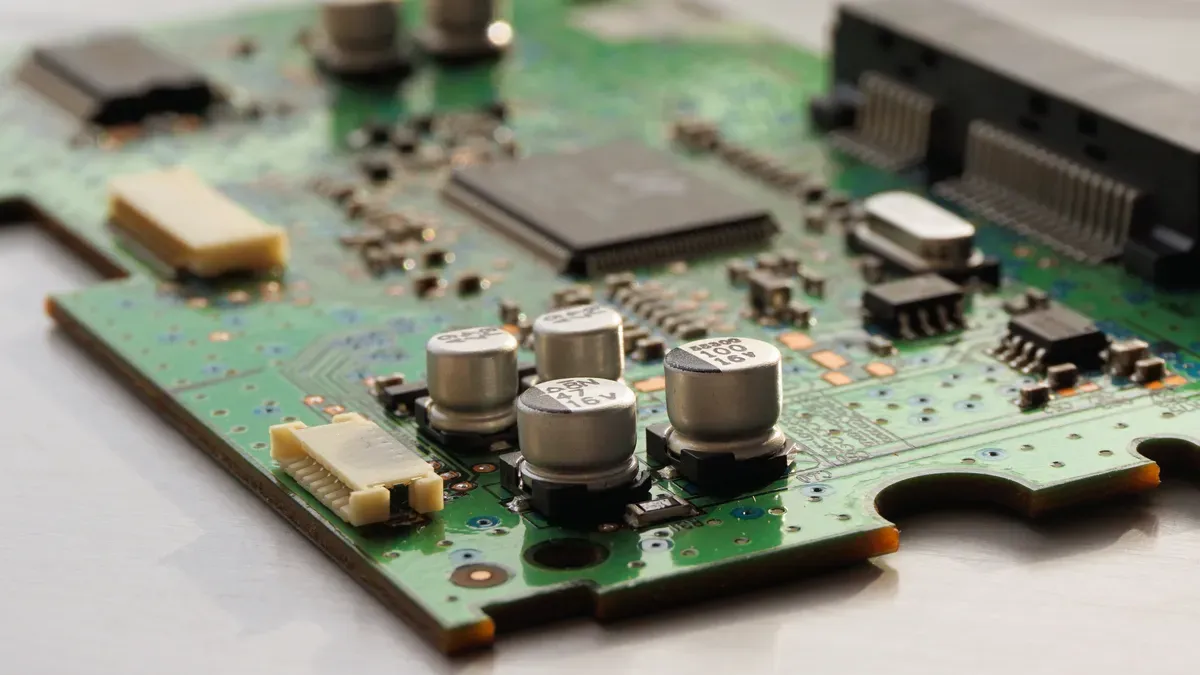
High-quality PCBs play a critical role in AI infrastructure, especially in high-temperature environments. They effectively manage thermal stress, ensuring that your AI servers operate reliably even under extreme conditions. Here are some key benefits of high-quality PCBs:
They maintain signal integrity and power delivery, which is crucial for data processing.
Advanced materials enhance thermal management and electrical performance, ensuring stability in demanding environments.
High-speed and high-density interconnects allow for faster data transfer, which is essential for AI applications that require real-time processing.
Recent trends show that automation and AI-driven PCB fabrication are becoming increasingly important. These technologies streamline the manufacturing process, resulting in more precise and reliable circuit boards. As a result, you can expect improved performance and reduced operational costs in your data center.
Liquid and Air Cooling Technologies
When it comes to cooling technologies, liquid cooling systems outperform air cooling in high-temperature AI server PCBs. Liquid cooling possesses higher heat capacitance and thermal conductivity, allowing it to efficiently transfer heat away from high-performance components. This efficiency reduces the need for energy-intensive cooling methods, enabling better performance and lower operational costs.
In contrast, air cooling systems struggle to manage heat effectively in extreme temperatures. They often require additional energy to maintain optimal temperatures, which can lead to increased operational costs. Therefore, investing in liquid cooling technologies can significantly enhance your data center’s efficiency and reliability.
To illustrate the materials used in high-temperature PCBs for AI servers, consider the following table:
Material | Dielectric Constant | Signal Loss | Thermal Stability | Cost |
|---|---|---|---|---|
Rogers | Low | 35% less | High | High |
Megtron | Ultra-low-loss | Very low | High | High |
FR4 | Standard | Baseline | Moderate | Low |
Rogers: Ideal for high-speed layers due to low signal loss.
Megtron: Perfect for ultra-low-loss applications, especially in high-performance settings.
FR4: Commonly used for power layers to reduce costs.
Recent trends indicate that high-performance PCBs increasingly utilize advanced composite materials. Traditional fiberglass boards often suffer from signal distortion at elevated frequencies, which can hinder performance when processing large data streams. New substrates incorporating ceramic-like fillers are being adopted in high-end boards, despite their higher cost, due to their effectiveness in controlling signal attenuation.
By focusing on high-quality PCBs and effective cooling technologies, you can ensure that your AI infrastructure remains robust and efficient, even in the challenging conditions of the UAE.
OEM Delivery for High-Temperature PCBA
Project Lifecycle Overview
The project lifecycle for high-temperature PCBA delivery consists of several key stages. Each stage has specific goals, risks, and confirmations that you should consider. The following table outlines these stages:
Stage | Main Goal | Typical Risk | What Buyers Should Confirm |
|---|---|---|---|
Prototype or EVT | Verify core design and basic function | Incomplete files, unstable BOM, quick fixes in layout | Fast engineering feedback and issue closure |
DVT | Validate design robustness and process fit | DFM gaps, poor panelization, unclear assembly notes | Corrective action on manufacturability issues |
PVT or pilot run | Prove process repeatability before ramp | Yield variation, fixture weakness, late material changes | Test readiness, operator instructions, traceability |
Mass production | Deliver stable quality and schedule | Supply interruption, uncontrolled substitutions, packaging inconsistency | Change control, reorder planning, delivery visibility |
Understanding these stages helps you navigate the complexities of high-temperature PCBA projects effectively.
Quality Assurance and Testing
Quality assurance is vital for ensuring the reliability of high-temperature AI server PCBA. Implementing strict protocols can significantly enhance product quality. Here are some essential quality assurance measures:
Strict inspections ensure consistent product quality.
AOI Testing detects defects and verifies PCB accuracy.
Antistatic testing protects sensitive electronic components.
Additionally, using ceramic PCBs can provide excellent thermal performance for high-power and high-temperature applications. This choice enhances the durability and efficiency of your server boards, making them suitable for the demanding conditions of the UAE.
By focusing on these quality assurance processes, you can ensure that your high-temperature PCBA meets the rigorous standards required for optimal performance. Partnering with a reliable OEM like bonysn can further enhance your project delivery, as they specialize in industrial-grade server boards and thermal management solutions.
High-temperature AI server PCBA offers numerous benefits that can transform your data center operations in the UAE. These advanced circuit boards enhance reliability, improve processing speeds, and reduce downtime, even in extreme heat. By investing in high-quality PCBs, you ensure optimal performance and efficiency.
Tip: Partnering with a trusted OEM like bonysn can further elevate your infrastructure. Their expertise in industrial-grade server boards and thermal management solutions ensures you receive the best support for your data center needs.
Embrace the future of data processing with high-temperature AI server PCBA and unlock the full potential of your operations.
FAQ
What is a high-temperature AI server PCBA?
A high-temperature AI server PCBA is a printed circuit board assembly designed to operate reliably in extreme heat. It enhances data center performance by ensuring efficient thermal management and stable power delivery.
Why are cooling solutions important for data centers?
Cooling solutions are crucial for data centers, especially in hot climates like the UAE. They prevent overheating, reduce operational inefficiencies, and protect equipment from damage, ensuring optimal performance.
How does bonysn support high-temperature PCBA projects?
Bonysn specializes in industrial-grade server boards and thermal management solutions. Their expertise ensures reliable OEM project delivery, focusing on quality assurance and advanced cooling technologies tailored for high-temperature environments.
What materials are used in high-temperature PCBs?
High-temperature PCBs often use advanced materials like Rogers and Megtron. These materials provide excellent thermal stability and low signal loss, making them ideal for high-performance applications in extreme conditions.
How can I ensure power stability in my data center?
To ensure power stability, continuously monitor temperature and humidity levels. Maintain server room temperatures between 20 to 25 degrees Celsius and implement backup systems to prevent outages during extreme heat.
See Also
UAE Smart City Infrastructure Powered by AI Server PCBA
Australian Energy Projects Utilizing AI Server Power Board PCBA
Canadian Remote Mining Sites Equipped with Low-Temperature AI PCBA
Comprehensive AI Server PCBA Solutions for Singapore Data Centers