In the rapidly evolving landscape of the UAE, AI server PCBA is pivotal in transforming smart cities and data centers. By leveraging artificial intelligence, you can enhance data processing capabilities, leading to faster and more efficient operations. This technology not only boosts overall infrastructure efficiency but also drives innovation across various sectors. As you navigate the digital transformation within urban environments, recognizing the significance of AI server PCBA becomes essential for optimizing data infrastructure and ensuring a smarter future.
Key Takeaways
AI server PCBA enhances data processing, making smart cities and data centers more efficient.
Rapid urbanization in the UAE increases the demand for advanced data infrastructure to support growing data needs.
Effective heat management and power stability are crucial for maintaining server performance in high-temperature environments.
Investing in high-quality PCBA ensures reliability and longevity, reducing downtime and operational costs.
Sustainability initiatives in data centers, like energy-efficient cooling and renewable energy, contribute to environmental goals.
AI Server Demand in Smart Cities
Urbanization and Data Growth
As urbanization accelerates in the UAE, the demand for AI servers in smart cities continues to rise. The UAE’s strategic investments in digital transformation and smart city projects are expected to propel the data center market to AED 9.7 billion by 2029. This growth reflects the increasing need for advanced digital infrastructure to support the burgeoning population and their data needs.
Rapid urbanization leads to a surge in data generation.
Smart city initiatives drive the demand for AI technologies.
Governmental digital initiatives create a robust framework for data management.
The Middle East is witnessing significant growth in its data center industry, fueled by the adoption of AI technologies. Key growth drivers include:
The rise of smart city projects.
Rapid urbanization.
Government initiatives aimed at enhancing digital infrastructure.
Building smart cities in the UAE involves collaboration among government bodies, tech companies, and cloud service providers. These partnerships are essential for creating efficient urban solutions that can handle the increasing data flow.
Enhancing Public Services with AI
AI servers play a crucial role in enhancing public services across various sectors in UAE smart cities. By integrating artificial intelligence into public services, you can improve efficiency and responsiveness. Here are some notable applications:
Transportation: The Dubai Roads and Transport Authority has implemented AI-driven traffic control systems. These systems alleviate congestion and enhance road safety. The city is also testing autonomous buses and taxis, aiming for 25% of its transportation to be autonomous by 2030.
Healthcare: The Dubai Health Authority has introduced AI-powered medical facilities. A unified health database enables telemedicine consultations and provides doctors with instant access to patient records, leading to quicker and more accurate treatment.
Security: Dubai’s police force utilizes smart police stations for citizen services. AI-powered cameras monitor the city, while robotic police officers aim to enhance public safety, with a target of having 25% of the police force composed of robots by 2030.
These advancements not only improve the quality of life for residents but also create a more efficient and responsive urban environment. The integration of AI servers into public services exemplifies how smart city projects can leverage technology to meet the needs of a growing population.
Challenges of High Temperatures in UAE Servers

Heat Management Solutions
High temperatures pose significant challenges for server performance in the UAE. Most servers operate optimally between 18°C and 27°C. When temperatures exceed 35°C, you risk encountering various component issues. Common causes of overheating include poor ventilation, high ambient temperatures, dust accumulation, constant high usage, and malfunctioning cooling systems. The consequences of overheating can be severe, leading to data loss, network downtime, reduced productivity, hardware damage, security vulnerabilities, and financial losses. In fact, even a 10°C increase above recommended levels can halve the lifespan of hardware components.
To combat these challenges, effective heat management solutions are essential. Here are some of the most effective cooling technologies currently used in UAE data centers for AI servers:
Cooling Solution | Advantages | Disadvantages |
|---|---|---|
Precision Air Conditioning | Reliable and easy to install | High energy consumption in hot weather |
In-Row Cooling | Very efficient and adaptable | Requires careful space planning |
Hot/Cold Aisle Containment | Reduces energy use by 30-50% | Requires layout changes |
Liquid Cooling | Handles high loads and has water-saving options | Risk of leaks and initial high cost |
Free Cooling (Economizers) | Utilizes cooler outside air when available | Not commonly used in UAE |
Implementing these solutions can significantly enhance server reliability and performance, ensuring that your data center operates smoothly even in extreme conditions.
Power Stability Issues
Power stability issues in the UAE further complicate the operational landscape for AI servers. Fluctuations in power supply necessitate power and cooling redundancy in server rooms. This redundancy ensures that your servers remain operational during power outages or equipment failures. For instance, a logistics firm in Sharjah successfully implemented redundancy measures, achieving zero unplanned downtime despite frequent power fluctuations.
The impact of power instability on server performance cannot be overstated. Higher temperatures accelerate component degradation and increase the probability of hardware failures. Overheated CPUs and chips may behave erratically, causing frozen servers, reboots, and crashes. This leads to disruptions in services and makes networks more vulnerable to intrusions.
Higher temperatures accelerate component degradation and increase the probability of hardware failures. Overheated hardware is more prone to faults like short circuits, current leakage, and arcing. This can result in power outages, fried motherboards, and permanent damage. Backup generators also have a harder time kicking in to restore power due to already operating near peak capacity trying to support cooling systems.
In addition, the excessive costs associated with cooling infrastructure upgrades force data center operators to divert budgets away from essential security initiatives. This includes critical investments in next-generation firewalls, network monitoring tools, and employee training, ultimately expanding the attack surface that hackers can exploit.
By addressing both heat management and power stability, you can enhance the reliability and efficiency of your AI server operations in the UAE’s challenging environment.
Cooling Technologies for AI Server PCBA
Liquid Cooling Systems
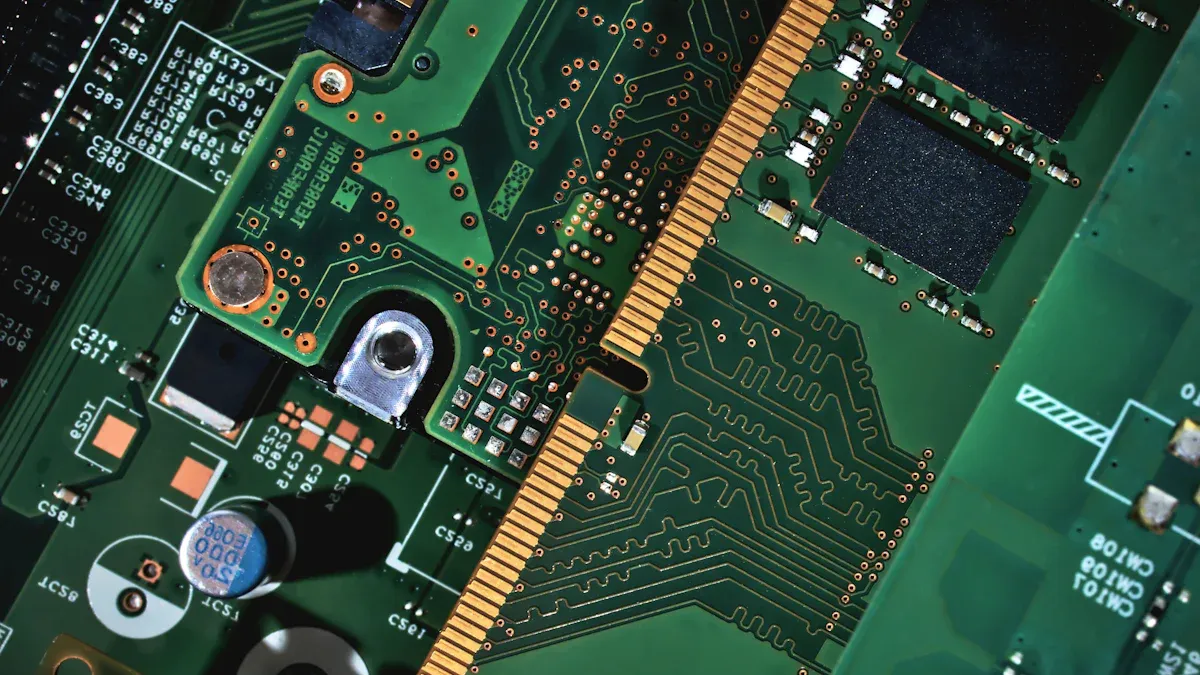
Liquid cooling systems have emerged as a leading solution for managing heat in AI server PCBA. These systems utilize water or other coolants to absorb heat directly from server components. This method offers several advantages:
Higher Efficiency: Liquid cooling can handle rack densities of 20 kW to 50 kW or more, significantly surpassing traditional air cooling limits of 5 kW to 10 kW per rack.
Improved Heat Exchange: You can expect a 30% to 50% improvement in heat exchange efficiency with liquid cooling.
Reduced Energy Consumption: These systems consume 20% to 40% less energy compared to air cooling, making them more cost-effective in the long run.
Air Cooling Control Boards
Air cooling remains a popular choice due to its simplicity and lower initial costs. However, it has limitations compared to liquid cooling. Here’s a comparison of the two technologies:
Metric | Traditional Air Cooling | AI-Ready Liquid Cooling |
|---|---|---|
Typical Rack Density Limits | 5 kW – 10 kW / rack | 20 kW – 50 kW+ / rack |
Heat Exchange Efficiency | Baseline | +30% to +50% improvement |
Cooling Energy Consumption | High (Massive fan/chiller power) | 20% to 40% reduction |
Space Utilization | Poor (Requires large hot/cold aisles) | Excellent (Dense server packing) |
Noise Levels | Extreme (>85 dB in aisles) | Significantly reduced |
Target Application | Enterprise storage, basic web hosting | Deep learning, LLM training, HPC |
Monitoring boards play a crucial role in both cooling systems. They provide real-time data on cooling performance, ensuring that you maintain optimal operating conditions. Key features include:
Accurate graphics for monitoring cooling performance.
Situational awareness for operators, especially under high power loads.
Detection of potential issues like failed sensors, stuck valves, and leaks, which can impact cooling performance.
By integrating these technologies, you can enhance the reliability and efficiency of your AI server operations, ensuring that your infrastructure remains robust in the face of rising demands.
Importance of PCBA in Data Centers
Role of PCBA in AI Integration
PCBA plays a crucial role in integrating artificial intelligence into data centers. High-quality printed circuit boards (PCBs) ensure that your AI servers operate efficiently and reliably. With the increasing complexity of AI applications, you need robust PCBA that can handle demanding workloads. Bonysn’s industrial-grade server boards exemplify this capability. They provide superior thermal management and power distribution, essential for maintaining optimal performance in AI-driven environments.
The integration of AI into data centers enhances data processing capabilities. You can expect faster decision-making and improved operational efficiency. By utilizing advanced PCBA, you can support high-density computing and ensure that your infrastructure meets the growing demands of AI applications.
Quality and Reliability in Data Centers
Quality and reliability are paramount in the data center industry. High-quality PCBs are essential for the continuous operation of data centers. They ensure that electronic systems function without failure, directly impacting reliability. The performance of PCBs affects critical aspects like power management and data processing capabilities.
Consider the following benefits of using high-quality PCBA in your data centers:
Enhanced Uptime: Reliable PCBA minimizes downtime, ensuring that your data centers remain operational.
Improved Performance: Quality PCBs support efficient power management, which is vital for AI applications.
Longer Lifespan: Investing in high-quality PCBA reduces the frequency of replacements, saving costs in the long run.
Incorporating these elements into your data center strategy will enhance your digital infrastructure. You can achieve greater efficiency and security while supporting the evolving needs of AI technologies.
OEM Project Delivery in UAE
Steps in Project Implementation
Implementing an OEM project in the UAE involves several critical steps. You must follow a structured approach to ensure success. Here’s a breakdown of the key steps:
Project Planning: Define the project scope, objectives, and timeline. This phase sets the foundation for your project.
Design and Development: Collaborate with engineers to create prototypes. This step involves rigorous testing to ensure quality and performance.
Manufacturing: Choose reliable manufacturing partners. Ensure they meet industry standards and can deliver high-quality printed circuit boards (PCBs).
Quality Assurance: Implement strict quality control measures. Regular inspections and testing help maintain high standards.
Deployment: Roll out the project according to the established timeline. Monitor the implementation closely to address any issues promptly.
Post-Implementation Review: Evaluate the project outcomes. Gather feedback to identify areas for improvement in future projects.
Collaboration with Local Partners
Collaborating with local partners enhances the success of your AI server PCBA OEM projects. The UAE’s demand for high-performance PCBs is crucial for these initiatives. Local partnerships provide several advantages:
Access to efficient distribution channels, improving project logistics.
The UAE’s strategic position as a hub for electronics assembly facilitates collaboration across various sectors, including defense and medical devices.
Local partners understand the regulatory landscape, ensuring compliance with the UAE government digital strategy 2025 and the national AI strategy 2031.
By leveraging these partnerships, you can streamline operations and enhance project outcomes. Engaging with local experts allows you to tap into valuable insights and resources, ultimately leading to more successful project delivery.
Sustainability in UAE Data Centers
Energy Efficiency in Data Centers
Sustainability is a key focus for data centers in the UAE. You can enhance energy efficiency through various initiatives. These efforts not only reduce operational costs but also contribute to environmental conservation. Here are some notable energy efficiency initiatives being implemented:
Initiative | Description |
|---|---|
Power Usage Effectiveness (PUE) | Measures the efficiency of a data center; modern facilities achieve PUE of 1.3-1.5. |
Variable Speed Fans and Pumps | Adjust cooling based on load, improving energy efficiency. |
LED Lighting with Occupancy Sensors | Reduces energy consumption by using lighting only when needed. |
High-Efficiency UPS Systems | More efficient power supply systems (95-98% vs 90-93% for older models). |
Heat Recovery Systems | Utilizes waste heat from servers for other heating needs. |
Solar Power Integration | Supplements grid electricity, leveraging UAE’s abundant sunshine for energy generation. |
In addition to these initiatives, intelligent plant management systems enable predictive, data-driven decision-making. Centralized optimization of chiller plants improves energy efficiency. Continuous analysis of system performance identifies optimal operating strategies in real time.
Environmental Impact of AI Technologies
AI technologies also play a significant role in promoting sustainability within data centers. By optimizing resource usage, AI can minimize waste and enhance operational efficiency. For instance, AI algorithms can analyze data patterns to predict server loads, allowing for better energy management. This leads to reduced energy consumption and lower carbon footprints.
Moreover, AI-driven systems can facilitate the integration of renewable energy sources. By intelligently managing energy distribution, you can ensure that data centers utilize solar or wind energy when available. This not only supports sustainability goals but also aligns with the UAE’s vision for a greener future.
Future Trends in AI Server PCBA
Innovations in Smart City Infrastructure
As you look toward the future, innovations in smart city infrastructure will significantly shape the role of AI server PCBA. Emerging technologies will enhance connectivity and data processing capabilities. Here are some key trends to watch:
5G Integration: The rollout of 5G networks will enable faster data transmission. This will support real-time analytics and improve the responsiveness of smart city applications.
IoT Expansion: The Internet of Things (IoT) will connect various devices within urban environments. AI server PCBA will process vast amounts of data generated by these devices, enhancing decision-making.
Edge Computing: By processing data closer to the source, edge computing reduces latency. This trend will allow for quicker responses in critical applications like traffic management and emergency services.
These innovations will create a more interconnected urban landscape, allowing you to leverage AI technologies effectively.
Evolving Data Center Needs
The needs of data centers in the UAE are evolving rapidly. As you adapt to these changes, consider the following factors:
Increased Data Volume: The growth of smart cities leads to an explosion of data. Data centers must scale their infrastructure to handle this influx efficiently.
Sustainability Goals: With a focus on reducing carbon footprints, data centers are adopting energy-efficient technologies. This includes AI-driven cooling systems and renewable energy sources.
Enhanced Security Measures: As cyber threats grow, data centers must implement robust security protocols. This includes advanced firewalls and AI-based monitoring systems to detect anomalies.
By staying ahead of these trends, you can ensure that your AI server PCBA remains relevant and effective in meeting the demands of modern data centers.
AI server PCBA plays a vital role in the UAE’s digital transformation, shaping the future of smart cities and data centers. Here are the key takeaways:
Data centers serve as a cornerstone of the UAE’s national strategy for digital transformation.
The increasing data generated by AI applications drives the need for expanded data center capacity.
Major cloud providers invest heavily in AI-optimized servers, requiring advanced PCBs.
The UAE’s commitment to initiatives like the Government Digital Strategy 2025 and the National AI Strategy 2031 highlights the essential link between infrastructure and innovation. By embracing AI server PCBA, you can contribute to a more efficient and innovative digital landscape.
FAQ
What is AI server PCBA?
AI server PCBA refers to printed circuit board assemblies designed specifically for artificial intelligence servers. These boards enhance data processing capabilities, ensuring efficient operation in data centers and smart city infrastructures.
How does AI improve smart city services?
AI enhances smart city services by optimizing data management, improving public safety, and streamlining transportation systems. For example, AI-driven traffic management reduces congestion and enhances response times for emergency services.
What cooling solutions are best for UAE data centers?
Liquid cooling systems are highly effective for UAE data centers due to their efficiency in managing high heat loads. Air cooling systems are also used but may not handle extreme conditions as effectively.
Why is quality PCBA important in data centers?
Quality PCBA ensures reliable performance and minimizes downtime in data centers. High-quality boards support efficient power management and data processing, which are critical for AI applications.
How can I ensure energy efficiency in my data center?
You can enhance energy efficiency by implementing initiatives like Power Usage Effectiveness (PUE) monitoring, using variable speed fans, and integrating renewable energy sources. These strategies reduce operational costs and environmental impact.
See Also
Comprehensive AI Server PCBA Solutions for Singapore Data Centers
AI Server Power Board PCBA for Australia’s Data Initiatives
Prototype PCBA for AI Servers Supporting Israeli Startups