
OpenAI inspired hardware plays a crucial role in transforming the functionality of AI companion devices. This technology significantly enhances user interaction, allowing for more intuitive and engaging experiences. With 72% of smart devices now incorporating voice AI, you can expect a level of responsiveness that traditional devices simply cannot match. Furthermore, AI companions, powered by OpenAI inspired hardware, provide a sense of companionship that many users find more fulfilling than human interactions. This shift signifies a growing trend towards devices that not only respond but also engage meaningfully with users, addressing issues like loneliness and social isolation effectively.
Key Takeaways
Focus on manufacturing efficiency by applying Design for Manufacturing (DFM) and Design for Assembly (DFA) principles to ensure easy production.
Select the right microphones and strategically place them to enhance audio capture, ensuring your AI companion can respond accurately to user commands.
Prioritise user experience by designing intuitive interfaces and building prototypes for early validation to gather feedback.
Incorporate strong security measures and ensure compliance with regulations to protect user data and privacy.
Utilise compact connectors in your PCB design to optimise space and improve the reliability of your AI companion device.
PCB Design for AI Companions
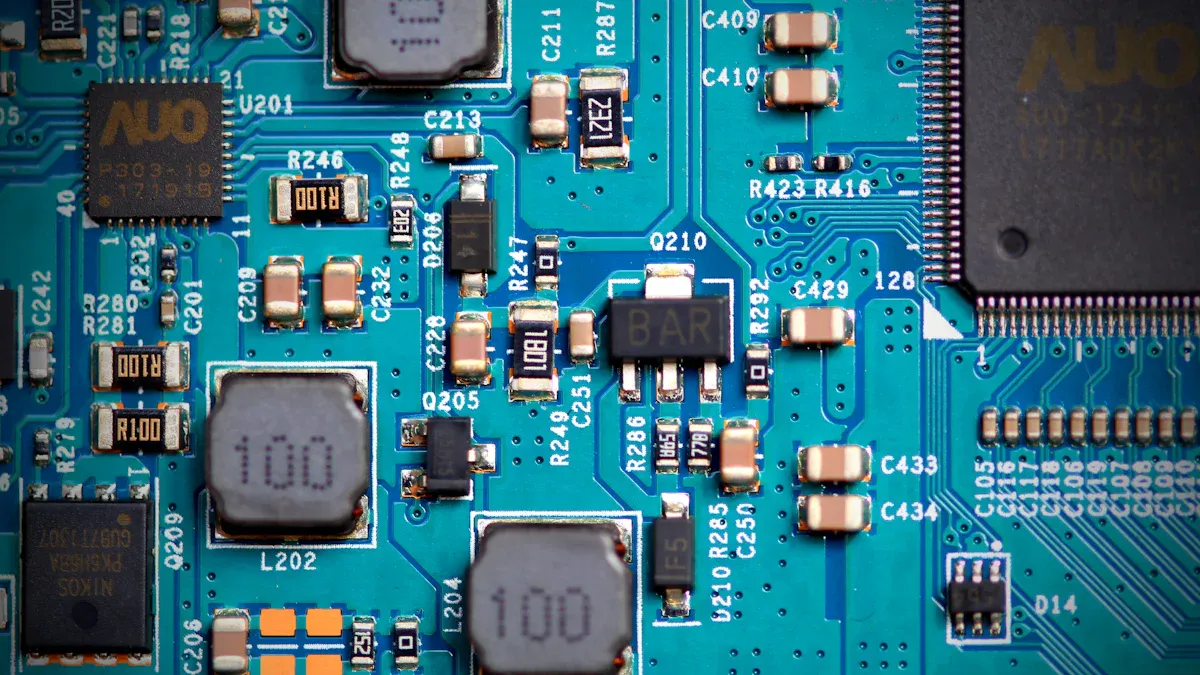
Designing PCBs for AI companion devices involves several critical considerations to optimise performance and reliability. You must focus on the following key aspects:
Manufacturing Efficiency: Adhere to Design for Manufacturing (DFM) and Design for Assembly (DFA) principles. This approach ensures that your designs are not only functional but also easy to produce.
Component Spacing: Maintain sufficient spacing between pads and avoid excessively small vias. This practice enhances reliability and reduces the risk of manufacturing defects.
Rigorous Testing: Conduct thorough testing, including both simulation and physical testing. This step is essential for ensuring power integrity and verifying performance under real-world conditions.
AI Integration: Leverage AI tools to suggest innovative design alternatives based on constraints. These systems can adapt quickly to design changes, which is crucial in dynamic environments.
Audio Capture Techniques
Effective audio capture is vital for the functionality of AI companions. You should consider the following techniques:
Microphone Selection: Choose between air and contact microphones. These options allow for always-on recording of speech and environmental sounds, ensuring that your device captures audio accurately.
Microphone Distribution: Strategically place microphones at various locations on the device. This arrangement ensures adequate directional coverage and enhances audio fidelity.
Audio Processing Methods: Implement algorithms such as voice activity detection (VAD) and automatic speech recognition (ASR). These methods are crucial for processing captured audio data effectively, enabling your device to respond promptly to user commands.
Microphone and Speaker Integration
Integrating microphones and speakers into your PCB design requires careful planning. Here are some considerations:
Low-Noise Design: Focus on minimising noise interference in your audio components. This can significantly improve the clarity of captured audio and the quality of playback.
Compact Connector Assembly: Use compact connectors to save space on your PCB. This approach allows for a more streamlined design, which is particularly important in smaller devices.
Incorporating these design principles will enhance the overall performance of your AI companion device. By focusing on audio capture techniques and effective integration of microphones and speakers, you can create a device that not only meets user expectations but also stands out in the competitive market of AI hardware.
Assembly of OpenAI Inspired Hardware
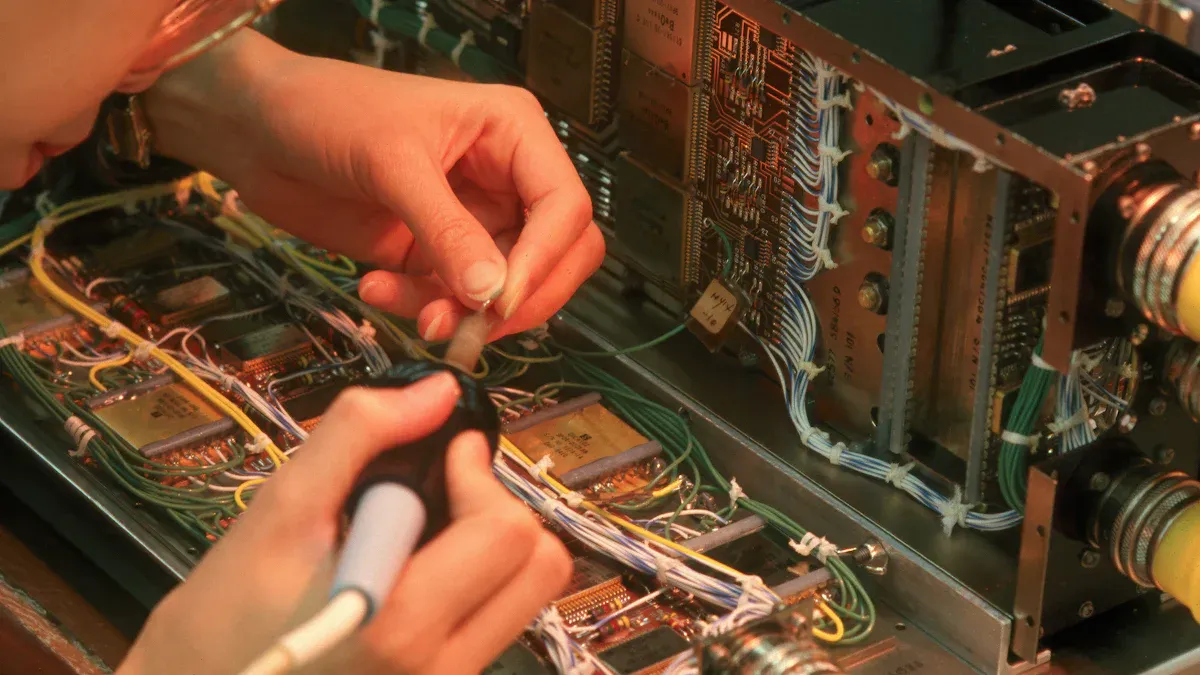
Assembling OpenAI-inspired hardware requires meticulous attention to detail to ensure functionality and durability. You must follow a structured assembly process that prioritises user experience and device performance. Here are the critical steps to consider:
Prioritise user experience (UX): Design an intuitive interface that makes AI features easily accessible.
Build prototypes for early validation: Create prototypes to test functionality and gather user feedback before full-scale development.
Thoroughly test before deployment: Conduct extensive testing to identify and fix bugs and performance issues early in the process.
Incorporate strong security and privacy measures: Implement encryption and ensure compliance with regulations like GDPR and CCPA.
Build for scalability: Use cloud-based solutions to manage increasing data loads as your user base grows.
Optimise AI for mobile devices: Employ lightweight models to prevent excessive resource consumption.
Take a DevSecOps approach: Integrate security into every phase of development to protect sensitive data.
Low-Noise Design
Low-noise design is essential for the performance of AI companion devices. You should focus on minimising electromagnetic interference (EMI) and ensuring power isolation strategies. Here are some effective methods to achieve this:
Use Shielded Components: Incorporate shielded components to reduce noise interference. This practice enhances audio clarity and overall device performance.
Implement Ground Planes: Design your PCB with ground planes to provide a stable reference point for signals. This approach helps in reducing noise and improving signal integrity.
Careful Routing: Route sensitive signal traces away from noisy components. This strategy prevents interference and maintains the quality of audio capture and playback.
Expert insights suggest that “a well-designed low-noise PCB can significantly enhance the user experience by providing clearer audio and faster response times.” This statement underscores the importance of prioritising low-noise design in your assembly process.
Compact Connector Assembly
Compact connector assembly plays a vital role in the overall performance and reliability of AI companion devices. By utilising compact connectors, you can optimise space on your PCB while maintaining high data rates and signal integrity. The following table outlines the key features of compact connectors:
Feature | Description |
|---|---|
Data Rates | Up to 112 Gbps per lane |
Signal Integrity | Excellent signal integrity and EMI shielding |
Mechanical Reliability | Engineered for thermal stability and mechanical endurance |
Configurations | Available in x4, x8, and x16 options |
Applications | Ideal for AI accelerators, networking, and storage systems |
Incorporating compact connectors not only saves space but also enhances the reliability of your device. As you assemble your OpenAI-inspired hardware, remember that a well-planned connector layout can lead to improved performance and user satisfaction.
By focusing on low-noise design and compact connector assembly, you can create AI companion devices that stand out in the market. These strategies will ensure that your devices deliver exceptional audio quality and responsiveness, ultimately enhancing the user experience.
Applications of AI Companions
AI companions have found diverse applications across various sectors, significantly enhancing user interaction and experience. Two prominent examples are smart speakers and desktop AI assistants.
Smart Speakers
Smart speakers have revolutionised how you interact with technology in your home. These devices leverage advanced AI to provide seamless voice interaction, allowing you to control your environment effortlessly. With OpenAI-inspired hardware, smart speakers can understand context and respond to multi-turn dialogues, making conversations feel more natural.
The market for smart speakers is booming, driven by the demand for personal assistance. According to recent data, personal assistance applications account for a 39% market share, improving user productivity by 28%. This growth reflects a shift towards devices that not only respond but also engage meaningfully with users.
Feature | Description |
|---|---|
Voice Recognition | Enhanced natural language understanding and generation |
User Engagement | Contextual responses to follow-up questions |
Market Growth | Rapid adoption in households and workplaces |
Desktop AI Assistants
Desktop AI assistants are becoming essential tools in both professional and personal settings. They streamline tasks such as scheduling, document retrieval, and smart home management. For instance, a sales manager might use an AI assistant to coordinate meetings, optimising their workflow around priority tasks.
The versatility of desktop AI assistants is evident in their applications. They can manage smart home devices, allowing you to control your environment with simple voice commands. This capability enhances daily comfort and convenience.
Use Case Type | Description |
|---|---|
Professional | Sales Meeting Coordination |
Professional | Document Retrieval in Legal Sector |
Personal | Smart Home Management |
As you explore the potential of AI companions, consider how these applications can address your needs and improve your daily life. The integration of AI technology into these devices not only enhances functionality but also fosters a deeper connection between you and your technology.
Benefits of OpenAI Technology
Enhanced User Engagement
Integrating OpenAI technology into AI companion devices significantly enhances user engagement. You experience more sophisticated conversational capabilities, allowing for natural interactions. This technology enables your device to process tasks locally, which improves response times and reduces latency. As a result, you enjoy a seamless experience that feels intuitive and responsive.
OpenAI’s voice mode fosters real-time conversations, making interactions feel fluid and engaging.
The AI adapts to your preferences over time, creating a personalised experience tailored to your needs.
Continuous learning from your interactions refines the AI’s capabilities, enhancing its effectiveness in various applications.
Recent studies show that AI companion platforms utilise multimodal large language models, integrating text, voice, image, and contextual memory. This integration improves contextual response accuracy by approximately 36% and reduces response latency by nearly 28%. Consequently, you benefit from a more engaging and personalised interaction with your AI assistant.
Future-Proofing Devices
OpenAI-inspired hardware not only enhances user engagement but also future-proofs your devices. Manufacturers can implement several strategies to ensure longevity and relevance in a rapidly evolving market:
Strategy | Description |
|---|---|
High-quality design | Focus on creating aesthetically pleasing and functional hardware. |
Advanced AI integration | Incorporate cutting-edge AI capabilities to enhance user experience. |
Unique features | Develop distinctive functionalities that set the product apart. |
By leveraging these strategies, you can expect your AI companion devices to remain relevant as technology advances. The integration of hardware, software, and AI into seamless ecosystems fosters deeper connections between you and your devices. This approach not only enhances your experience but also prioritises your well-being and privacy.
In summary, designing and assembling PCBs for AI companion devices involves critical considerations that enhance performance and user experience. By integrating OpenAI-inspired technology, you can significantly improve emotional well-being and foster meaningful interactions. Recent advancements show that AI optimises PCB layouts, streamlines manufacturing, and enhances quality control. As you explore this evolving field, consider how these innovations can transform your devices, making them more efficient and responsive to user needs. Embrace the future of AI companions and their potential to enrich your daily life.
FAQ
What is an AI companion device?
An AI companion device is a personal AI device designed to enhance human-AI interaction. It uses advanced algorithms to provide context-aware support, making your interactions more engaging and intuitive.
How does OpenAI technology improve AI companions?
OpenAI technology enhances AI companions by enabling them to understand context better. This improvement leads to more natural interactions and quicker responses, enriching your overall experience with the device.
What are the key benefits of using AI in companion devices?
AI in companion devices offers several benefits, including improved user engagement, personalised experiences, and efficient task management. These features help you interact seamlessly with your device, making daily tasks easier.
How can I ensure my AI companion device remains relevant?
To future-proof your AI companion device, focus on high-quality design and advanced AI integration. Regular updates and unique features will keep your device aligned with evolving user needs and technological advancements.
What role does audio quality play in AI companions?
Audio quality is crucial for effective communication in AI companions. High-quality microphones and speakers ensure clear audio capture and playback, enhancing your interaction and overall user experience.
See Also
Understanding OpenAI Hardware Trends for Tailored AI Device PCBA
Comprehensive AI PCBA Solutions for Irish MedTech and IoT Firms
Edge AI PCB Production for Canadian Vision and Surveillance Equipment
Bespoke AI PCBA Solutions for Czech Industrial Electronics Sector
Complete AI PCBA Services for Singapore’s IoT and MedTech Initiatives