


The rise of AI-driven technologies in Israel showcases the critical role of AI server prototype PCBA in empowering startups. These prototypes enhance memory accessibility, offering up to 1000 times the access compared to conventional solutions. With improved computational performance exceeding 50 times that of existing options, startups can efficiently train complex AI models. Additionally, the cost efficiency of AI server prototypes allows companies to save on resources, potentially reducing the need for 10 to 20 Nvidia servers. This combination of high-speed connectivity and sustainable PCBs positions Israeli startups at the forefront of innovation in AI infrastructure.
Key Takeaways
AI server prototypes significantly enhance memory access, offering up to 1000 times more than traditional solutions.
Customization of PCBA is essential for optimizing performance in AI workloads, leading to better signal integrity and thermal management.
Addressing DFM and BOM issues early in the design process ensures smoother prototyping and faster production timelines.
Utilizing generative AI tools can streamline PCB design, saving time and reducing material waste while enhancing performance.
Effective thermal management strategies, such as heat sinks and active cooling, are crucial for maintaining optimal performance in AI servers.
PCBA in AI Applications

AI Server Performance
PCBA plays a pivotal role in enhancing the performance of AI servers. By integrating advanced components and optimizing layouts, you can achieve significant improvements in processing speed and efficiency. For instance, the use of high-density interconnect (HDI) technology in PCBs allows for faster signal transmission, which is crucial for AI applications that require real-time data processing.
According to industry experts, “The performance of AI servers hinges on the quality of their PCBs. A well-designed PCB can reduce latency and increase throughput, enabling startups to deploy AI solutions more effectively.” This statement underscores the importance of investing in high-quality PCBA for your AI infrastructure.
Customization for AI Workloads
Customization is essential when it comes to meeting the unique demands of AI workloads. Each AI application has specific requirements, whether it involves deep learning, machine learning, or data analytics. Tailoring your PCBA to accommodate these needs can lead to substantial performance gains.
For example, consider the following comparison of standard PCBs versus customized PCBs for AI workloads:
Feature | Standard PCBs | Customized PCBs |
|---|---|---|
Signal Integrity | Moderate | High |
Thermal Management | Basic | Advanced |
Component Density | Low | High |
Design Flexibility | Limited | Extensive |
As shown in the table, customized PCBs offer superior signal integrity and thermal management, which are critical for handling the intense processing demands of AI applications. By focusing on these aspects, you can ensure that your AI servers operate at peak performance.
In addition, utilizing generative AI tools for PCB design can streamline the customization process. These tools analyze various design parameters and suggest optimal configurations, saving you time and resources.
Prototyping Challenges
DFM and BOM Issues
In the world of AI server prototype PCBA development, addressing DFM (Design for Manufacturability) issues is crucial. You must ensure that your designs meet quality and reliability standards. Identifying and resolving manufacturability problems early in the design process leads to first pass success, which is essential for efficient production. Common DFM issues include:
Component Placement: Incorrect placement can lead to signal integrity problems.
Trace Width: Insufficient trace width may cause overheating and failure.
Via Size: Using the wrong via size can affect the overall performance of the PCB.
By focusing on these areas, you can enhance the manufacturability of your PCBs, ultimately leading to a smoother prototyping process.
When it comes to BOM (Bill of Materials) issues, you need to ensure that all components are readily available and compatible. A well-structured BOM helps you avoid delays in production. Here are some tips for managing BOM effectively:
Standardization: Use standardized components whenever possible to simplify sourcing.
Supplier Relationships: Build strong relationships with suppliers to ensure timely delivery of components.
Version Control: Maintain version control of your BOM to track changes and updates.
Quick-Turn PCB Manufacturing
Quick-turn PCB manufacturing is essential for startups looking to accelerate their prototyping process. The ability to produce PCBs rapidly allows you to test and iterate designs quickly. However, this speed comes with its own set of challenges.
You may encounter issues such as:
Quality Control: Rapid production can sometimes compromise quality. Implement strict quality checks to ensure reliability.
Cost Management: Quick-turn services often come at a premium. Balance speed with budget constraints to avoid overspending.
Design Adjustments: Last-minute design changes can lead to delays. Plan your designs carefully to minimize adjustments during manufacturing.
Utilizing co-design and rapid prototyping techniques can help you navigate these challenges effectively. By collaborating closely with your PCB manufacturer, you can streamline the process and ensure that your prototypes meet the necessary specifications.
AI-Driven PCB Fabrication
High-Speed Signal Transmission
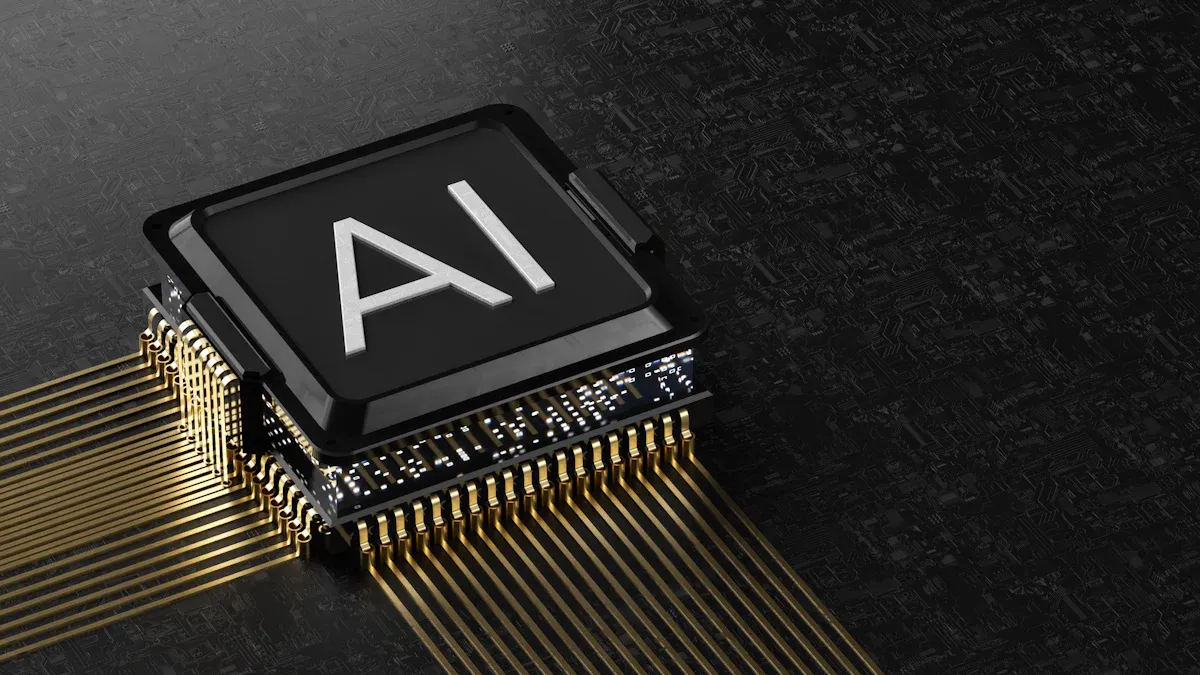
In the realm of AI-driven PCB fabrication, high-speed signal transmission is paramount. AI hardware operates at gigahertz frequencies, where even minor distortions in signal paths can lead to computation errors. To combat this, manufacturers utilize low-loss dielectric materials that enhance signal quality. Additionally, optimized trace geometry minimizes signal degradation, ensuring that your AI servers perform reliably.
Key requirements for achieving high-speed signal transmission include:
Stable Power Distribution Networks (PDNs): These networks ensure stable voltage delivery to all components, which is crucial for maintaining performance.
Low-Loss Materials: Using materials that reduce signal loss enhances overall efficiency.
Careful Trace Design: Properly designed traces minimize interference and maintain signal integrity.
By focusing on these aspects, you can significantly improve the performance of your AI server prototypes.
Multi-Layer PCB Stack-Up
Multi-layer PCB stack-ups offer numerous benefits for AI server prototypes. They support complex designs and allow for advanced electronic systems. The following table outlines the key features and their benefits for AI servers:
Feature | Benefit for AI Servers |
|---|---|
High layer count | Supports complex designs for advanced electronic systems |
High density | Enables more components in a smaller area, enhancing performance |
High speed | Facilitates faster data transfer, crucial for AI processing |
Controlled impedance | Reduces signal loss, improving reliability and performance |
Thermal Management | Enhances heat dissipation, preventing overheating in high-performance applications |
Variety of finishes and coatings | Improves connectivity and sustainability, essential for long-term operation in AI servers |
The integration of multi-layer designs allows you to pack more functionality into a compact space, which is essential for modern AI applications. As you explore AI-driven PCB fabrication, consider how these innovations can elevate your startup’s capabilities.
Generative AI Computing in Startups
AI-Assisted Design
Generative AI computing revolutionizes PCB design for startups. This technology allows you to create optimized layouts quickly. By using algorithms, you can explore numerous design variations in a fraction of the time it would take manually. This process not only saves time but also enhances the performance of your PCBs.
For example, consider the following benefits of AI-assisted design:
Speed: Generate multiple design options rapidly.
Optimization: Identify the best configurations for signal integrity and thermal management.
Cost-Effectiveness: Reduce material waste by selecting the most efficient designs.
With generative AI, you can focus on high-performance computing needs while ensuring your designs meet the specific demands of your applications.
Thermal Management Solutions
Effective thermal management is crucial for high-performance computing in AI servers. As your PCBs handle intense workloads, they generate heat that can affect performance and reliability. Implementing advanced thermal management solutions can help mitigate these issues.
Here are some strategies to enhance energy efficiency in your designs:
Heat Sinks: Use heat sinks to dissipate heat away from critical components.
Thermal Pads: Incorporate thermal pads to improve heat transfer between components and heat sinks.
Active Cooling: Consider active cooling solutions, such as fans or liquid cooling systems, for high-density designs.
By prioritizing thermal management, you can ensure that your AI server prototypes maintain optimal performance levels. This focus on energy efficiency not only enhances reliability but also contributes to the sustainability of your data center infrastructure.
In summary, AI server prototype PCBA holds immense potential for Israeli AI startups. These prototypes enhance performance, customization, and efficiency, enabling you to tackle complex AI workloads effectively. As you explore these technologies, consider how they can drive innovation and growth in your projects. Embrace the advancements in PCB design and fabrication to stay competitive in the rapidly evolving AI landscape. The future of AI infrastructure in Israel is bright, and your startup can lead the way! 🚀
FAQ
What is PCBA, and why is it important for AI servers?
PCBA stands for Printed Circuit Board Assembly. It is crucial for AI servers because it enhances performance, reliability, and customization, enabling efficient processing of complex AI workloads in data centers.
How does customization improve AI server performance?
Customization allows you to tailor the PCBA to specific AI workloads. This leads to better signal integrity, thermal management, and overall efficiency, which are essential for high-performance computing in data centers.
What are the common challenges in PCB prototyping?
Common challenges include DFM (Design for Manufacturability) issues, BOM (Bill of Materials) management, and quick-turn manufacturing constraints. Addressing these challenges ensures smoother prototyping and faster time-to-market for your AI solutions.
How can generative AI assist in PCB design?
Generative AI can optimize PCB layouts quickly by analyzing various design parameters. This technology helps you identify the best configurations for performance, saving time and reducing material waste in data centers.
What thermal management solutions should I consider for AI servers?
Consider using heat sinks, thermal pads, and active cooling systems. Effective thermal management prevents overheating and ensures reliable performance of your AI server prototypes in data centers.