


Demand for intelligent security solutions and real time systems escalates rapidly. Specialized hardware plays a critical role. OpenAI’s research in AI models fundamentally reshapes the design and capabilities of AI security PCBA. This influences edge AI devices. We explore key hardware trends and architectural shifts expected by the edge ai technology report 2026. Robust, efficient, and secure hardware is necessary at the edge. Edge foundation models drive this innovation in AI.
Key Takeaways
Edge AI processes security data locally to deliver faster alert speeds and protect private video feeds.
Specialized NPU chips boost camera processing power while consuming very low electrical energy.
Modern PCBA designs combine multiple vision sensors on single compact boards for accurate threat detection.
Built-in hardware security features protect smart devices from cyber threats and unauthorized software attacks.
Edge AI for Security and Vision

Drivers for Edge AI Adoption
The landscape of AI security and vision systems is undergoing a fundamental shift. Processing is moving from centralized cloud servers to the edge. This migration is driven by critical needs for faster response times, enhanced privacy, and reduced bandwidth consumption. This defines the hardware landscape for the edge ai technology report 2026, especially for physical ai applications. Companies now prioritize local processing to improve system efficiency and reliability.
Latency, Privacy, and Bandwidth
Latency presents a significant challenge for real-time security systems. Edge ai mitigates latency volatility by running inference on nearby nodes. This prevents the unpredictable delays inherent in cloud round trips. Localized processing stabilizes response times and drastically minimizes network jitter. This delivers consistent, predictable behavior critical for real-time security systems.
Deployment Architecture | Processing Location | Response Latency | Secondary Benefits |
|---|---|---|---|
Cloud AI | Remote Cloud Servers | 50–200 ms (or longer multi-second delays) | Suffers from network congestion and uplink dependency |
Edge AI | Point of Capture (Local Cameras/MCUs) | Sub-10 ms (e.g., YOLOv8n models) | Enables offline function and immediate local siren/alert triggers |
This shift eliminates network delays. It moves ai inference to local devices, bypassing raw video transmission over fluctuating network pipelines. It also bypasses cloud bottlenecks, avoiding server queue delays, bandwidth limits, and upstream network congestion. Furthermore, it enables lightweight alerting. Systems transmit lightweight structured JSON alerts over protocols like MQTT/HTTP instead of streaming continuous, heavy raw video data. This approach significantly enhances privacy by keeping sensitive data local. It also reduces bandwidth requirements, making systems more efficient.
OpenAI’s Influence on Edge AI Deployment
OpenAI’s research in large language models and other advanced ai models significantly influences edge deployment strategies. While large models often reside in the cloud, their architectural principles and optimization techniques inspire smaller, more efficient models for the edge. The development of edge foundation models allows for sophisticated AI capabilities to run on resource-constrained devices. This enables advanced analytics and decision-making directly at the source of data capture. This trend is crucial for AI security cameras, unmanned system vision boards, and edge AI vision boxes.
AI Security PCBA Hardware Architectures
Heterogeneous Compute Platforms
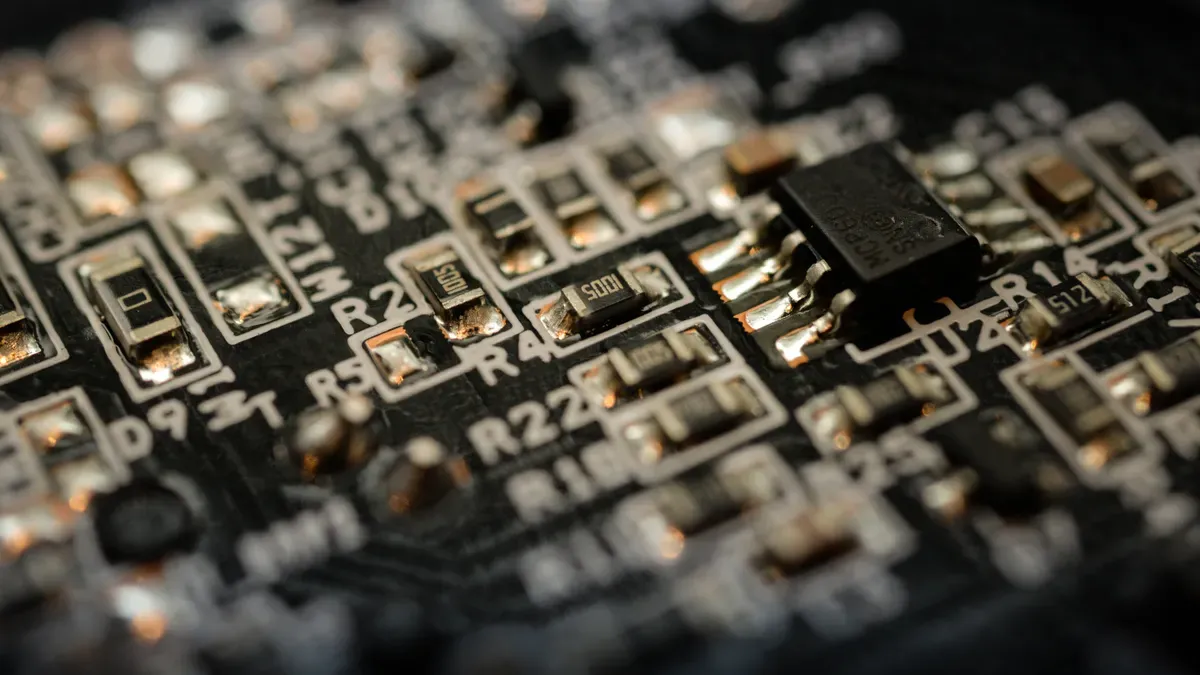
Modern ai security pcba designs increasingly feature heterogeneous compute platforms. These platforms integrate various processing units onto a single board. They combine CPUs, GPUs, FPGAs, and specialized NPUs. This integration allows each processor to handle specific ai workloads most efficiently. CPUs manage general-purpose tasks and system orchestration. GPUs excel at parallel processing for complex vision algorithms. FPGAs offer reconfigurable logic for custom acceleration. NPUs provide highly efficient inference for neural networks. This diverse architecture optimizes resource utilization. It also boosts overall system performance for demanding edge applications. For instance, an ai security pcba in an AI security camera might use a CPU for operating system functions, a GPU for initial image preprocessing, and an NPU for real-time object detection. This division of labor ensures maximum efficiency and responsiveness.
Specialized AI Accelerators and NPUs
Specialized ai accelerators and Neural Processing Units (NPUs) are central to advanced ai security pcba designs. These components are purpose-built to execute neural network operations with high efficiency and low power consumption. They significantly outperform general-purpose CPUs or GPUs for inference tasks. This makes them ideal for edge devices where power and thermal constraints are critical. These specialized accelerators deliver the necessary compute performance for real-time ai analysis.
Consider the performance benchmarks for these accelerators in edge security devices:
Hardware / Platform | Performance Benchmark | Device / Application Context |
|---|---|---|
Hailo AI Acceleration Modules (M.2 / USB) | 13 TOPS to 40 TOPS | General Edge AI Acceleration |
Hailo-15H AI Vision Processor | 20 TOPS NPU | NeoEyes NE503 Professional 4K Smart Camera |
Generic Edge NPU (e.g., for basic object detection) | 2-5 TOPS | Entry-level AI security camera |
High-End Edge NPU (e.g., for multi-object tracking) | 10-20 TOPS | Advanced unmanned system vision board |
This table illustrates the significant performance gains from dedicated hardware. For example, the Hailo-15H NPU provides 20 TOPS (Tera Operations Per Second). This enables sophisticated ai capabilities directly within a 4K smart camera. Such capabilities include advanced facial recognition and anomaly detection. These accelerators are crucial for processing complex ai workloads at the edge.
Localized VRAM and Memory Bandwidth
Efficient memory management is paramount for ai security pcba. Localized Video RAM (VRAM) and high memory bandwidth are critical for edge ai applications. Ai models, especially those for vision, process large amounts of data. They require rapid access to this data. Integrating VRAM directly on or very close to the NPU or GPU minimizes data transfer latency. This ensures that the processing units do not wait for data. High memory bandwidth allows for quick movement of large datasets between the processor and memory. This is essential for real-time video analytics. For example, an edge AI vision box processing multiple high-resolution video streams needs substantial bandwidth. It moves frames to the NPU for inference and then stores results. Without sufficient localized VRAM and bandwidth, the performance of even the most powerful accelerators can suffer. This directly impacts the responsiveness and accuracy of ai security systems.
Edge AI Power Efficiency
Ultra-Low Power AI Processors
Power efficiency is crucial for edge devices. These devices often operate on limited power sources like batteries or Power over Ethernet (PoE). Ultra-low power ai processors are essential. These specialized chips execute complex ai workloads with minimal energy consumption. They allow devices to run for extended periods without frequent recharging or large power supplies. For example, some modern edge ai processors consume less than 5 watts during active inference. This contrasts sharply with cloud GPUs that can draw hundreds of watts. This low power draw directly impacts operational costs and deployment flexibility.
Advanced Power Management
Effective power management techniques maximize the lifespan and efficiency of edge hardware. Advanced systems dynamically adjust power consumption based on current workloads. They use methods like dynamic voltage and frequency scaling (DVFS). This allows the processor to run at lower speeds and voltages when demand is low. Power gating selectively turns off unused parts of the chip. Sleep modes put the device into a low-power state during idle periods. These strategies ensure that the device only uses the power it needs. This optimization is vital for maintaining continuous operation in remote or difficult-to-access locations.
Power Management Feature | Description | Power Saving Impact |
|---|---|---|
Dynamic Voltage and Frequency Scaling (DVFS) | Adjusts CPU/NPU clock speed and voltage based on demand. | Up to 30% reduction during idle/low load. |
Power Gating | Shuts off power to inactive circuit blocks. | Significant savings for intermittent tasks. |
Sleep Modes | Places entire system or components into low-power states. | Reduces standby power to milliwatts. |
Thermal Management for Compact Designs
Efficient power consumption directly simplifies thermal management. Less power used means less heat generated. This is critical for compact edge device designs. Many edge security cameras or vision boxes have small form factors. They lack space for large fans or elaborate cooling systems. Ultra-low power processors and advanced power management reduce the need for active cooling. This enables passive cooling solutions like heat sinks. These designs improve reliability by eliminating moving parts. They also reduce noise. This ensures stable performance even in enclosed environments. This approach allows for robust, fanless designs suitable for harsh industrial settings or discreet security installations.
PCBA Design for Edge Vision
PCBA design for edge vision applications presents unique challenges. It requires integrating diverse components into compact, high-performance systems. These systems include AI security cameras, unmanned system vision boards, edge AI vision boxes, and sensor fusion boards. Innovations in PCBA design directly impact the capabilities and reliability of these devices.
High-Density Interconnects and Miniaturization
Miniaturization is a key trend in edge AI hardware. Devices must fit into increasingly smaller form factors. This demands high-density interconnects (HDI) on the Printed Circuit Board Assembly (PCBA). HDI technology allows for finer lines, smaller vias, and higher component density. This enables complex circuits in a reduced footprint. For example, an AI security camera needs to pack powerful processing, memory, and communication modules into a small enclosure. This often leads to complex design iterations and frequent revisions. Engineers must carefully manage signal integrity and power delivery within these dense layouts.
PCBA Technology | Line/Space Width (µm) | Via Type | Layer Count (Typical) | Application |
|---|---|---|---|---|
Standard PCB | >100 | Through | 2-8 | General Purpose |
HDI PCB | 50-100 | Microvia | 8-20+ | Edge AI, Mobile Devices |
SLP (Substrate-Like PCB) | <50 | Microvia | 10-20+ | Advanced Edge AI, Wearables |
This push for miniaturization also impacts manufacturing processes. Advanced fabrication techniques are essential to produce these intricate boards reliably. Industry data shows that the demand for HDI PCBs in edge computing grew by 15% in the last year. This highlights the critical role of specialized PCBA design and manufacturing expertise.
Integrated Camera Interfaces and ISPs
Edge vision systems rely heavily on high-quality image data. Integrating camera interfaces and Image Signal Processors (ISPs) directly onto the PCBA is crucial. This integration minimizes latency and optimizes data flow. ISPs perform critical functions like noise reduction, color correction, and dynamic range enhancement. They process raw sensor data into usable image formats. This offloads these computationally intensive workloads from the main AI processor. For instance, an unmanned system vision board requires real-time video processing for navigation and object detection. A dedicated ISP ensures the AI receives clean, optimized visual input. This direct integration also reduces the overall bill of materials and simplifies system assembly.
Multi-Sensor Fusion on PCBA
The future of edge AI security and vision lies in multi-sensor fusion. This involves combining data from various sensors, such as cameras, radar, lidar, and thermal imagers. Fusing data from multiple sources provides a more comprehensive understanding of the environment. This enhances accuracy and robustness for AI applications. However, integrating diverse sensors onto a single PCBA presents significant challenges. Customers often face pain points related to the complexity of multi-sensor synchronization, data alignment, and power management.
Bonysn specializes in sensor fusion PCBA solutions. They address these integration complexities directly. Their expertise ensures seamless data aggregation and processing. This allows for advanced perception capabilities in devices like edge AI vision boxes and sophisticated sensor fusion boards. For example, a security system might combine visual data from a camera with thermal data to detect intruders in low-light conditions. This multi-modal approach significantly reduces false positives and improves detection rates.
Sensor Type | Primary Data Output | Key Benefit for Edge AI | Integration Complexity |
|---|---|---|---|
Camera | RGB, Depth | High-resolution visual context | Moderate (ISP, data bandwidth) |
Radar | Distance, Velocity | All-weather object detection | Moderate (RF shielding, processing) |
Thermal | Heat Signatures | Low-light/obscured object detection | Low (simple interface, specific processing) |
Lidar | 3D Point Cloud | Precise spatial mapping | High (data volume, processing) |
Effective sensor integration on the PCBA is vital for these advanced systems. It ensures that the AI receives rich, synchronized data streams for accurate analysis. This capability is transforming how edge devices perceive and interact with their surroundings.
Hardware Security for Edge AI
Secure Boot and Trusted Execution
Edge devices require robust security measures. Secure boot ensures that only authenticated software runs on a device. This process verifies the digital signature of each software piece before execution. It prevents malicious code from compromising the system at startup. Trusted execution environments (TEEs) create isolated areas within the processor. These areas protect sensitive data and operations from the rest of the system. For edge ai applications, TEEs safeguard AI models and inference results. This protection is crucial for maintaining data integrity and confidentiality. These mechanisms enhance the overall reliability of edge systems.
Hardware Root of Trust
A Hardware Root of Trust (HRoT) forms the foundation of device security. It is an immutable component, typically a small, dedicated chip or a secure area within the main processor. The HRoT establishes an unchangeable starting point for trust. It verifies the integrity of the secure boot process. It also provides cryptographic functions for secure storage and authentication. Without a strong HRoT, attackers could potentially compromise the entire system. This hardware-based approach ensures that the device’s identity and initial state are always trustworthy. It is vital for the long-term reliability of edge deployments.
AI-Driven Defenses for Edge Devices
Advanced ai techniques are now protecting edge devices from cyber threats. These ai-driven defenses operate directly at the network edge. They deploy security directly onto peering, access, and aggregation edge devices. This approach does not require extra hardware. Unsupervised machine learning algorithms detect real-time behavioral threats. These algorithms identify anomalies directly at the network edge. They enable on-box line-rate mitigation for edge ai systems. This allows instant threat neutralization, often in less than 30 seconds. It combats zero-day, carpet bombing, and high-volume DDoS attacks on the router itself. This provides 360-degree threat defense. It protects edge hardware across inbound, outbound, and East-West traffic pathways against advanced AI botnet threats.
BOM and Manufacturing Risk Management
Strategic Component Selection
Strategic component selection is crucial for the success of edge ai devices. Manufacturers must carefully evaluate each part. Key criteria for strategic component selection in edge AI electronics include:
Performance Characteristics: Evaluating processing power and energy management capabilities required for edge AI workloads.
Long-Term Availability: Ensuring components remain accessible throughout the product’s intended lifecycle.
Supplier Diversity: Avoiding single-source dependencies to mitigate sourcing risks.
Supply Chain Resilience: Selecting parts backed by stable and adaptable procurement networks. This careful selection ensures product reliability and longevity. Customers often face pain points with fast R&D cycles and project confidentiality. Bonysn supports these needs by offering expertise in sourcing reliable components and managing supply chain risks. This approach helps clients avoid costly redesigns and delays.
Design for Manufacturability (DFM)
Design for Manufacturability (DFM) is essential for efficient production. DFM reviews identify potential manufacturing issues early in the design phase. This process reduces costs and improves product quality. For complex multi-sensor boards and systems with frequent revisions, DFM is critical. It ensures designs are optimized for assembly and testing. Bonysn provides comprehensive DFM reviews. This helps clients streamline their production processes. It also minimizes errors during manufacturing. This proactive approach enhances overall product reliability.
Agile Prototyping and Testing
The fast-paced AI hardware market demands agile development. Rapid prototyping allows quick iteration and validation of designs. This speeds up time-to-market for new edge AI security devices. Bonysn supports rapid prototyping and small batch OEM/ODM production. This capability addresses customer needs for quick R&D and market entry. Thorough testing at each stage ensures product functionality and performance. This agile approach helps companies adapt to evolving market demands efficiently.
AI Hardware Collaboration Models
NDA and IP Protection
Developing advanced ai hardware requires significant investment and innovation. Companies often possess sensitive intellectual property (IP) they need to protect. Project confidentiality is a major concern for customers in this competitive market. Non-Disclosure Agreements (NDAs) are essential tools. They legally safeguard proprietary information shared during collaboration. NDAs ensure that designs, specifications, and research remain confidential. This protection builds trust between partners. Bonysn understands these critical needs. They actively support NDA projects. This commitment ensures client IP remains secure throughout the development and manufacturing process.
OEM and ODM Partnerships
Original Equipment Manufacturer (OEM) and Original Design Manufacturer (ODM) partnerships are vital for accelerating hardware development. OEMs produce components or products based on a client’s specific design. ODMs design and manufacture products that clients then brand and sell. These models allow companies to leverage specialized expertise and existing manufacturing capabilities. This reduces time-to-market and lowers development costs. For example, a company might partner with an ODM to produce an edge vision PCBA. This allows the company to focus on software and market strategy.
Partnership Type | Design Responsibility | Manufacturing Responsibility | Client Involvement | Time-to-Market |
|---|---|---|---|---|
OEM | Client | Partner | High | Moderate |
ODM | Partner | Partner | Low | Fast |
Bonysn (Hybrid) | Client/Partner (flexible) | Partner | Flexible | Fast |
Bonysn offers flexible OEM and ODM services. They adapt to client requirements. This approach supports diverse project scopes.
Open-Source Hardware Ecosystems
Open-source hardware ecosystems foster collaboration and rapid innovation. These platforms provide publicly accessible designs and specifications. Developers can modify and share these designs freely. This accelerates the development of foundational technologies. While open-source models promote transparency, they may not suit projects requiring strict IP control. Companies often balance the benefits of open-source components with the need for proprietary solutions. They integrate open-source elements into their designs while protecting their unique innovations. This strategy allows them to benefit from community contributions.
The 2026 Edge AI Technology Report
Growth of Physical AI
The edge ai technology report 2026 highlights a significant surge in physical ai. This refers to ai systems embedded directly into real-world devices. These systems interact with their physical environment. This growth drives demand for specialized hardware. Devices like ai security cameras, autonomous vehicles, and industrial robots increasingly rely on on-device ai inference. This shift moves processing closer to the data source. It reduces latency and enhances privacy. This trend underscores the critical role of robust and efficient edge hardware. It enables real-time decision-making without constant cloud connectivity.
Specialized Inference Accelerators
Specialized accelerators are pivotal for efficient edge ai. These chips are purpose-built for ai workloads. They deliver high performance with low power consumption. Hailo, a key player in this space, offers ultra-efficient edge processors. Their Hailo-10 ai accelerator enables local generative ai capabilities. This allows sophisticated ai functions directly on low-power IoT devices, automotive systems, and edge endpoints. These accelerators are essential for deploying complex edge foundation models in resource-constrained environments.
Innovation | Architecture & Features | Performance / Efficiency | Target Applications |
|---|---|---|---|
CUBE | Uses 3D architecture to address thermal challenges | Up to 256GB/s bandwidth per die at <1pJ/bit | High-demand ai workloads |
CUBE-Lite | Eliminates LPDDR4 PHY for easier integration | Consumes 20% of LPDDR4X power | Battery-powered TinyML endpoints (drones, wearables, ai cameras) |
Advanced Semiconductor Ecosystems
An advanced semiconductor ecosystem supports the rapid evolution of edge ai. This ecosystem includes companies innovating in chip design and integration. Mellanox (NVIDIA) contributes advanced microprocessor architecture and edge computing integration. CEVA provides intellectual property and design solutions for ai chips. DSP Group specializes in chip design for telecommunications, automotive, and consumer electronics. These collaborations and innovations drive the development of more powerful and efficient edge hardware. They ensure the continuous advancement of ai capabilities at the edge.
The edge ai technology report 2026 clearly shows how OpenAI’s AI model advancements, combined with specialized ai security pcba and edge vision hardware, define the future of edge ai. This convergence drives innovation in heterogeneous compute, power efficiency, and advanced PCBA design. However, balancing performance, power, and security presents ongoing challenges. Resource overhead from security protocols and cryptographic defenses often compete for compute cycles. This creates system design trade-offs. Hardware-level trade-offs require careful processor selection, evaluating inference throughput against strict power budgets. Strategic hardware development remains crucial for a secure and intelligent edge ecosystem. These innovations will transform various industries.
FAQ
How does Edge AI enhance security device performance?
Edge AI processes data locally on devices. This significantly reduces latency. It also improves response times for security systems. Local processing enhances privacy by keeping sensitive data on-device. It minimizes bandwidth usage. This allows for faster, more reliable real-time threat detection and response.
What are the key challenges in designing PCBAs for advanced edge vision?
Designing PCBAs for edge vision involves several challenges. Miniaturization requires high-density interconnects. Integrating diverse sensors for multi-sensor fusion demands complex layouts. Managing thermal output in compact designs is also critical. Bonysn specializes in sensor fusion PCBA solutions. They address these integration complexities directly.
How does Bonysn support rapid development and protect intellectual property for AI hardware?
Bonysn offers agile prototyping and small batch OEM/ODM production. This accelerates time-to-market for clients. They provide comprehensive Design for Manufacturability (DFM) reviews. This minimizes manufacturing risks. Bonysn also supports Non-Disclosure Agreements (NDAs). This ensures strict project confidentiality and protects client intellectual property throughout development.
See Also
How OpenAI Hardware Trends Impact Custom Artificial Intelligence Device PCBAs
Artificial Intelligence Vision PCBAs Powering Israeli Security And Autonomous Robotics
Unlocking Circuit Board Opportunities In OpenAI Stargate Data Center Hardware
Advanced Edge Artificial Intelligence Server PCBAs For British Security Networks
Prototyping Next Generation Artificial Intelligence Hardware For Israeli Security Devices