
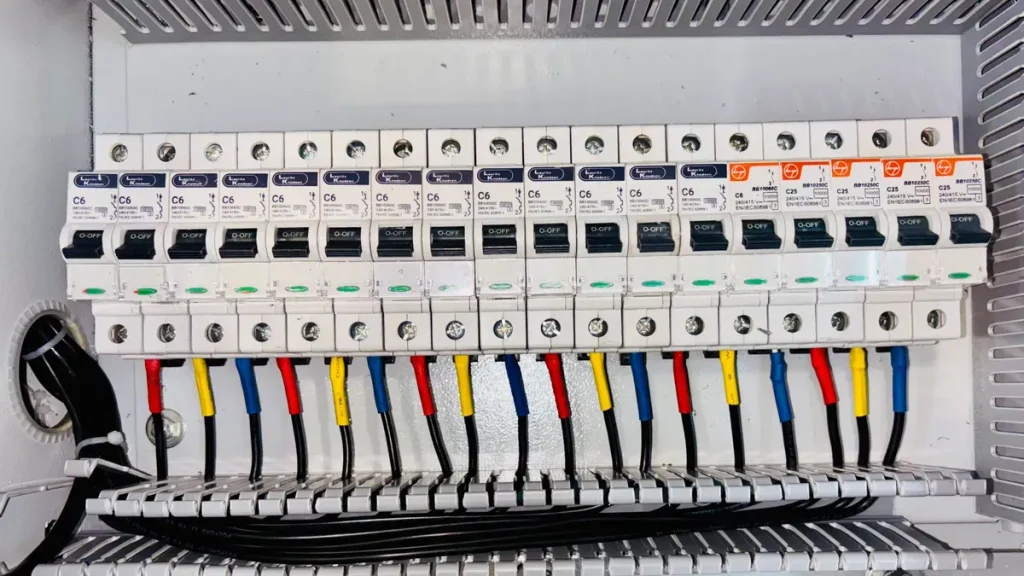
High-current power distribution PCBs play a crucial role in optimising AI server performance and efficiency across Australia. As the demand for AI technologies surges, so does the need for robust power solutions. Australia’s data centre industry is poised for remarkable growth, with projections indicating an increase from 1.5 GW in 2025 to 3.9 GW by 2030. This 2.6-fold growth underscores the escalating requirements for AI workloads and significant infrastructure investments, estimated at around AU $190 billion. You will find that this rapid expansion elevates the importance of high current server PCBs, ensuring that your AI servers operate effectively and reliably.
Key Takeaways
High-current power distribution PCBs are essential for optimising AI server performance and efficiency in Australia.
Effective power delivery systems are crucial for AI servers, as they require substantial energy to function optimally.
Advanced thermal management solutions, such as liquid cooling, are vital for maintaining AI server performance and longevity.
Incorporating thick copper designs in PCBs enhances current capacity and reduces resistive losses, improving overall efficiency.
Collaboration with PCB manufacturers during the design phase can lead to better performance and manufacturability of AI server PCBs.
AI Server Needs
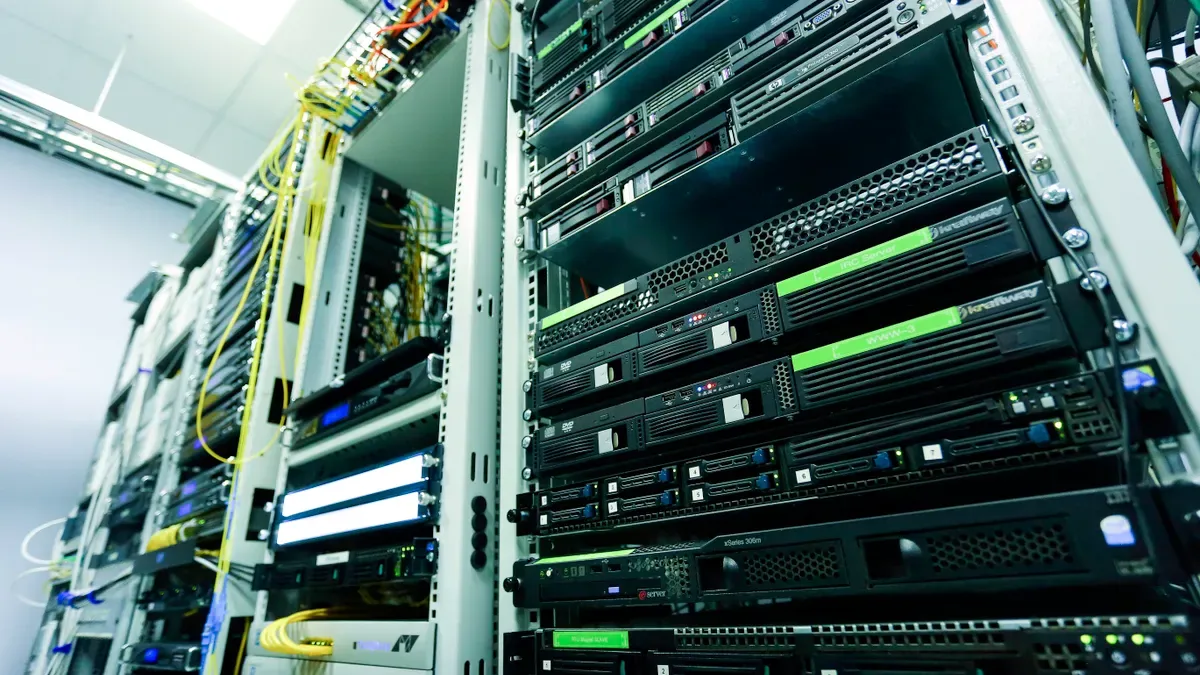
AI servers demand exceptional power delivery systems to support their high computational loads. As you engage with AI technologies, you will notice that these servers often require substantial energy to function optimally. The increasing power draw of AI, particularly generative AI, has led to a surge in computational power requirements, significantly raising energy consumption in data centres.
Modern AI data centres utilise a sophisticated power architecture that efficiently delivers energy from the utility grid to processors. This architecture includes medium-voltage connections, transformers, and uninterruptible power supply (UPS) systems to ensure continuous operation. Rack-level power architectures are essential due to the increasing power densities driven by AI workloads. For instance, AI workloads require large clusters of GPUs, consuming up to 1.2 kW per processor. Rack power levels are escalating from tens of kilowatts to over 100 kW, with some next-generation racks expected to exceed 500 kW or even 1 MW.
Tip: When designing your AI server PCB, consider integrating features that optimise power distribution. This will enhance the overall efficiency and reliability of your server.
Thermal Management Solutions
Effective thermal management is crucial for maintaining the performance and longevity of AI servers. The high heat output from modern AI chips can reach up to 700 watts each, leading to significant power densities. Therefore, you must implement advanced cooling solutions to manage these thermal loads effectively.
Several techniques have emerged as effective solutions for thermal management in AI server PCBs, particularly in the Australian climate:
Liquid Cooling: This method is essential for managing the high heat output from AI chips. It allows for efficient heat dissipation, ensuring that components remain within optimal temperature ranges.
High-Temperature Server Designs: New server designs can operate between 5℃ to 47℃, reducing cooling needs and improving reliability.
Efficient Chilled-Water Cooling Systems: These systems can operate at higher incoming water temperatures, enhancing air conditioning efficiency in data centres.
The thermal management requirements for AI servers differ significantly from those of traditional servers. The following table highlights these differences:
Feature | AI Servers | Traditional Servers |
|---|---|---|
Cooling Method | Direct-to-chip liquid cooling | Air cooling |
Heat Dissipation Capability | 80–120 kW per rack and beyond | 8–25 kW per rack |
Thermal Load Generation | 90%+ at die surface | Distributed across multiple components |
Pressure-Drop Budget | Tight, CDU-constrained | Looser, less critical |
ΔT Tolerance | ≤ 10 °C across the cold plate | Broader tolerance |
Heat Flux | 700–2,700 W concentrated on a small die | Lower flux, distributed across many cells |
Material Used | Copper or aluminium cold plates with micro-channel topology | Stamped-and-brazed aluminium plates |
By understanding these power delivery and thermal management needs, you can design high-current power distribution PCBs that meet the demands of AI servers effectively.
High Current Server PCB Advancements
Thick Copper Designs
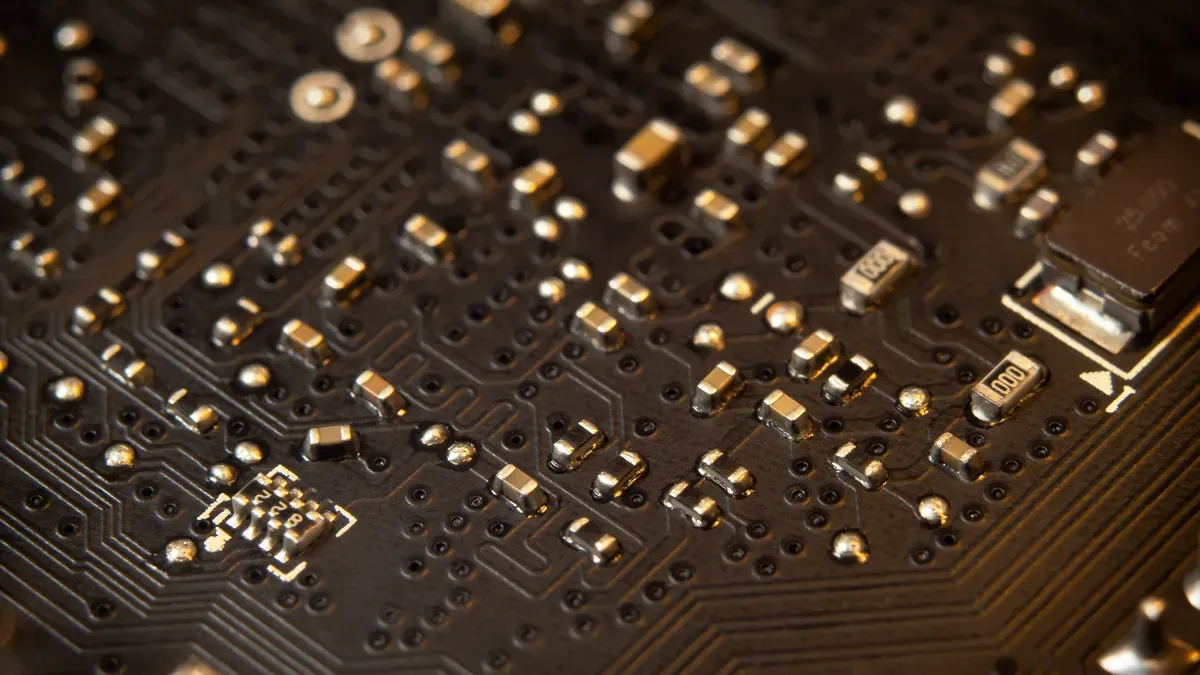
Thick copper designs represent a significant advancement in high-current server PCBs. These designs utilise copper layers that exceed the standard thickness, allowing for improved current handling capabilities. By integrating thick copper, you enhance the power distribution efficiency and reduce resistive losses. This is particularly crucial for AI servers, which demand high-performance PCBs to support their intensive workloads.
The benefits of thick copper designs include:
Enhanced Current Capacity: Thick copper layers can handle higher currents without overheating, ensuring stable performance during peak loads.
Reduced Electromagnetic Interference (EMI): The increased thickness helps to minimise EMI, which is vital for maintaining signal integrity in high-speed applications.
Improved Thermal Management: Thick copper aids in heat dissipation, contributing to better thermal management within the server.
Incorporating thick copper into your PCB design may incur higher costs due to advanced manufacturing processes. However, the long-term benefits in performance and reliability often justify this investment.
High-Density Interconnects
High-density interconnects (HDIs) are another critical advancement in the realm of high-current server PCBs. These interconnects facilitate the integration of numerous connections within a compact space, making them ideal for high-performance computing environments. You will find that HDIs support the power and signal integrity needs of AI servers effectively.
The following table outlines the key features of high-density interconnects:
Feature | Description |
|---|---|
Single-channel transmission | Supports 224 Gb/s (PAM4) transmission, enabling high-speed applications like 200G Ethernet. |
Impedance matching | Offers 92Ω and 85Ω versions to match different protocol requirements. |
Bandwidth | High bandwidth of up to 67 GHz ensures excellent signal integrity. |
Low-loss characteristics | Provides a stable channel for high-speed data exchange, crucial for AI server performance. |
High-density design | Facilitates deployment of ultra-high-bandwidth links in limited spaces within server racks. |
Flexibility and cooling | Excellent flexibility improves airflow and reduces cooling challenges in dense configurations. |
System-level performance | The performance of the base cable determines the overall cable assembly performance. |
To achieve optimal performance, high-density interconnect PCBs often utilise advanced materials and fabrication techniques. Key components include:
High TG FR4 laminates, which manage heat effectively and ensure reliability.
Thick copper layers that maintain signal integrity and reduce electromagnetic interference.
Solid ground layers that minimise noise and ensure clear signal paths.
Moreover, AI-driven automation and predictive modelling enhance the design and production efficiency of these PCBs. By leveraging these technologies, you can optimise your circuit board design for high-density interconnects, ensuring that your AI servers operate at peak performance.
Successful AI Server PCB Implementations
Energy Sector Applications
The energy sector has embraced AI server PCBs to enhance operational efficiency and reliability. You will find that advanced PCB solutions significantly improve performance in this field. For instance, AI servers equipped with high-frequency laminates achieve a dielectric loss (Df) value of 0.0058 at 10 GHz, nearing international standards. This improvement ensures that your applications maintain signal integrity, crucial for real-time data processing.
The following table illustrates measurable improvements observed in energy sector AI servers using advanced PCB solutions:
Improvement Area | Details |
|---|---|
Signal Integrity | At 112 Gbps PAM4, insertion loss controlled within -0.6 dB/inch; Df reduced from 0.02 to <0.005. |
Thermal Management | Embedded copper block + thermal via array technology reduces thermal resistance to 0.8°C/W. |
High-Frequency Laminates | Df value of 0.0058 at 10 GHz achieved, nearing international standards. |
Inspection Technology | AOI and electrical testing combined for early signal integrity issue identification. |
These advancements enable energy companies to optimise their operations, reduce downtime, and enhance overall system performance.
Mining Data Server Solutions
In the mining sector, AI server PCBs play a pivotal role in managing vast amounts of data generated by mining operations. You can leverage these PCBs to support high-performance computing needs, ensuring that data processing occurs efficiently and reliably. The integration of thick copper designs in PCBs allows for enhanced current capacity, which is essential for handling the high loads typical in mining applications.
Moreover, the use of aluminium substrates in your server designs can improve thermal management, crucial for maintaining optimal operating conditions in harsh environments. By implementing these advanced PCB solutions, mining companies can achieve significant improvements in data processing speed and reliability, ultimately leading to better decision-making and operational efficiency.
Collaboration in PCB Development
Design and Prototyping
Collaboration between PCB manufacturers and AI developers is essential for driving innovation in high-current power distribution networks. You should focus on engaging with manufacturers during the design phase to optimise both performance and manufacturability. This partnership allows you to leverage the expertise of manufacturers while ensuring that your specific requirements are met.
Consider these best practices for effective collaboration:
Engage Early: Involve manufacturers in the initial design discussions to align on capabilities and limitations.
Adopt IPC Standards: Utilise industry standards to ensure consistency and quality in production.
Embrace New Materials: Explore innovative materials that enhance sustainability and performance.
The integration of advanced design tools accelerates the prototyping process. For instance, the use of JITX technology enables rapid design, allowing you to create circuit boards in hours rather than weeks. This efficiency significantly speeds up the development process, ensuring that your AI server projects remain competitive.
Feature | Description |
|---|---|
Rapid Design | JITX enables circuit board design in hours instead of weeks. |
High-level Abstraction | Engineers can specify requirements in code, focusing on design goals. |
Optimisation | AI optimises component placements for signal integrity and thermal constraints. |
Quality Control Standards
Quality control is paramount in PCB development, especially for AI servers where reliability and performance are critical. You must ensure that your manufacturing partners adhere to stringent quality control standards. This commitment to quality enhances the reliability of your power distribution solutions.
Regular audits and inspections can help maintain high standards throughout the production process. By implementing automated testing and inspection technologies, you can identify potential issues early, ensuring that your PCBs meet the required specifications.
In summary, high-current power distribution PCBs are vital for optimising AI server performance in Australia. You have learned how these PCBs enhance power delivery and thermal management, which are crucial for handling the demands of AI workloads.
Looking ahead, you can expect continued advancements in PCB technology, driven by Australian innovation. The integration of thick copper designs and high-density interconnects will further improve efficiency and reliability. Embracing these innovations will position you at the forefront of the AI revolution, ensuring your projects thrive in this rapidly evolving landscape.
Remember: Investing in robust power solutions today will pave the way for your success in the future.
FAQ
What is a high-current power distribution PCB?
A high-current power distribution PCB is a specialised circuit board designed to manage and distribute significant electrical currents efficiently. It supports the power needs of AI servers, ensuring reliable operation and optimal performance.
How does thermal management affect AI server performance?
Effective thermal management prevents overheating in AI servers, which can lead to performance degradation. High-current PCBs incorporate advanced cooling solutions to maintain optimal temperatures, enhancing reliability and extending hardware lifespan.
Why are thick copper designs important for PCBs?
Thick copper designs improve current handling capabilities in PCBs. They reduce resistive losses, enhance thermal management, and minimise electromagnetic interference, making them essential for high-performance AI server applications.
What role do high-density interconnects play in AI servers?
High-density interconnects facilitate efficient signal transmission and power distribution in compact spaces. They support the high-speed data requirements of AI servers, ensuring optimal performance and reliability in demanding environments.
How can I ensure quality in PCB manufacturing?
To ensure quality, engage with reputable manufacturers who adhere to industry standards. Implement regular audits and utilise automated testing technologies to identify issues early, ensuring your PCBs meet performance specifications.
See Also
Australian Data Projects Require AI Server Power Board PCBA
Durable AI PCBA Designed for Australian Mining and Energy
Robust AI Server PCBA for Remote Computing in Canada
Cold-Weather AI Server PCBA for Canadian Mining Locations
UK Edge Computing Projects Use AI Inference Server PCB Assembly